
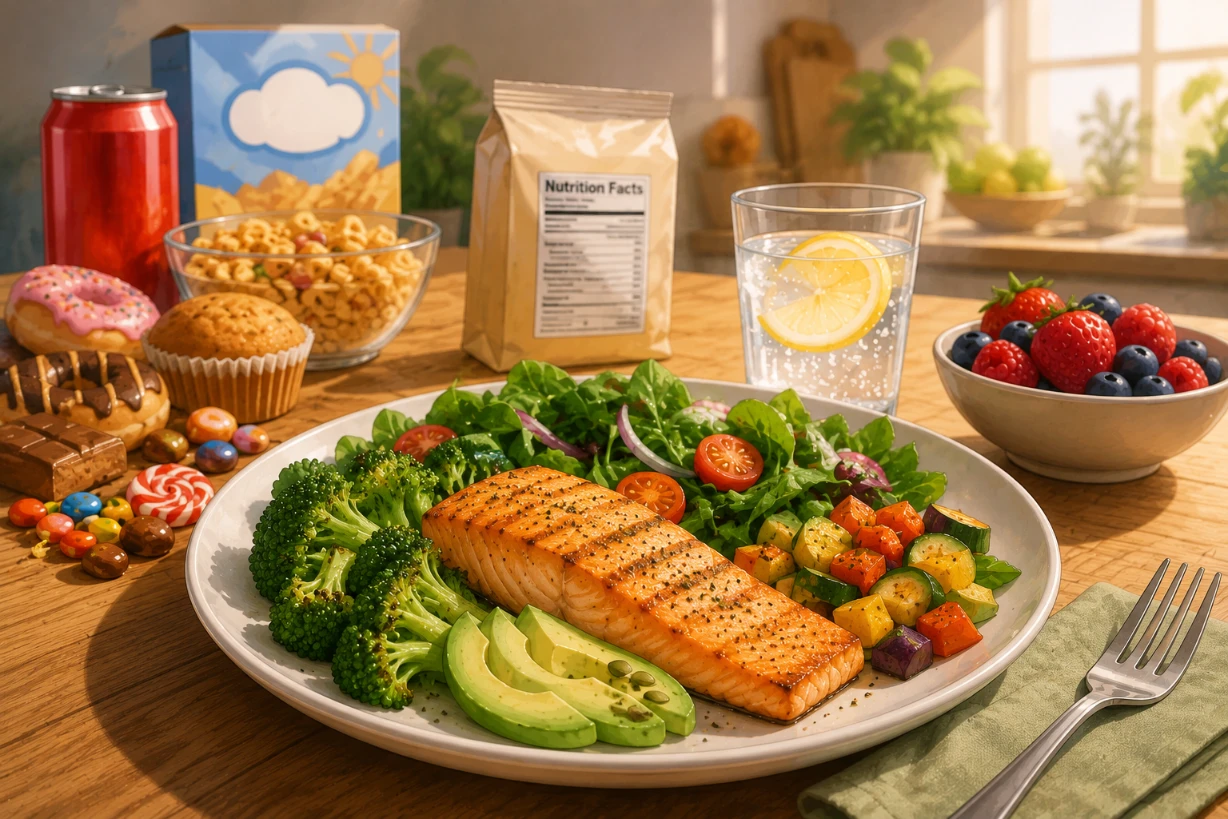

Learning how to eliminate sugar from your diet is one of the most powerful changes we can make for better health, more steady energy, and long term weight control. Many of us already know sugar is a problem, but we still feel stuck between cravings, social pressure, and confusing food labels. The goal of this guide is to make that process feel less confusing and more doable in real life.
Why Eliminating Added Sugar Matters For Your Health
We are not talking about the natural sugar in whole fruits or plain milk. The real issue is added sugar, which shows up in soda, pastries, flavored yogurt, cereal, ketchup, pasta sauce, energy drinks, coffee creamers, and even “healthy” granola bars.
Based on recent data from the Centers for Disease Control and Prevention (CDC), the average American gets about 13 percent of daily calories from added sugars. That is well above the limit recommended by the American Heart Association, which suggest no more than 6 teaspoons a day for women and 9 teaspoons for men. Many people hit that limit before lunch without realizing it.
Research links high added sugar intake with several serious problems:
- Higher risk of type 2 diabetes and insulin resistance
- Weight gain and belly fat
- Elevated triglycerides and lower HDL (“good”) cholesterol
- Nonalcoholic fatty liver disease
- Higher rates of heart disease and stroke
- Increased inflammation that may affect joints, skin, and mood
We also see day to day effects that feel very personal. Many readers describe a sugar “roller coaster”: a quick burst of energy after a sweet snack, followed by a crash that leaves them tired, irritable, and wanting more sugar. When we learn how to eliminate sugar from your diet step by step, that roller coaster starts to calm down. Mood and focus often improve in ways that suprise people.
Step 1: Define Your Goal – Reduce Or Fully Eliminate?
Before changing anything, we need a clear goal. “No sugar ever again” sounds strong, but for most of us it does not fit real life. A more helpful question is: what level of sugar intake matches your health, your lifestyle, and your personality.
Here are three common paths readers choose when they ask how to eliminate sugar from your diet:
1. Strict sugar-free (short term reset)
This is a 14 to 30 day period where you remove all added sugar, including honey, maple syrup, agave, coconut sugar, and artificial sweeteners. People use this as a reset to calm cravings and learn what their body feels like without sugar.
This approach can be intense, but it often brings clear feedback: better sleep, less bloating, more stable energy. It can also reveal how emotional some food habits are. We reach for sweets when we are stressed, lonely, or bored, not only when we are hungry.
2. Low sugar lifestyle (more flexible)
This path fits most people better over the long run. The focus is cutting out obvious sugar sources like soda, candy, desserts, and sugary breakfast foods, while allowing occasional planned treats. You still read labels and aim for low sugar products, but you are not aiming for perfection.
3. Targeted sugar reduction (focused on specific health issues)
Some of us are managing prediabetes, PCOS, fatty liver, or significant weight challenges. In these cases, strong sugar reduction can help, but it should be paired with medical guidance. You may combine lower sugar with other diet patters like a Mediterranean style plan or a higher protein approach. For example, many people blend lower sugar habits with a Mediterranean pattern, rich in vegetables, olive oil, beans, and fish. You can learn more about what foods fit that style of eating here: https://dietlinic.com/what-foods-are-in-the-mediterranean-diet/.
Pick the path that feels challenging but realistic. If the goal feel impossible, we usually quit fast.
Step 2: Find Your Hidden Sugar Sources
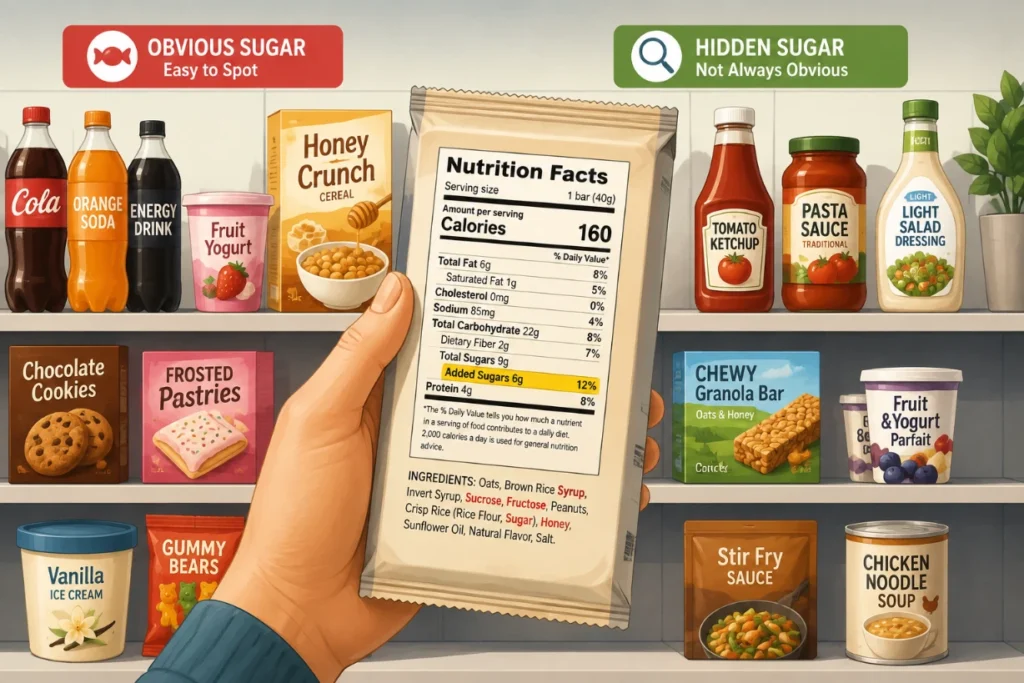
Most of us know that cake and soda have sugar. The tricky part is the “sneaky” sugar that shows up where we do not expect it. Learning how to eliminate sugar from your diet starts with a honest look at what your eating now.
Common high sugar foods and drinks
These are sources that usually give the biggest impact when we reduce them:
- Soda and sweetened iced tea
- Energy drinks and sports drinks
- Specialty coffee drinks with syrups and whipped cream
- Fruit juice and juice cocktails
- Breakfast cereal (even many “whole grain” versions)
- Flavored yogurt and plant-based yogurts
- Pastries, donuts, cookies, muffins, sweet breads
- Ice cream and frozen treats
- Candy and chocolate bars
- Sweetened protein bars or granola bars
Hidden sugar in savory foods
This is where label reading really matters. Many savory items add sugar for flavor or texture:
- Ketchup, BBQ sauce, and many salad dressings
- Pasta sauce and stir fry sauces
- Marinades and glazes
- Flavored instant oatmeal packets
- Some deli meats and bacon brands
- Packed soups and frozen meals
To get a clear baseline, try tracking everything you eat for 2 to 3 days using a simple food diary or a tracking app. You are not judging yourself; you are collecting data. Most readers are shock when they add up the teaspoons of sugar from drinks alone.
Step 3: Learn To Read Labels For Sugar
Food labels can feel like a different language, but once we know what to look for, they become one of our best tools for reducing sugar.
Check the “Added Sugars” line
On the Nutrition Facts label, look for “Added Sugars” under Total Carbohydrate. That line tells you how much sugar was added during processing, separate from any natural sugar in the food. Many health organizations recommend keeping added sugars under 10 percent of total calories. For someone eating 2000 calories, that is about 50 grams a day, though aiming lower often brings better results.
Recognize sugar by its many names
Manufacturers use a long list of words for sugar. When you read ingredients, watch for:
- Sucrose, glucose, fructose, maltose, dextrose
- Corn syrup, high fructose corn syrup
- Cane sugar, raw sugar, beet sugar
- Brown rice syrup, malt syrup
- Agave nectar, honey, maple syrup, coconut sugar
- Fruit juice concentrate
If several of these show up in the first half of the ingredient list, the product is basically a sugar delivery system, even if the front of the package claims “natural” or “made with whole grains.”
Use simple rules when shopping
Rather than obsessing over every gram, many readers find these quick rules helpful:
- For everyday foods (cereal, yogurt, bread, sauces), aim for 5 grams or less of added sugar per serving.
- For condiments, look for “no sugar added” or versions with less than 2 grams and use modest portions.
- Be wary of “low fat” products, which often add sugar to replace flavor.
Step 4: Replace Sugary Drinks First
If you want to know how to eliminate sugar from your diet with the least pain and the most impact, start with drinks. Liquid sugar hits the blood stream very fast, and it does not make us feel full, so we often drink hundreds of calories without feeling like we had a “big” snack.
How much sugar hides in common drinks
| Beverage (approx) | Serving | Added sugar |
|---|---|---|
| Regular soda | 12 oz can | About 9–10 teaspoons |
| Sweetened iced tea | 16 oz bottle | About 8–11 teaspoons |
| Energy drink | 16 oz | Up to 13 teaspoons |
| Flavored coffee drink | Medium (16 oz) | 10–15 teaspoons |
| Fruit punch or juice drink | 8 oz | 5–7 teaspoons |
Practical drink swaps
You do not need to drink plain water only, unless you want to. Some helpful swaps include:
- Unsweetened iced tea with lemon slices
- Sparkling water with lime, berries, or cucumber
- Black coffee or coffee with a small splash of cream, without syrups
- Herbal teas, hot or iced
- Half juice, half sparkling water if you are not ready to drop juice fully
For someone who drinks 2 cans of soda a day, switching to no sugar drinks can remove more than 15 teaspoons of sugar daily. That alone can support weight loss and better blood sugar control, even if you do not change anything else at first.
Step 5: Rebuild Your Meals Around Protein, Fiber, And Healthy Fats
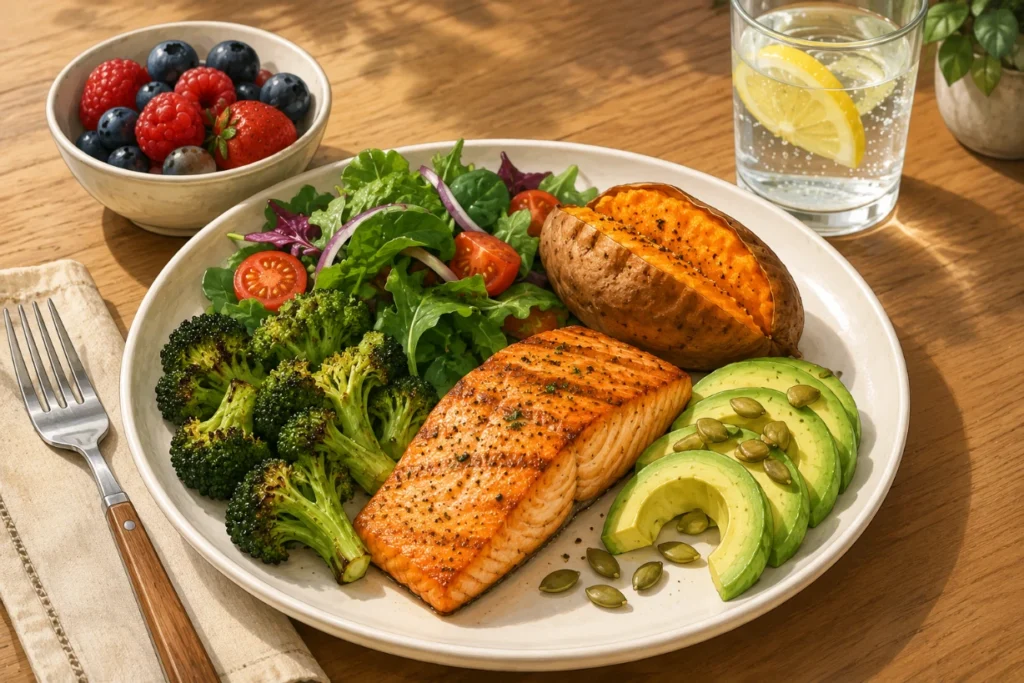
When people focus only on what to remove, they often feel deprived and give up. A smarter way to think about how to eliminate sugar from your diet is to crowd sugar out by building meals that keep you full and satisfied.
Key building blocks
Each meal should include:
- Protein: chicken, fish, eggs, Greek yogurt, cottage cheese, lean beef, tofu, beans, lentils.
- Fiber: vegetables, fruits, beans, lentils, whole grains like oats or quinoa.
- Healthy fats: olive oil, avocado, nuts and seeds, natural nut butters, olives.
For readers who enjoy animal foods and want to explore more protein-forward days with simple ingredients, an animal-based style of eating can support sugar reduction by making meals naturally satisfying. You can see practical meal ideas here: https://dietlinic.com/animal-based-diet-meal-ideas-recipes/.
Example of a low sugar daily menu
Breakfast: Omelet with spinach and peppers cooked in olive oil, side of berries, and black coffee or tea.
Lunch: Grilled chicken salad with mixed greens, tomatoes, cucumbers, pumpkin seeds, and olive oil + vinegar dressing. Sparkling water with lemon.
Snack: Handful of almonds and a small apple.
Dinner: Baked salmon, roasted broccoli, and a small baked potato with plain Greek yogurt as a topping instead of sour cream.
Evening option (if needed): Herbal tea and a slice of cheese or few walnuts.
Notice that nothing in this menu is sugared, but the meals still feel like “real” food. When meals are made this way, cravings tend to drop, because our blood sugar stays more stable and we are not hungry every two hours.
Step 6: Handle Cravings Without White-Knuckling
No guide on how to eliminate sugar from your diet is complete without talking about cravings. They are normal, especially in the first 1 to 3 weeks of cutting down. The goal is not to “have more willpower” but to work with your body and your habits.
Why cravings happen
Cravings reflect a mix of brain chemistry, blood sugar patterns, and emotional cues. When you eat a lot of sweet foods, your taste buds adjust and you need more sweetness for the same pleasure. Dopamine (the “reward” chemical) spikes with sugar, so your brain starts linking sugar with comfort, fun, or relief from stress.
Strategies that actually help
- Do not let yourself get overly hungry. Skipping meals or eating only carbs is a recipe for strong cravings later. Include protein and fat at each meal to stay steady.
- Drink water or tea first. Sometimes we are a little dehydrated or just restless, and a warm drink can calm us enough to notice if we are truly hungry.
- Change your environment. If you always eat cookies while streaming shows at night, try breaking the link by moving to a different room, reading for 10 minutes, or doing a short walk.
- Use “delay, do not deny.” Tell yourself, “If I still want something sweet in 20 minutes, I can decide then.” Often the craving peak passes.
- Choose a smarter sweet. If your plan allows, have a small piece of dark chocolate (70 percent or higher), or some fruit with nuts. It is not about perfection; it is about learning what you can handle without sliding back.
There will be days when you eat more sugar than you planned. That does not erase your progress. What matters is the pattern over weeks and months, not one stressful afternoon with candy at the office.
Step 7: Build A Home And Social Life That Supports Less Sugar
Our environment often has more power over our behavior than motivation alone. If sugary snacks are in your direct line of sight all day, saying no constantly will drain your mental energy.
Shape your home environment
- Keep sweets you choose to keep in opaque containers, not clear ones.
- Store fruit, nuts, and cut veggies at eye level in the fridge.
- Do one “pantry audit” where you remove old candy, stale snacks, or items you eat mindlessly.
- Make water easy to get: use a large bottle, a filter pitcher, or a water dispenser on the counter.
Navigate social events
At birthdays, holidays, or work events, sugar is everywhere. Some strategies readers use successfully:
- Eat a protein rich snack before you go so you are not starving.
- Decide in advance: “I will have one dessert and skip the sugary drinks,” or “I will enjoy the main meal and say no to dessert today.”
- Hold a glass of water or unsweetened drink so people offer you less food automatically.
- If loved ones push food, respond kindly: “That looks amazing, but I am working on cutting back sugar for my health right now.”
Over time, people around you adjust. Many even get curious and start asking how to eliminate sugar from your diet because they see your energy or mood change and want similar results.
Step 8: Choose Smarter Desserts And Treats
For many of us, dessert is a ritual, not just a flavor. Removing sugar does not mean you can never enjoy something sweet again. It means you choose versions that fit the health goals you care about.
Lower sugar dessert ideas
Some options readers often like:
- Fresh berries with unsweetened whipped cream or plain Greek yogurt
- Baked apple or pear with cinnamon and a sprinkle of chopped nuts
- Chia pudding made with unsweetened almond milk and a small amount of fruit
- Frozen banana slices blended into a “nice cream” with a spoon of nut butter
- 2 or 3 squares of dark chocolate with a handful of almonds
If you bake, try reducing the sugar in recipes by one third to one half. In many cakes and muffins, the texture holds up and our taste buds adjust over time. You can add flavor through vanilla, cinnamon, nutmeg, citrus zest, or cocoa instead of more sugar.
Step 9: What About Artificial Sweeteners And “Sugar Free” Foods?
When we first explore how to eliminate sugar from your diet, it is tempting to swap every sweet thing with a sugar free version. Diet sodas, sugar-free candy, and “keto” desserts all over the shelves make that easy.
Current evidence on nonnutritive sweeteners like sucralose, aspartame, stevia, and monk fruit is mixed. They do reduce calories and sugar load, but some studies suggest they might affect gut bacteria, appetite signals, or sweet taste preference, especially when used in large amounts.
Practical approach many experts and readers use:
- Use sugar-free products as temporary helpers, not long-term crutches.
- Prefer options like stevia or monk fruit over large daily doses of aspartame or sucralose, if they agree with you.
- Pay attention to how they make you feel: more cravings or more hunger may be a sign to cut back.
Over time, most people find that using less sweeteners overall, artificial or natural, helps them enjoy the real flavors of food more.
Step 10: Track Progress Beyond The Scale
Weight is only one part of the picture. When we focus only on that number, we may miss other big wins from learning how to eliminate sugar from your diet.
Non-scale signs that sugar reduction is working
- Fewer energy crashes in the afternoon
- Less bloating and more regular digestion
- Steadier mood and less irritability
- Improved skin clarity for some people
- Better sleep quality and less night waking
- Less joint stiffness in the morning
If you have access to lab tests, your doctor may also see improved fasting glucose, A1c, triglycerides, and liver enzymes after a period of lower sugar eating.
Keeping a simple weekly log of how you feel can show progress that the mirror alone may not show. Many readers say this is what keeps them going when dessert looks tempting.
Frequently Asked Questions About Eliminating Sugar
Do I need to cut out fruit?
For most people, no. Whole fruit comes packaged with fiber, water, vitamins, and antioxidants. This makes it very different from table sugar or candy. One or two servings of fruit a day usually fits well into a low sugar pattern, unless your healthcare provider advises otherwise because of a specific medical condition.
How long until cravings get better?
Everyone is different, but many people notice the strongest cravings fade after about 10 to 14 days of lower sugar intake. Taste buds start to reset, so foods that used to seem only mildly sweet begin to taste very sweet. The first week is often the hardest, so planning ahead for that time matters a lot.
Can a higher protein or animal based approach help?
Some individuals find that bringing in more protein and healthy fats from animal foods helps them feel full and reduces sugar desires. Animal foods are naturally low in sugar and combine well with vegetables and some whole fruits to create satisfying meals. For readers curious about how different patterns compare, this article on animal-based vs plant-based eating shares pros and cons: https://dietlinic.com/animal-based-diet-vs-plant-based-diet/.
What if I live with family members who still eat lots of sugar?
This is a real challenge. You might not be able to change your entire household overnight, but you can set personal boundaries. Consider designating one drawer or shelf you do not open, where other family members keep their sweets. Talk openly about why you are learning how to eliminate sugar from your diet and ask for small bits of support, like not waving treats in front of you or respecting your choice to skip dessert.
Bringing It All Together
Figuring out how to eliminate sugar from your diet is not about perfection or punishment. It is about giving your body a fair chance to run on steadier fuel. When we reduce added sugars, we tend to sleep better, think more clearly, and feel more in control around food. The steps that matter most are simple: cut sugary drinks, learn labels, build meals around protein and fiber, handle cravings with smart strategies, and create a home and social life that makes the low sugar choice the easy one.
Progress will not be linear. There will be vacations, birthdays, stressful days and late-night snacks. What defines success is not never having sugar again, but choosing most days to feed your body in a way that supports the life you care about. Every small shift you make, from your morning coffee to your evening dessert, is a real investment in your future health.





Leave a Reply