
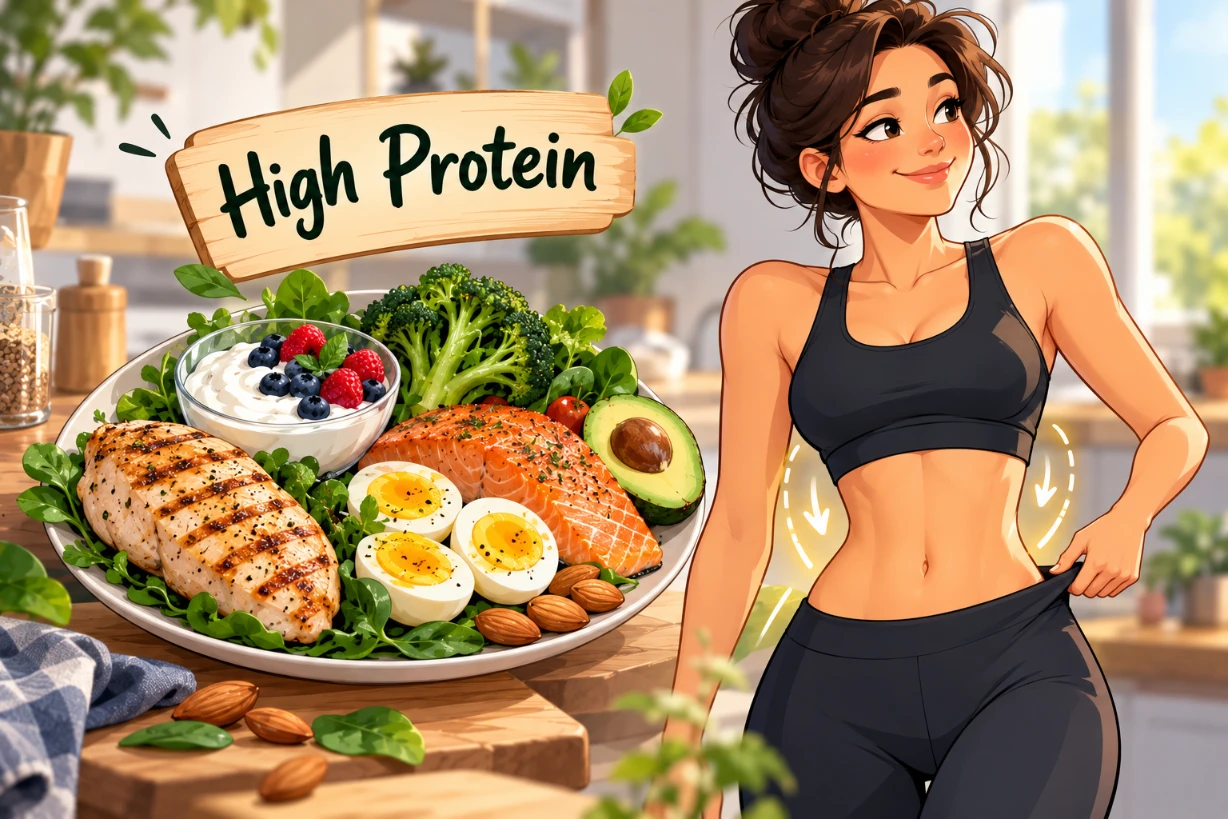

Many of us search for a realistic way to shrink our waistline without feeling hungry all day. A high protein diet for belly fat loss can be one of the most practical tools we have. When protein is used wisely, it helps control cravings, protect muscle, and support a flatter stomach over time. This is not about a quick detox or a magic food. It is about how we build our plate, day after day, so our body burns more fat and less lean tissue.
How A High Protein Diet Targets Belly Fat
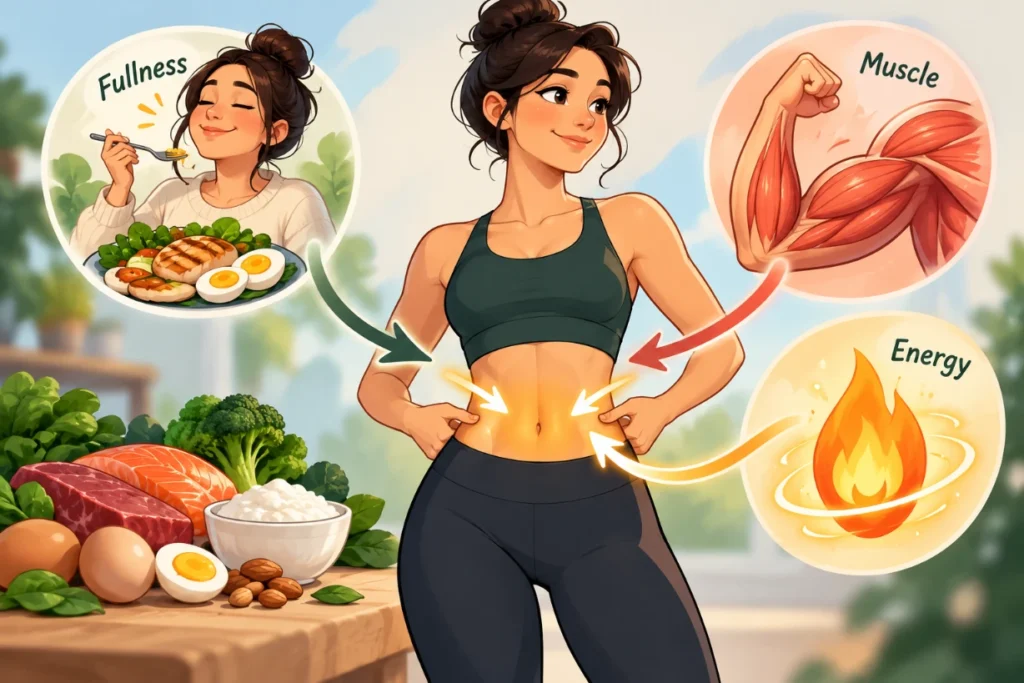
Belly fat is not just a cosmetic issue. Extra fat around the abdomen, specially deep visceral fat around organs, is linked with higher risk of type 2 diabetes, fatty liver, and heart disease. A high protein diet for belly fat loss works through several key mechanisms that are backed by research.
1. Protein raises fullness and controls hunger hormones
Protein is the most filling of the three main macronutrients (protein, carbs, fat). When we eat enough protein, we tend to feel full sooner and stay satisfied longer. That means less snacking, fewer random trips to the pantry, and more stable portion sizes without feeling deprived.
Several clinical trials show that diets with around 25 to 30 percent of calories from protein reduce levels of ghrelin, the “hunger hormone,” and increase GLP-1 and peptide YY, signals that tell the brain we are full. In daily life, people on higher protein plans often report that they “just are not thinking about food all the time,” which is a huge win for sticking to a lower calorie intake.
2. Protein helps keep muscle while you lose weight
When we cut calories to lose weight, the body does not only burn fat. It can also break down muscle. Losing muscle slow our metabolism, and that makes belly fat easier to regain later. Adequate protein intake helps preserve lean mass, especially when paired with strength training.
A 2023 review in the journal Nutrients found that higher protein diets consistently protect muscle during weight loss, which helps keep resting energy expenditure steadier. More muscle mass means we burn more calories even when we are sitting or sleeping, and that slowly helps trim fat from the midsection.
3. Protein has a higher thermic effect
The “thermic effect of food” is the energy the body uses to digest and process what we eat. Protein has a much higher thermic effect compared with carbs or fat. Roughly:
- Protein uses about 20 to 30 percent of its calories just for digestion.
- Carbs use around 5 to 10 percent.
- Fat uses only about 0 to 3 percent.
That means if we eat 100 calories of protein, only about 70 to 80 calories are available after digestion. Over weeks and months, this difference adds up and support belly fat loss even when the scale moves slowly.
4. Better blood sugar control lowers belly fat storage
High protein intake, especially with fiber and moderate carbs, can lead to steadier blood sugar and insulin response after meals. Spikes of blood sugar, followed by crashes, tend to drive cravings for more refined carbs and sugar. Those pattern promote fat storage around the waist.
By centering meals on protein, then adding smart carbs and healthy fats, we reduce this roller coaster. In practice, many people notice less desire for sweets in the late afternoon and evening when they hit their protein target earlier in the day.
How Much Protein Do We Need For Belly Fat Loss
There is no single perfect number for everyone, but we can use science-based ranges as a starting point.
General protein guidelines
For general health, the US Recommended Dietary Allowance sits at 0.8 grams per kilogram of body weight per day. For fat loss and muscle maintenance, most research suggest more:
- For active adults trying to lose fat: about 1.2 to 1.6 g/kg body weight
- For people who lift weights or do intense training: up to 2.0 g/kg may offer extra benefit
Example: A 170 pound person (about 77 kg) might aim for 90 to 125 grams of protein per day for effective belly fat loss.
We also want to consider age and activity. As we get older, our muscles respond less strongly to small amounts of protein. That means a 50 year old may benefit from more protein per meal than a 25 year old to get the same effect.
Protein per meal: a more useful target
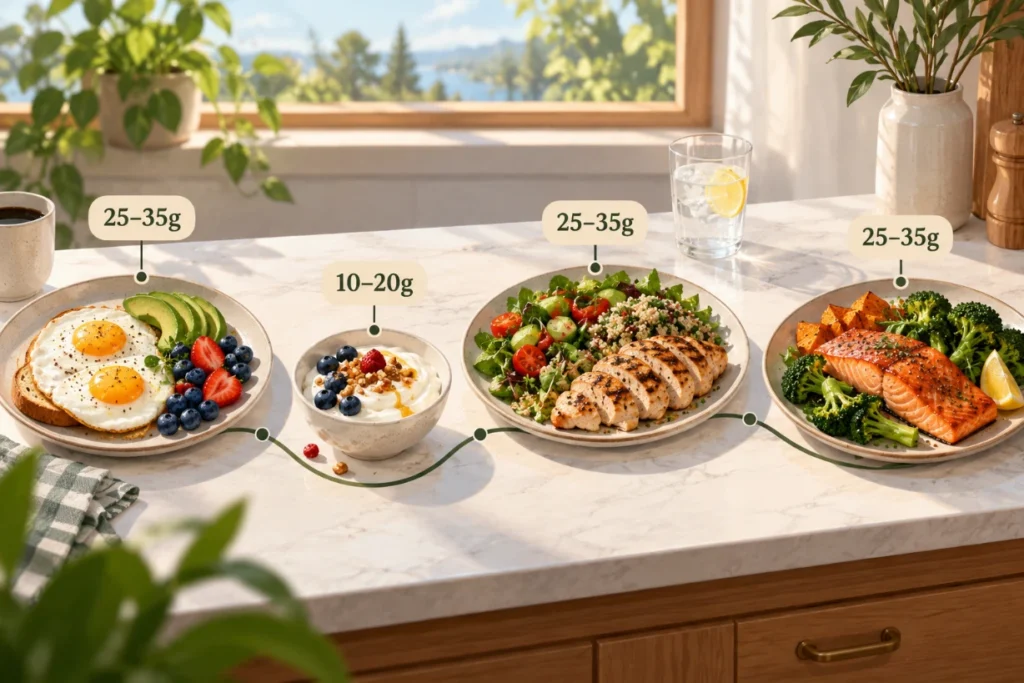
Instead of chasing a daily number only, thinking in terms of protein per meal is often easier and more practical. Most adults aiming for belly fat loss do well with:
- 25 to 35 grams of protein at breakfast
- 25 to 35 grams at lunch
- 25 to 35 grams at dinner
- Optional 10 to 20 grams at snacks, depending on appetite and exercise
That pattern adds up to roughly 80 to 120 grams per day, depending on body size. Spreading protein through the day also support muscle protein synthesis more evenly, which seem to matter for preserving lean mass.
Best Protein Sources For A Flatter Belly
A high protein diet for belly fat loss does not have to look like dry chicken and plain salads. We can mix different animal and plant proteins to suit taste, budget, and ethics, while still hitting target.
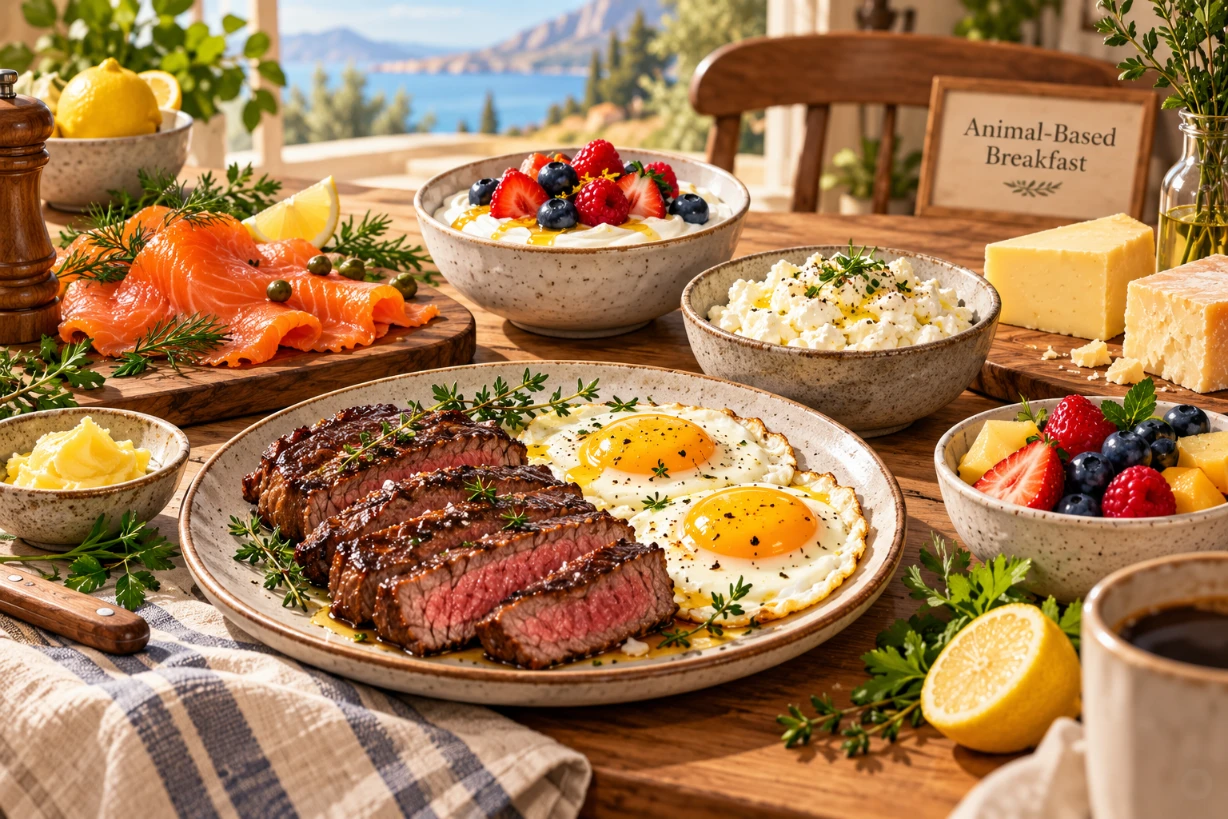
Animal-based protein options
Animal proteins are complete proteins, meaning they provide all essential amino acids in good amounts. They also tend to be very filling per calorie when we pick leaner cuts.
- Skinless chicken breast, turkey breast
- Lean ground turkey or lean ground beef (90 percent lean or higher)
- Fish and seafood like salmon, tuna, cod, shrimp
- Eggs and egg whites
- Greek yogurt, cottage cheese, and light cheese
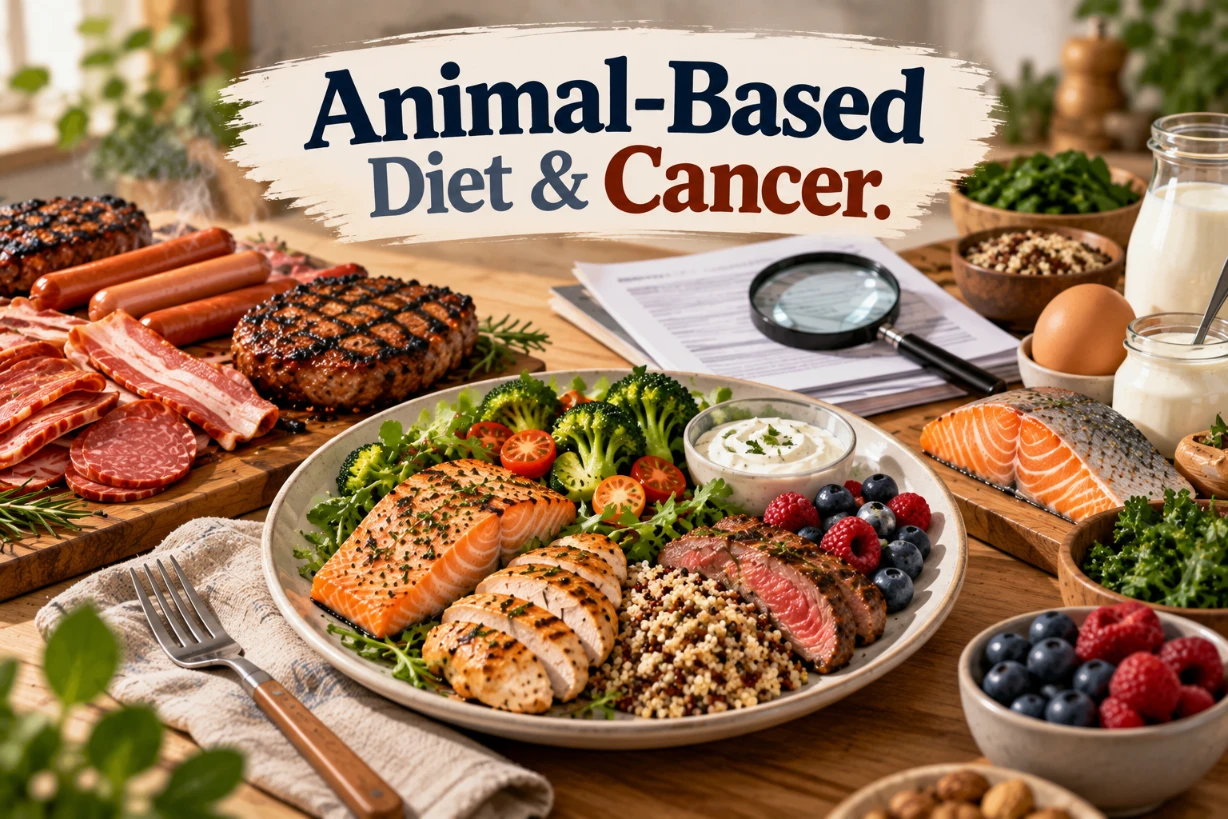
Those foods fit nicely into a structured fat loss plan. Some readers prefer a more animal-focused approach, for example pairing high protein intake with low sugar and simple carb intake. For more on how that can look over a month, we shared a detailed 30 day guide here: 30-day animal-based diet transformation plan.
Plant-based protein options
Vegetarian or vegan eaters can also follow a high protein approach, it just require more planning and sometimes a higher total calorie intake because plant proteins are often mixed with carbs or fats.
Helpful plant protein sources include:
- Lentils, black beans, chickpeas, and other legumes
- Firm tofu and tempeh
- Edamame (soybeans)
- Seitan (wheat gluten, for people who tolerate gluten)
- Higher protein whole grains like quinoa, farro, and buckwheat
- Plant-based protein powders from pea, soy, or rice
Pairing different plant proteins over the day, such as beans with grains or nuts with legumes, usually covers the amino acid needs well.
Protein powders: helpful but not required
Protein powders are convenient, especially for busy mornings or post-workout snacks. Whey, casein, and soy are the most studied types. They can support a high protein diet for belly fat loss by making it easier to hit daily protein goals without a lot of cooking.
We still want most of our protein intake from whole foods, because they deliver vitamins, minerals, and fiber (in plant sources) that shakes alone lack. Shakes work best as a backup or add-on, not as the base of the whole plan.
Macros That Support Belly Fat Loss: Not Just Protein
Protein sits in the spotlight, but carbs and fats still play a role. A high protein diet for belly fat loss usually shifts some calories away from refined carbs and added fats, without fully removing any one macro.
Balancing carbs for a flatter stomach
Carbohydrates are not the enemy. The issue tends to be portion size and type. Many of us eat large servings of white bread, pastries, sugary drinks, and pasta with little fiber. This pattern promotes belly fat gain, especially when paired with sitting for long hours.
What works better for most people who want less belly fat:
- Focus on whole-food carbs: fruits, vegetables, whole grains, beans
- Cut sugar-sweetened drinks like soda and many coffee beverages
- Keep treats small and less frequent rather than daily habits
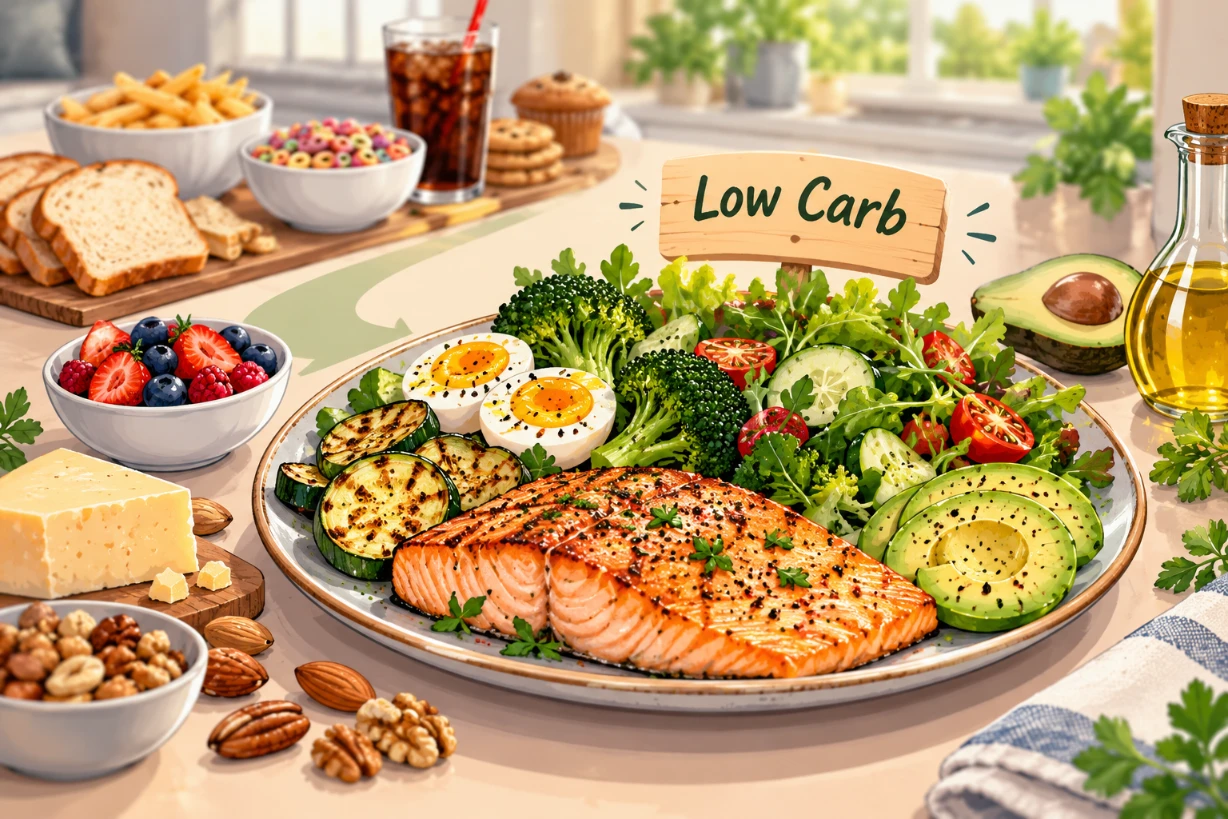
Some people prefer more carb restriction, closer to a low-carb or animal-based pattern. There is ongoing debate around animal-based diet vs keto, and in practice, the best choice is the one a person can follow without feeling miserable. For a deeper comparison, we break down differences here: animal based diet vs keto which is better.
Healthy fats and belly fat
We do not need to fear fat, but we want to choose it carefully. High calorie, low satiety fats like fried foods, creamy sauces, and large spoonfuls of oil can slow progress. To support hormone health and satiety, we still need some fats, mainly:
- Olive oil and avocado oil for cooking
- Avocados and olives
- Nuts and seeds in small portions
- Fatty fish like salmon or sardines for omega 3s
When protein intake rises, total fat intake often goes down naturally, since high protein foods tend to push out some higher fat items. The key is not to replace those missing calories with more sugar or refined starch.
Sample 1 Day High Protein Meal Plan For Belly Fat Loss
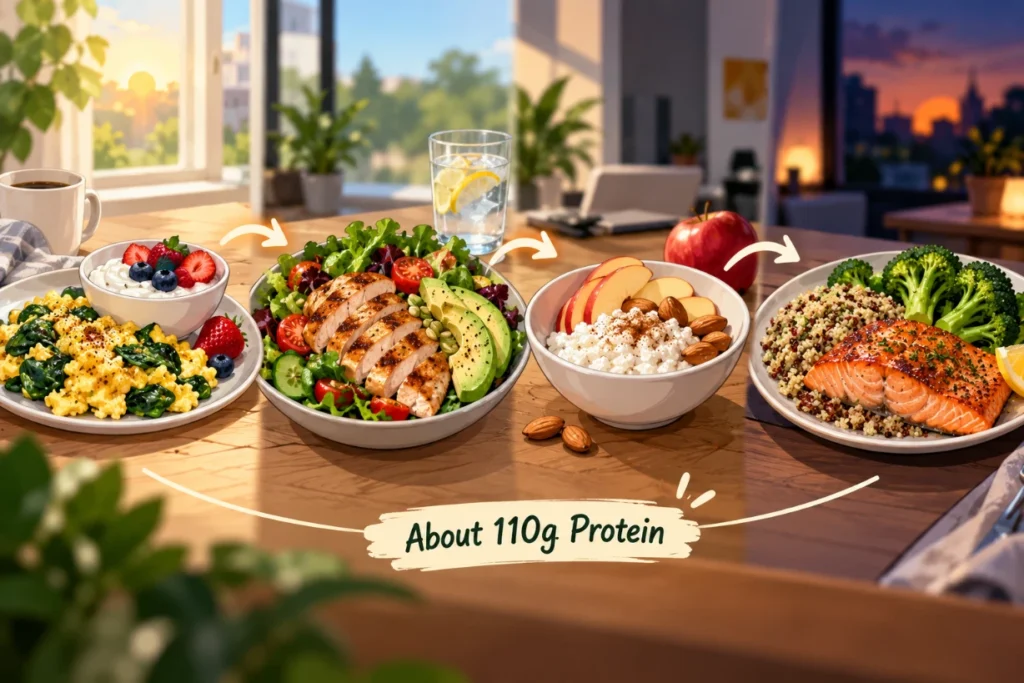
To show how these ideas work in real life, here is a simple example of one day of eating around 110 grams of protein. This is just a model and should be adjusted for your own calorie needs, taste, and health status.
Breakfast (around 30 grams protein)
Spinach egg scramble with Greek yogurt
- 2 whole eggs + 3 egg whites scrambled with spinach and onions
- 1/2 cup low fat Greek yogurt with a handful of berries
- 1 slice whole grain toast
Lunch (around 30 grams protein)
Grilled chicken salad bowl
- 4 to 5 ounces grilled chicken breast
- Mixed greens, tomatoes, cucumbers, shredded carrots
- 1/4 avocado and a small handful of chickpeas
- Olive oil and lemon dressing (light pour)
Snack (around 15 grams protein)
Cottage cheese and fruit
- 3/4 cup low fat cottage cheese
- 1 small apple or pear sliced
Dinner (around 35 grams protein)
Salmon, quinoa, and broccoli
- 5 ounces baked salmon with herbs and lemon
- 1/2 to 3/4 cup cooked quinoa
- 1 to 2 cups roasted or steamed broccoli
That pattern gives a strong protein base, plenty of fiber, and moderate carbs. Many people find this style of eating leaves them satisfied but not stuffed, with fewer late night cravings, which directly help belly fat control.
Training And Lifestyle: Multiplying The Effect Of Protein
No way around it, diet is only part of the belly fat story. A high protein diet for belly fat loss works best when we pair it with movement, stress management, and sleep care.
Strength training: protein’s best partner
Even two to three sessions per week of resistance work can change how the body uses protein. Lifting weights, using resistance bands, or doing bodyweight moves like squats and pushups all send a signal: keep and build this muscle.
With that signal in place, higher protein intake helps the body repair and build lean tissue after each session. Over months, this combo reshape the body, so you might lose inches around the waist even if the scale number moves slower than expected.
Daily steps and non-exercise activity
Non-exercise activity, often called NEAT, covers walking, household chores, taking stairs, and all the small movements that fill a day. These low intensity actions burn more calories across a week than most people guess.
A practical target for many adults is 7,000 to 10,000 steps per day. That does not need to look like a long, boring treadmill session. It can be brisk 10 minute walks after meals, parking farther away, or walking phone calls.
Sleep, stress, and belly fat
Poor sleep and chronic stress change hormones in ways that favor abdominal fat gain, even when food intake is not crazy high. Cortisol, the main stress hormone, encourages fat storage around the midsection when it stays high for long periods.
Helpful steps include:
- Target 7 to 9 hours of sleep for most adults
- Keep a regular wake-sleep schedule, even on weekends
- Use brief relaxation tools like deep breathing, short walks, or journaling during high stress days
When sleep and stress improve, people often find they can follow a high protein eating pattern more easily. Late-night “stress snacks” reduce, and appetite feels more under control.
Common Mistakes On A High Protein Diet For Belly Fat Loss
Many people start a high protein diet with good intentions but get stuck or frustrated. Here are some missteps that often slow belly fat change.
1. Ignoring total calories
Protein helps a lot, but it does not erase all extra calories. Eating very large portions of steak, cheese, nuts, and “keto snacks” can still lead to fat gain, even with high protein intake. We still need a moderate calorie deficit to lose fat, which means eating somewhat less energy than we burn.
2. Not drinking enough water
Higher protein intake raise the need for hydration so the kidneys can process nitrogen byproducts from amino acids. Many people mistake mild dehydration for hunger or fatigue. A simple guide is to aim for pale yellow urine most of the day. People with kidney disease or other serious medical issues should talk with their doctor before raising protein intake drastically.
3. Relying only on very lean protein
Chicken breast and egg whites are helpful, but a diet made only of very lean protein can feel bland and unsatisfying fast. Including some fattier fish, whole eggs, or dark meat in modest portions often make the diet more enjoyabel and sustainable. Enjoyment matters because a miserable plan is usually a short lived one.
4. Neglecting fiber
Some high protein diets cut carbs so aggressively that fiber intake drops sharply. Low fiber intake can lead to constipation, bloating, and changes in gut bacteria that may not help belly fat over the long term.
Most adults do well with at least 25 to 30 grams of fiber per day from vegetables, fruits, beans, and whole grains. Even on a lower carb pattern, we can keep non-starchy vegetables and small servings of berries often without blowing carb goals.
5. Expecting spot reduction
A the body loses fat, it decide where to pull it from. We can not force fat loss from only the belly, even with perfect protein intake and all the crunches in the gym. Usually, fat comes off in layers, and the midsection is often one of the last areas to fully lean out, especially in people with a history of yo-yo dieting or high stress lifestyles.
Seeing progress in clothing fit, tape measure readings, and strength markers can help stay motivated while the final belly changes take longer.
Who Should Be Cautious With A High Protein Diet
While most healthy adults can safely follow a high protein diet for belly fat loss, some people should take extra care or talk with a doctor or dietitian first.
- Individuals with chronic kidney disease or reduced kidney function
- People with severe liver disease
- Those recovering from major surgery or with complex medical conditions
- Anyone on medications that impact kidney or liver work
For these groups, a more moderate protein intake, carefully tailored by a professional, is usually safer than jumping straight into very high numbers.
Evidence Snapshot: What Recent Studies Show
Over the past two years, research continue to support the use of higher protein intake for fat loss and metabolic health.
A 2022 meta analysis in Obesity Reviews found that higher protein diets resulted in greater total weight loss and better waist circumference reduction compared with standard protein diets, especially when combined with resistance training.
Another 2023 trial in overweight adults showed that a diet with about 30 percent of calories from protein led to more loss of visceral belly fat, not just subcutaneous fat under the skin, when paired with modest calorie restriction and daily walking.
Based on these and many other studies, we can say with reasonable confidence that a well planned high protein pattern is one of the most reliable nutritional strategies for reducing harmful belly fat while keeping muscle strength.
Bringing It All Together For Real Life
At the end of the day, a high protein diet for belly fat loss has to fit into busy schedules, social events, family meals, and personal taste. The most effective plans are rarely extreme. They look more like this:
- Center every meal on a solid protein source, roughly palm-sized
- Fill at least half the plate with colorful vegetables most of the time
- Add a modest portion of whole-food carbs or fruit
- Include small amounts of healthy fats for flavor and satisfaction
- Layer in movement, decent sleep, and stress tools, even if imperfect
If a more animal-focused eating style appeals to you, with priority on meat, eggs, and dairy, it can still be aligned with belly fat goals by watching portions and added fats. We explored the potential benefits of such a pattern here: top benefits of an animal-based diet, along with everyday meal ideas: animal based diet meal ideas recipes.
Consistent protein intake does not promise overnight changes, but over weeks and months it reshape hunger, metabolism, and body composition. For many people, the first shift they notice is not even on the scale. It is the feeling of waking up less puffy, clothes fitting looser around the waist, and the quiet relief of not arguing with cravings all day. From there, the numbers usually follow.
By focusing on a realistic high protein diet for belly fat loss, supported by steady movement and simple lifestyle changes, we give our body the tools it needs to slowly move toward a leaner, healthier midsection and better long term health.
Leave a Reply