


How many carbs per day on the keto diet is probably the first question that pops up when someone wants to try low carb for weight loss or better health. Carbs are the lever that control whether you go into ketosis or stay in a normal sugar-burning mode, so getting this number right really matter. The challenge is that there is no single perfect carb target for everyone. Age, activity level, health history, body size, and even stress can change how many grams of carbs you can eat and still stay in ketosis.
What Does “Low Carb” Really Mean On Keto
Before we dig into exact grams, we need to be clear what we mean by keto. A ketogenic diet is a very low carb, moderate protein, high fat way of eating that shift your main fuel source from glucose (sugar) to ketones (made from fat). To do that, we reduce carbs enough that the body has to pull from fat stores and dietary fat.
Different low carb styles use different carb limits:
- Standard keto diet: usually 20 to 50 grams of net carbs per day
- Low carb but not keto: up to 100 to 130 grams of carbs per day
- Moderate carb: roughly 130 to 225 grams of carbs per day
- Typical Western diet: often 225 to 325 grams or more per day
So when we talk about how many carbs per day on the keto diet, we are almost always talking about the 20 to 50 gram range. That is the range shown in research to push the body into nutritional ketosis for most people.
Net Carbs vs Total Carbs: What Are We Actually Counting
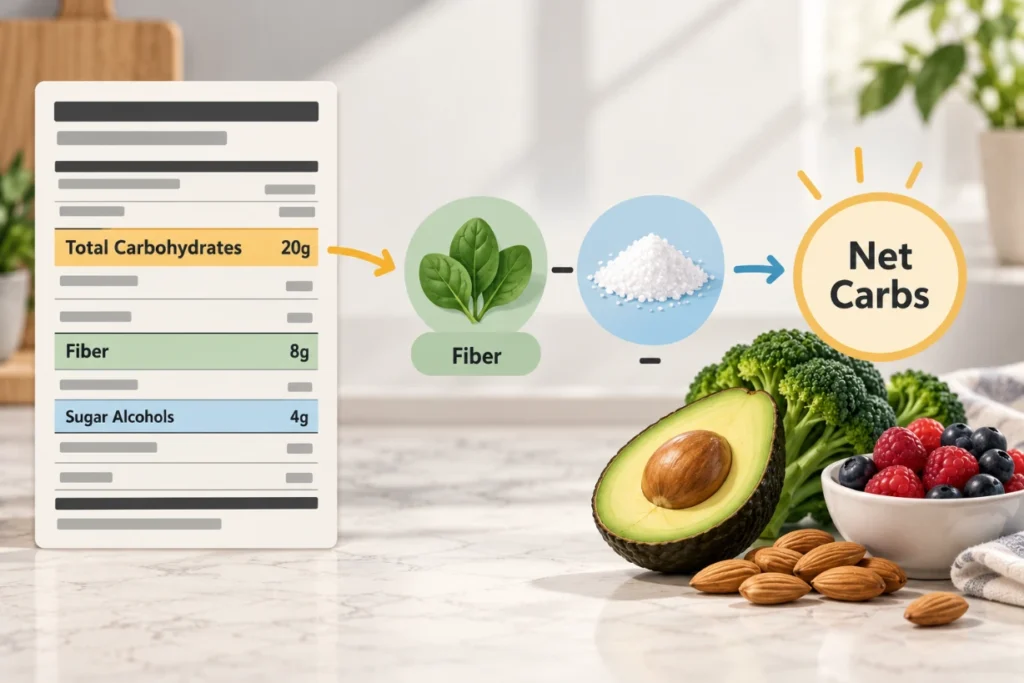
Another puzzle is deciding whether you should count total carbs or net carbs. You might see keto labels in the grocery store shouting “Only 3g net carbs!” and it confuses thing fast.
What are total carbs
Total carbs is the sum of all carbohydrate in a food: sugars, starches, and fiber. On a US nutrition label, you see “Total Carbohydrate,” then under it “Dietary Fiber,” “Total Sugars,” and sometimes “Added Sugars.”
What are net carbs
Net carbs is an estimate of carbs that actually raise blood sugar. The simple formula used in the US is:
Net carbs = Total carbs – Fiber – Certain sugar alcohols
For real whole foods such as vegetables, berries, nuts and seeds, most people subtract fiber and count net carbs. Fiber does not raise blood glucose in the same way as digestible starch and sugar, and many people finds they can stay in ketosis even with higher fiber intake.
Which should you track on keto
Based on client experiences, research, and what many doctors who use ketogenic diets in clinic report, this pattern tends to work:
- New to keto or insulin resistant: count net carbs but keep them low.
- If weight loss stalls or blood sugar stay high: try counting total carbs for a few weeks.
- For processed “keto” snacks with sugar alcohols: be more careful, because labels sometimes understate impact.
For the rest of this article, when we say how many carbs per day on the keto diet, we will mostly be referring to net carbs, because that is what most people use day to day, unless noted as total carbs.
Standard Keto Carb Ranges: 20–50 Grams Per Day
Most ketogenic guides suggest starting around 20 to 30 grams of net carbs a day. That level is low enough to push almost everyone toward ketosis within a few days to a week. It also leaves room for non starchy vegetables and small amount of low sugar fruit.
Common carb targets and what they fit
| Daily net carbs | Who this often suits | Typical foods in a day |
|---|---|---|
| 10–20 g | People with type 2 diabetes, metabolic syndrome, or those who are very carb sensitive | Meat, eggs, cheese, leafy greens, oils, very few berries |
| 20–30 g | Most beginners wanting reliable ketosis and fat loss | Non starchy veggies at 2–3 meals, some nuts, small portion of berries |
| 30–50 g | Active people, those closer to goal weight, or long term keto maintainers | More vegetables, modest serving of berries or Greek yogurt, small carb side like pumpkin |
These ranges are not rigid rules. Someone who is 6-foot-3, very muscular, and doing heavy training might stay in ketosis at 60 or even 80 grams of net carbs. Someone else with insulin resistance might need to stay under 20 grams total carbs to see measurable ketones.
Factors That Change How Many Carbs You Can Eat On Keto
Two people can eat the same 40 grams of carbs and see totally different responses. That is one reason why we see so much confusion in low carb communities. Several key factors shape your personal carb tolerance.
1. Body size and muscle mass
Larger bodies and more muscle tissue use more glucose, even at rest. Muscle acts like a sponge for carbs. People with more lean mass often handle slightly more carbs while still staying in ketosis, especially if they also move a lot during the day.
2. Activity level
Exercise, especially high intensity or longer endurance work, burns through stored glycogen (your stored form of carbs) and can make room for more carbs in the diet without kicking you out of ketosis between workouts.
For example, a recreational runner doing 5 miles three times per week may stay in ketosis at 40–50 grams of net carbs. A desk worker who rarely moves much might need to stay closer to 20–25 grams to see the same blood ketone levels.
3. Metabolic health and insulin sensitivity
People with type 2 diabetes, prediabetes, fatty liver, or PCOS are usually more carb sensitive. Research between 2022 and 2024 continues to show that lower carb intake improves insulin sensitivity and blood sugar control in these groups, but the number they need to aim for is often at the lower edge of the keto range.
In my own experience reading labs and hearing from readers, the folks who start keto at 20 grams of net carbs and keep it there for at least 8 weeks tend to see the biggest drops in fasting glucose and A1c when they have metabolic issues.
4. Age, hormones, and sex
Hormones like estrogen, progesterone, testosterone, and cortisol all play roles in how we handle carbs. Women often notice they can tolerate a bit more carbs in the first half of their cycle and less in the days before their period. Perimenopause and menopause can also change carb needs.
Men sometimes have a slightly wider carb window while staying in ketosis because of higher baseline muscle mass and different hormone patterns, but its not a hard rule. Stress hormones can spike blood sugar even with low carb intake, which is why sleep, recovery, and stress management matter on keto too.
How To Pick Your Starting Carb Limit On Keto

When someone asks how many carbs per day on the keto diet they should start with, a practical system is more useful than a one-size answer. Here is a simple step by step way to pick your number and tweak it later.
Step 1: Choose a starting range based on your goal
- Rapid fat loss or major blood sugar issues: Start at 15–20 grams net carbs (or 20 total carbs) per day.
- Moderate weight loss, general health, or brain focus: Start at 20–30 grams net carbs per day.
- Active, fit, using keto for mental clarity or performance: Start at 30–40 grams net carbs per day.
Most people do well starting at 20–25 grams of net carbs, then reassessing after 3–4 weeks.
Step 2: Track your carbs for at least 1–2 weeks
Keto is harder to guess by eye in the beginning. Using a tracking app for a short period helps you learn which foods push carb counts up faster than you expect. Pay extra attention to:
- Hidden sugars in sauces, dressings, marinades, and condiments
- Coffee drinks with creamers or flavored syrups
- “Keto” bars or treats with sugar alcohols or fibers that still impact you
After a month, most people get a solid feel for portions and no longer need strict tracking unless they hit a plateau.
Step 3: Check for signs of ketosis
How many carbs per day on the keto diet actually puts you in ketosis is easier to confirm with simple signs:
- Reduced hunger and fewer cravings
- Stable energy without afternoon crashes
- Dry mouth or mild metallic taste in the first week
- Weight beginning to drop after the first few days of water shifts
For more objective data, some people use blood ketone meters. Nutritional ketosis is typically 0.5 to 3.0 mmol/L of blood ketones. If you stay under your chosen carb limit for a week and see no sign of ketosis, consider reducing carbs by 5–10 grams and test again.
What Does 20–30 Grams Of Net Carbs Look Like In Real Food

Numbers on a chart are one thing. Seeing what a realistic day on keto looks like often make the idea less scary and more doable. Here is a sample low carb day around 25 grams of net carbs.
Sample keto day at 25 grams net carbs
Breakfast
- 3 eggs scrambled in butter with spinach and mushrooms
- 2 slices of bacon
- Black coffee with a tablespoon of heavy cream
Approx: 4–5 g net carbs (most from veggies and cream)
Lunch
- Grilled chicken thigh
- Large salad: mixed greens, 1/2 avocado, cucumber, olives, olive oil and vinegar dressing
Approx: 7–8 g net carbs
Snack (optional)
- Small handful of almonds (about 1 oz)
Approx: 3 g net carbs
Dinner
- Salmon baked with lemon and herbs
- Roasted broccoli with olive oil
- Side of cauliflower mash with butter
Approx: 8–9 g net carbs
Total for the day: about 22–25 g net carbs, depending on portions. This style of menu is filling, heavy in fats, and still includes a wide range of non starchy veggies for fiber and micronutrients.
Common Mistakes That Raise Carb Intake Without Realizing It
Many people think they are at 20 grams of carbs but actual intake lands closer to 50 or more. This is one reason someone might not be losing fat on keto. A few sneaky carb sources show up over and over in reader stories.
1. “Keto” baked goods and bars
Some brands are careful about their labeling and formula, but others use high amounts of tapioca starch, maltitol, or chicory root fiber. These can raise blood sugar more than the label suggest. If your progress stalls, try dropping all packaged keto sweets for 2 weeks and see what changes.
2. Nut flours and nut butters
Almond flour, coconut flour, and nut butters are low carb compared to wheat flour, but they are still carb dense and very easy to over eat. Two generous “keto” muffins or a few spoonfuls of peanut butter can quietly add 10–15 grams of net carbs.
3. Heavy cream and dairy
Cheese, cream, and yogurt are keto friendly, but they contain lactose, which is sugar. A few tablespoons in coffee, some shredded cheese on eggs, and then some more on a casserole add up fast. Tracking dairy for a week gives a more accurate picture.
4. Sauces, condiments, and drinks
BBQ sauce, ketchup, sweet chili sauce, and many marinades are high in sugar. Coffee drinks, flavored waters, and even “zero sugar” drinks can trigger cravings in some people. When carb intake need to stay low, it is safer to choose simple sauces like mustard, homemade mayo, butter, olive oil, and vinegar.
Adjusting Carb Intake Over Time
How many carbs per day on the keto diet you need at the start might not be the same number you use 6 months later. As weight, insulin sensitivity, and activity change, your carb tolerance usually shifts too.
Phase 1: Strict keto (first 4–8 weeks)
During this period, most people keep carbs between 15 and 25 grams net. The focus is:
- Adapting to fat as a primary fuel
- Breaking old sugar snacking habits
- Stabilizing blood sugar
Many people see quick early losses in water weight, then slower but steady fat loss.
Phase 2: Experiment and personalize (months 2–6)
After adaptation, you might test adding 5 grams of net carbs per day for 1–2 weeks and watch what happens. If weight, hunger, and energy stay stable and ketone levels remain acceptable, you can try bumping up another 5 grams. If cravings or weight gain show up, you know you went past your personal carb line.
This might mean moving from 20 to 30 grams of net carbs, or from 25 to 40, depending on your body and routine.
Phase 3: Long term lifestyle
Once you reach a healthy weight or your main health goals, your carb intake might live anywhere in the low carb to moderate keto zone. Some people settle at 30–50 grams of net carbs per day and maintain very well. Others prefer to stay under 25 grams because they feel mentally sharper there.
Based on trends with readers and newer research, a flexible approach tends to work better long term than rigid perfection. Occasional slightly higher carb days, built around whole foods like fruit or starchy vegetables, often fit fine for active people who stay low carb most of the time.
How Keto Carb Intake Compares To Other Popular Diets
When people look up how many carbs per day on the keto diet, they are often also comparing keto to plant based, animal based, or Mediterranean styles. Carb intake varies widely between these patterns.
For example, a classic Mediterranean pattern, rich in whole grains, legumes, fruits, and vegetables, tends to be higher carb but still linked with better heart and metabolic outcomes in many studies. If you want a deeper dive on how that works in practice, you might like this guide on what foods are common in the Mediterranean pattern: https://dietlinic.com/what-foods-are-in-the-mediterranean-diet/
On the other end, some animal based approaches feature mostly meat, eggs, seafood, and dairy, often landing at very low carb or even near carnivore levels. This kind of pattern overlap with keto in many ways, especially when carbs come mostly from small amounts of fruit or honey instead of grains. We cover some of these comparisons here: https://dietlinic.com/animal-based-diet-vs-keto-which-is-better/
Seeing these options side by side helps you choose not just a carb number, but an overall approach that fit your values, preference, and health goals.
Health Outcomes Linked To Different Keto Carb Levels
In the last couple of years, evidence around very low carb diets keep growing. While every study uses slightly different carb targets, almost all of them land under 50 grams of carbs per day for the keto groups.
Recent research from 2022–2024 reports patterns like:
- Type 2 diabetes: Low carb diets around 20–30 grams of net carbs regularly show reductions in A1c, fasting glucose, and medication use in many participants.
- Weight loss: Studies often find that very low carb groups lose more fat in the first 3–6 months compared to low fat or standard diets, especially in insulin resistant adults.
- Neurological conditions: For conditions like epilepsy or some forms of cognitive decline, therapeutic ketosis sometimes uses even stricter carb limits, combined with higher fat percentages and medical oversight.
The exact number that works best for you depends on your starting health. Still, nearly all these studies cluster around carb intakes that match standard keto advice: typically 20–50 grams of net carbs daily, not 100 or 150.
Signs You Might Need To Adjust Your Carb Intake
Even if you picked a sensible starting target, your body will give you feedback. Listening to that feedback can help you decide if you need more or fewer carbs.
You might be eating too many carbs if:
- Weight loss stalls for 3–4 weeks despite calorie awareness and consistent habits
- You never see any measurable ketones if you are testing
- Cravings for sweets or bread stay strong all day long
- Blood sugar readings stay in the prediabetic or diabetic range
In that case, try dropping carb intake by 5–10 grams per day and watching your response for 2 weeks.
You might be eating too few carbs if:
- Sleep stays poor for weeks even with good sleep habits
- You feel flat, depressed, or highly anxious without reliefe
- Workout performance keeps dropping, not just for a short adaptation phase
- Hair shedding increases or menstrual cycles become very irregular
Some of these can be related to calories, minerals, or stress, not just carbs. But if they show up, testing a small increase in carbs from whole foods, such as extra vegetables or a bit more berry or yogurt, may help without taking you out of ketosis.
Putting It All Together: Finding Your Personal Keto Carb Sweet Spot
So, how many carbs per day on the keto diet should you eat. The answer is that there is a range where most people see benefits, and within that range you will fine tune.
For most adults, a realistic roadmap looks like this:
- Start at 20–25 grams of net carbs per day for at least 4 weeks.
- Focus carbs on non starchy vegetables, small amounts of berries, and nuts or seeds.
- Limit keto processed foods until you understand your natural carb response.
- Track both carbs and subjective signs like hunger, energy, and sleep.
- After adaptation, carefully test adding 5 grams of net carbs at a time and watch what happens.
Different seasons of life may call for different carb levels, even if you stay broadly keto. The number that serves you during an intense fat loss push might not be the same one that supports you during half marathon training or postpartum recovery. What stay constant is the basic guideline that ketosis usually require keeping daily carb intake low, typically below 50 grams of net carbs, and often closer to 20–30 for consistent results.
When you use that range as a framework and listen closely to your bodys response, you can shape a ketogenic way of eating that feels sustainable, supports your health markers, and still lets food be enjoyable. In the end, that mix of structure and flexibility is what makes finding how many carbs per day on the keto diet truly work for real life, not just on paper.







Leave a Reply