
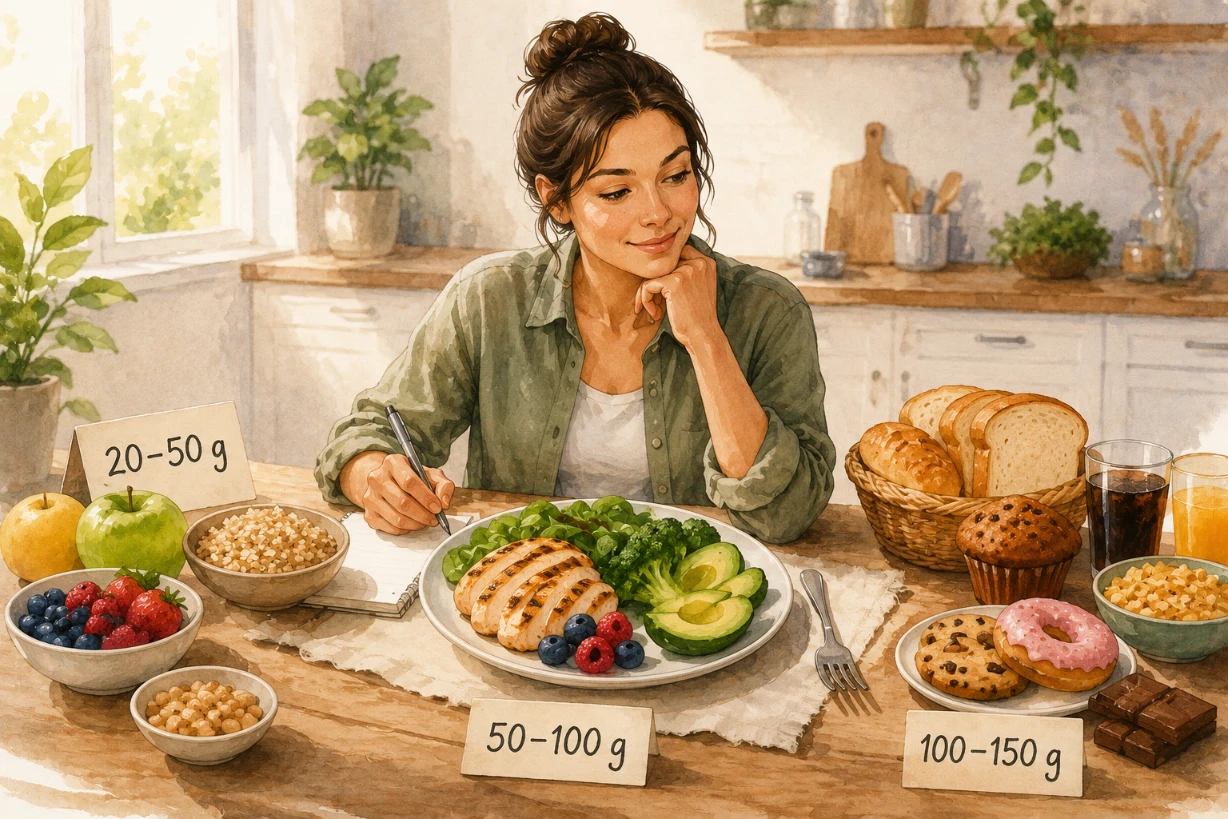

How many carbs are in a low carb diet is a question most of us ask right after we decide we want to lose some weight, manage blood sugar, or just stop feeling sleepy after meals. We hear phrases like low carb, keto, moderate carb, but the numbers behind them often stay fuzzy. That confusion can lead to frustration, because we dont really know if we are actually eating low carb or not.
What Does “Low Carb Diet” Actually Mean?
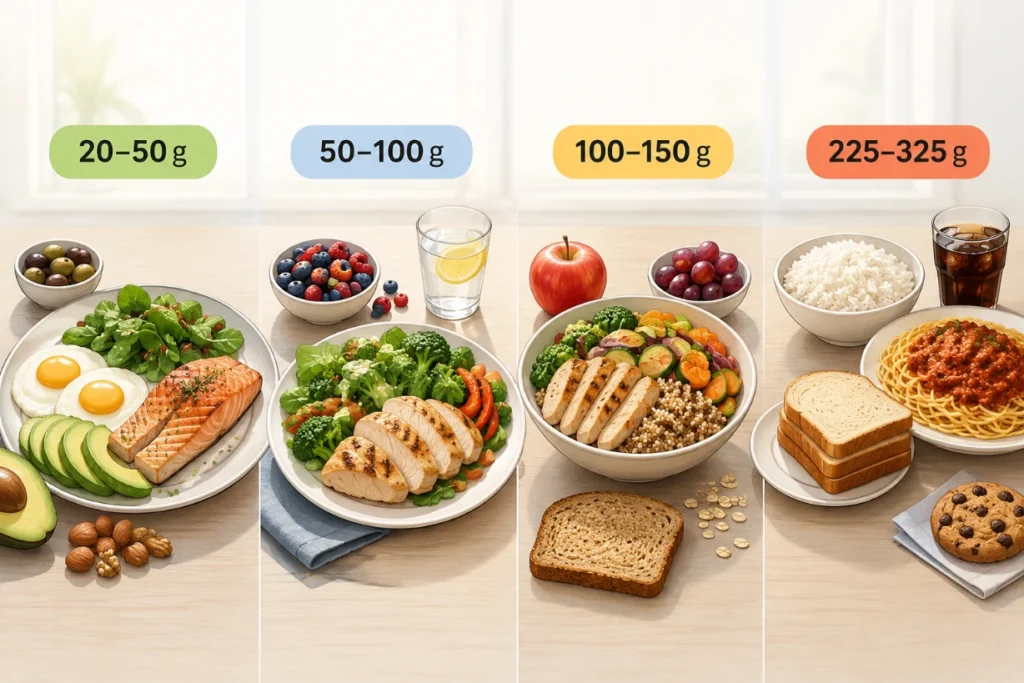
There is no single official rule for how many carbs are in a low carb diet, but nutrition researchers and medical groups use some common ranges to describe carb intake. When we talk about carbs, we mean all digestible carbohydrates: starch, sugar, and the natural sugars in fruit and dairy. Fiber is usually counted separate because it is not digested the same way.
Here is a useful guideline that many studies and clinicians use:
| Carb level | Grams of carbs per day | Percent of calories from carbs | Typical goal |
|---|---|---|---|
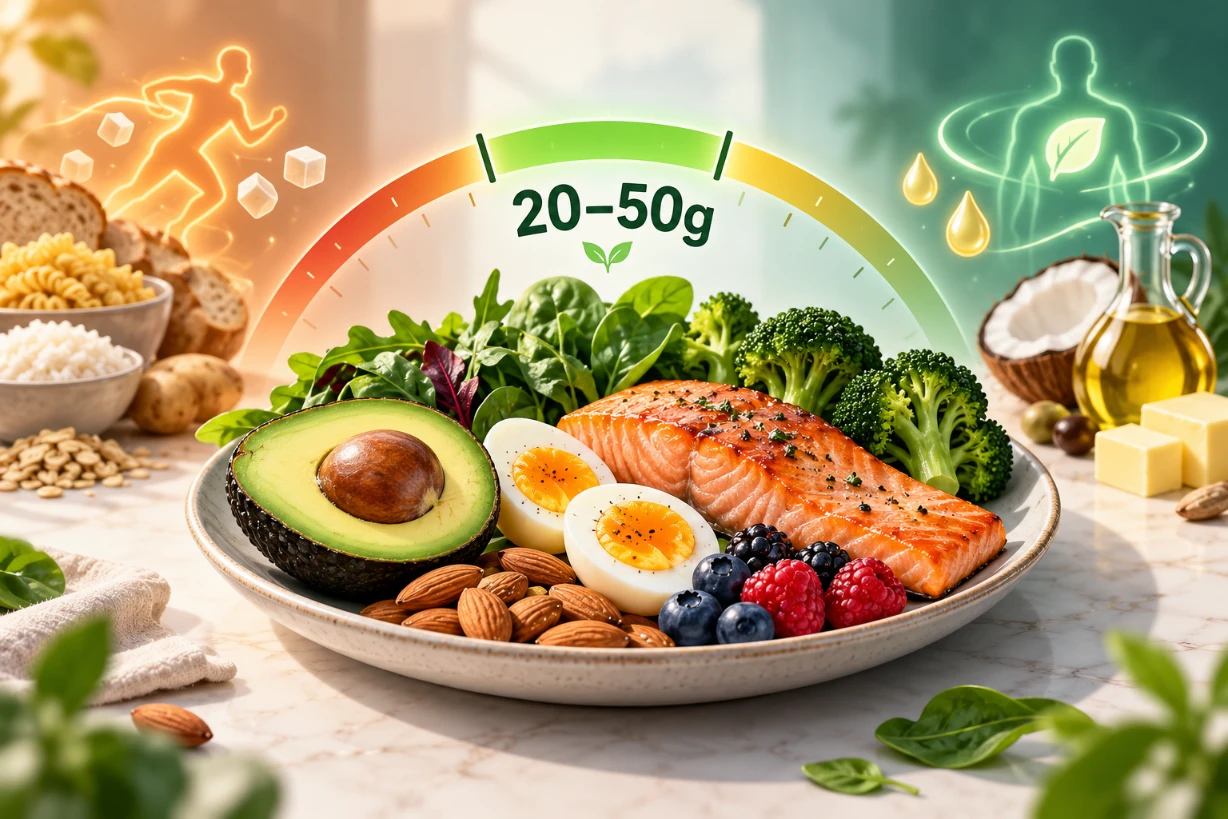
| Very low carb / strict keto | 20 to 50 g | About 5 to 10 percent | Nutritional ketosis, fast blood sugar and weight changes |
| Low carb | 50 to 100 g | About 10 to 20 percent | Weight loss, better blood sugar, still some fruit & starch |
| Moderate carb | 100 to 150 g | About 20 to 30 percent | Weight maintenance, active lifestyles |
| Typical Western diet | 225 to 325 g | About 45 to 65 percent | No specific carb restriction |
So if we ask how many carbs are in a low carb diet, the straight answer is usually between 20 and 100 grams per day, depending on how strict we want to be. Most people who say “I am low carb” are somewhere in that range.
How Many Carbs Do Most Americans Eat Now
To understand what “low” means, it helps to compare it to what most people currently eat. Based on recent NHANES data in the United States, adults often get around 45 to 50 percent of there calories from carbs. For a 2,000 calorie diet, that usually comes out to about 225 to 250 grams of carbs per day.
So even dropping to 150 grams per day is a big shift for the average person. Going all the way down to 50 grams or less can feel like a totally different way of eating at first. Many readers tell me the first week feels awkward, but once they have a simple list of foods they rely on, it starts to feel normal.
Different Types Of Low Carb Diets And Their Carb Limits
Very Low Carb Or Ketogenic: 20 To 50 Grams Per Day
This level is what most people call “keto”. At this intake, many bodies enter nutritional ketosis, meaning we burn more fat and make ketones for fuel. Research from 2022 and 2023 on type 2 diabetes often uses this range when testing keto diets in clinical trials.
Typical features at 20 to 50 grams of carbs:
- Carbs mainly from non starchy vegetables and some dairy
- Little or no bread, pasta, rice, or sugary snacks
- Fruit very limited, maybe a few berries
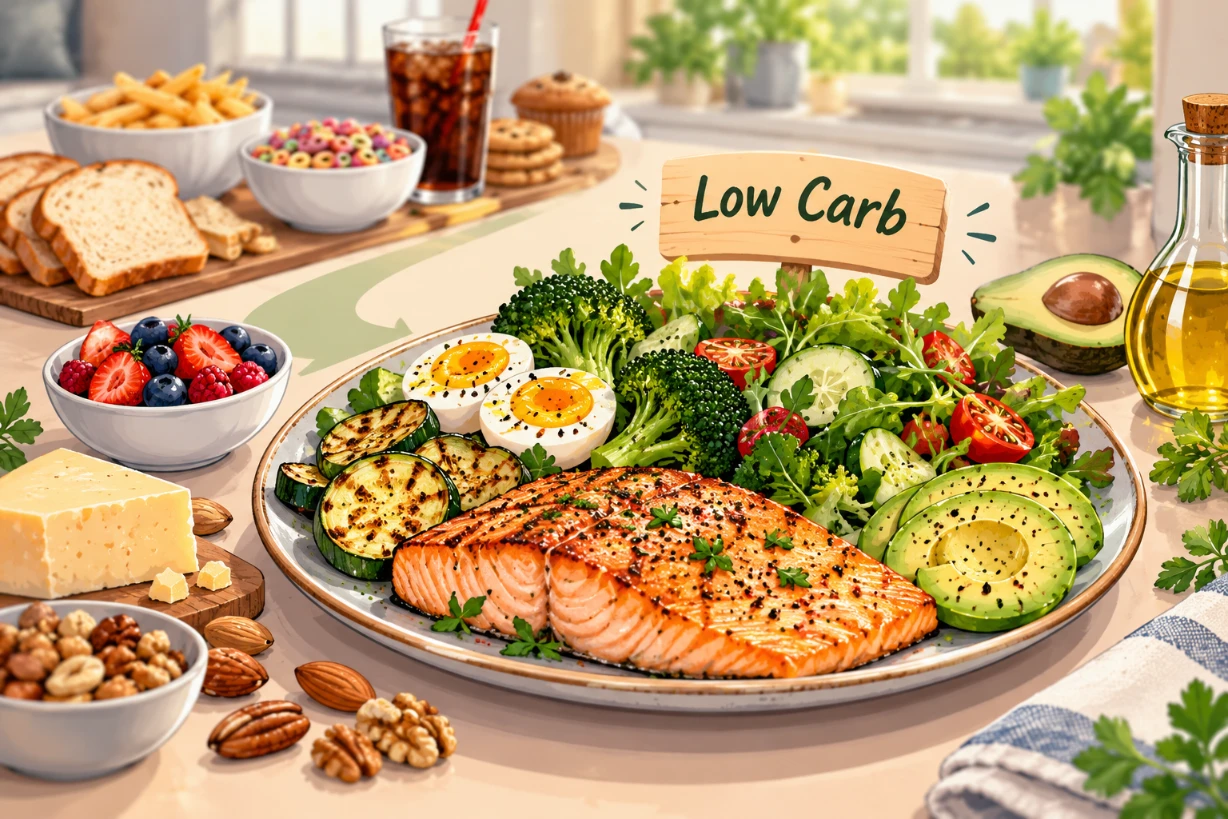
- Higher fat intake from healthy sources like avocado, olive oil, eggs, and fatty fish
Who this might suit:
Based on current research and what we see in practice, this level can be helpful for people with type 2 diabetes, insulin resistance, or major weight loss goals. However it is also more demanding, so it can be hard to maintain without planning and social support.
Standard Low Carb: 50 To 100 Grams Per Day
This is what many health conscious people mean when they ask how many carbs are in a low carb diet for weight loss without going full keto. At this level we can usually enjoy:
- 1 to 2 servings of fruit per day (for example, a small apple and some berries)
- Occasional small portions of whole grains or root vegetables
- Still plenty of non starchy vegetables, meat, fish, eggs, nuts, and seeds
Many people can lose weight and improve there blood sugar in this range without feeling like they are on a extreme diet. In my experiance, this is often where a busy parent or office worker feels most balanced: less hunger swings, but also not as restrictive as strict keto.
Moderate Low Carb: 100 To 150 Grams Per Day
This level is sometimes called “lower carb” rather than low carb, but it still represents a big shift away from a typical U.S. diet.
At 100 to 150 grams per day, we generally can fit in:
- 2 to 3 servings of fruit daily
- 1 to 2 servings of whole grains or starchy vegetables
- Plenty of vegetables and protein
Active individuals, people who enjoy running, lifting, or intense fitness classes, often find this range works well. It supports glycogen stores for exercise while still lowering carb load compared to a standard high carb pattern.
How To Choose Your Daily Carb Target
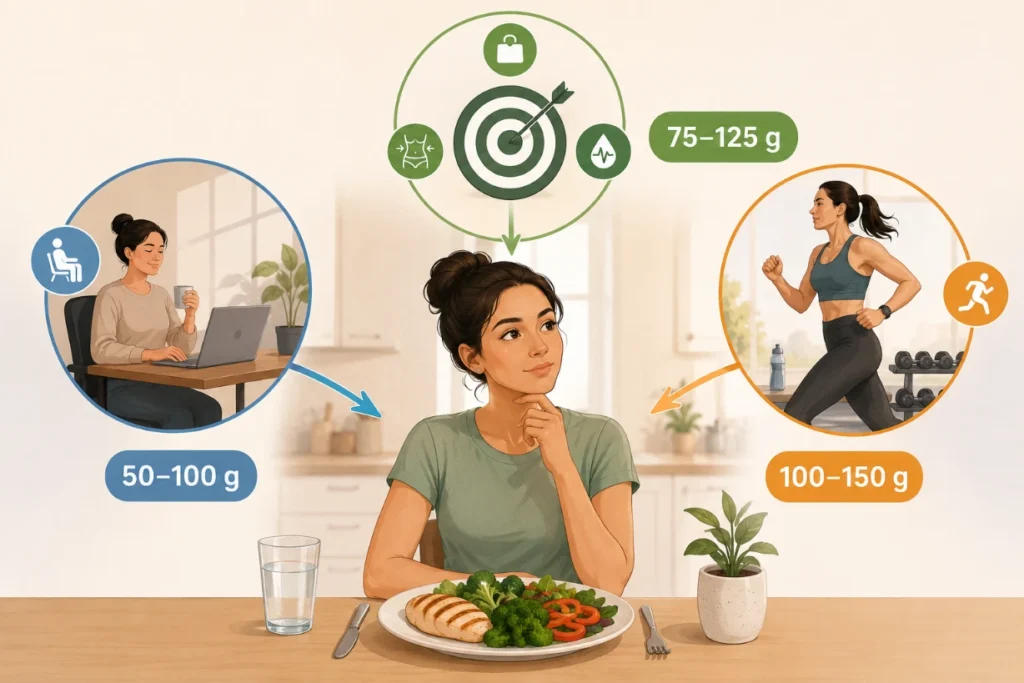
When we talk about how many carbs are in a low carb diet, the more practical question is: how many carbs are right for us personally. That answer depends on health goals, medical history, and daily routine.
1. Your Main Health Goal
Different goals may do better with different carb ranges:
- Fast weight loss or major insulin resistance: 20 to 50 grams per day can give stronger metabolic shifts, but should be done carefully, especially if we take medication.
- Gradual, steady weight loss: 50 to 100 grams per day is usually enough to see progress, and may feel more sustainable.
- Weight maintenance and energy balance: 100 to 150 grams can support stable weight and strong workout performance.
2. Activity Level
Someone who sits most of the day usually does not need as many carbs as someone who cycles, lifts, or does construction work. Carbs act as fuel. If muscles are not demanding much, extra carbs are more likely to store as fat over time.
A rough idea:
- Sedentary or lightly active: 50 to 100 grams may be plenty.
- Moderately active (walking, home workouts): 75 to 125 grams often works.
- Very active (heavy training, sports): 100 to 150 grams, or even more on intense days, can be helpful.
3. Medical Conditions And Medications
Low carb diets have been studied quite a bit for diabetes, metabolic syndrome, fatty liver, and PCOS. For example, studies published between 2022 and 2024 keep showing that lowering carb intake can drop A1c and fasting glucose in people with type 2 diabetes.
However, if we take medications that lower blood sugar (like insulin or sulfonylureas), cutting carbs quickly can make blood sugar go too low. That is why any significant carb reduction should be discussed with a healthcare provider who can adjust meds safely.
Net Carbs Versus Total Carbs: Which Number Matters
When we read food labels, we see “Total Carbohydrate”, “Dietary Fiber”, and maybe “Total Sugars” and “Added Sugars”. Many low carb plans focus on net carbs rather than total carbs.
Net carbs are generally calculated like this:
Net carbs = Total carbs – Fiber – Sugar alcohols (sometimes)
The logic is that fiber does not raise blood sugar the same way digestible starch and sugar do. For many people, counting net carbs makes room for more vegetables and high fiber foods without “breaking” there daily carb limit.
Example: a cup of broccoli might have 6 grams of total carbs and 2.5 grams of fiber. That would be about 3.5 net carbs. Under a 50 gram net carb plan, we can fit a generous amount of non starchy vegetables like this.
What 20, 50, 100, And 150 Grams Of Carbs Look Like In Real Food
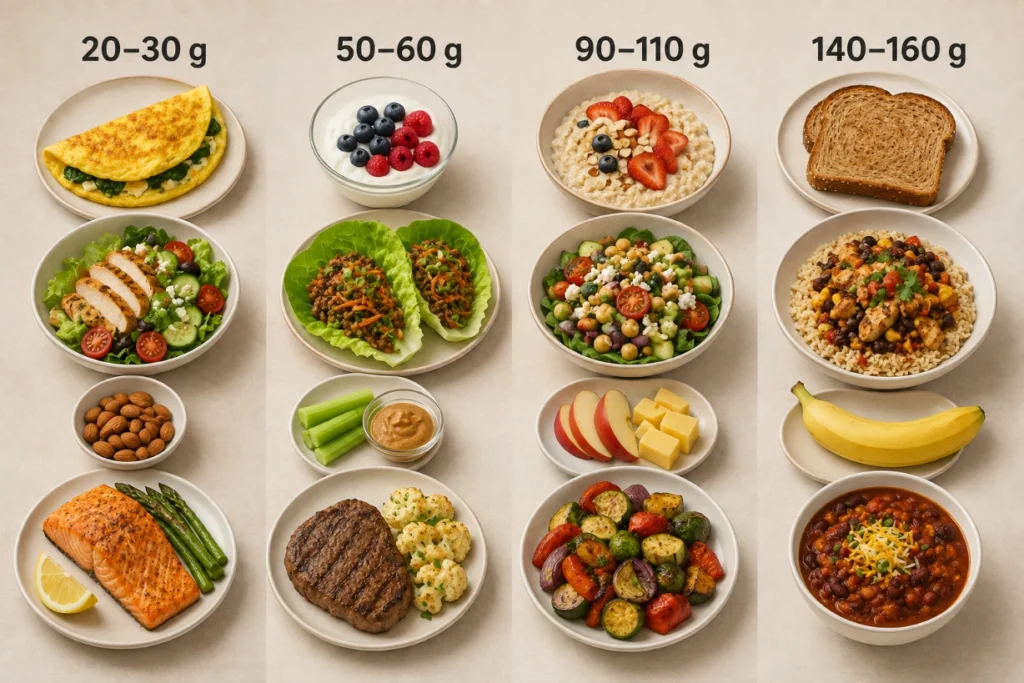
The numbers sound abstract until we picture actual plates. Lets walk through four sample days to see how many carbs are in a low carb diet at different levels. These are rough estimates, not exact meal plans.
Example Day At 20–30 Grams Of Carbs (Very Low Carb)
Breakfast: Omelet with spinach, mushrooms, cheddar, cooked in olive oil (about 4 to 5 g net carbs)
Lunch: Chicken salad with leafy greens, cucumber, olive oil dressing (about 5 g net carbs)
Snack: 10 almonds (about 2 g net carbs)
Dinner: Salmon with roasted asparagus and a side salad (about 6 to 8 g net carbs)
Evening: Herbal tea with a spoon of heavy cream (1 g net carb or less)
Total: roughly 20 to 25 grams of net carbs.
Example Day At 50–60 Grams Of Carbs (Standard Low Carb)
Breakfast: Greek yogurt (plain, full fat) with a small handful of berries (around 15 g net carbs)
Lunch: Turkey lettuce wraps with avocado, tomato, and cheese (about 10 g net carbs)
Snack: Celery sticks with peanut butter (about 5 g net carbs)
Dinner: Grilled steak, cauliflower mash, green beans (about 15 g net carbs)
Evening: Small square of dark chocolate (about 5 g net carbs)
Total: about 50 to 55 grams of net carbs.
Example Day At 90–110 Grams Of Carbs (Moderate Low Carb)
Breakfast: Oatmeal (small portion) cooked in milk with cinnamon and a few walnuts (about 35 g net carbs)
Lunch: Big salad with grilled chicken, chickpeas, and olive oil dressing (about 25 g net carbs)
Snack: An apple with cheese (about 22 g net carbs)
Dinner: Baked chicken thighs, roasted carrots, broccoli (about 20 g net carbs)
Total: roughly 100 grams of net carbs.
Example Day At 140–160 Grams Of Carbs (Lower Than Average, But Not Strict Low Carb)
Breakfast: Whole grain toast with eggs and avocado (about 30 g net carbs)
Lunch: Brown rice bowl with salmon, veggies, and soy sauce (about 50 g net carbs)
Snack: Banana (about 25 g net carbs)
Dinner: Chili with beans and a side salad (about 40 g net carbs)
Total: about 140 to 150 grams of net carbs. Still lower than typical American intake, but not in the classic low carb range.
Where Do Those Carbs Come From
When we learn how many carbs are in a low carb diet, the next logical step is choosing where we want those carbs to come from. Two people can both eat 75 grams a day, but have totally different health outcomes depending on food quality.
We can picture three broad categories:
1. Nutrient Dense, High Fiber Carb Sources
These are the carbs we generally want to keep, even on a stricter plan, as far as possible within our target:
- Non starchy vegetables (leafy greens, broccoli, zucchini, peppers, mushrooms)
- Some low sugar fruits (berries, kiwi, small apples, citrus)
- Legumes and beans (more common on moderate low carb levels)
- Whole grains in small amounts, if they fit our goals
These foods provide vitamins, minerals, and phytonutrients that support long term health. They also give fiber, which helps digestion and appetite control.
2. Refined Or Highly Processed Carbs
These include white bread, pastries, candy, sugary drinks, most fast food buns and fries, and ultra processed snacks. They deliver a lot of carbs with very little nutrition. On a low carb diet, they use up our limited carb budget without giving us much in return.
From a practical view, we often see the biggest changes in blood sugar and cravings when these foods are removed or cut way back, even before total carb grams get very low.
3. Natural Sugars From Fruit And Dairy
Milk, yogurt, fruit, and some vegetables carry natural sugars like lactose and fructose. In a very low carb plan, these may need to be limited. On a moderate low carb plan, they often fit quite well, especially when paired with protein and fat to slow digestion.
For example, a bowl of plain Greek yogurt with a few berries is very different metabolically than a sweetened fruit flavored yogurt with added sugar, even if the carb number looks similar.
Pros And Cons Of Eating Low Carb
Knowing how many carbs are in a low carb diet only matters if we also weigh the practical pros and cons for our life. Research over the last few years gives a more nuanced picture than the simple “carbs are bad” or “fat is bad” arguments from the past.
Potential Benefits
- Weight loss and smaller waistline: Many studies, including recent trials, show that low carb diets often lead to greater early weight loss compared to low fat diets, especially in the first 6 to 12 months.
- Better blood sugar control: For people with diabetes or prediabetes, less carb means less glucose load. Some people reduce or stop medications under medical guidance.
- Lower triglycerides and higher HDL: This pattern can support heart health, though LDL may sometimes rise in certain people.
- Reduced hunger for some people: Higher protein and fat intake can lead to more satiety, so it feels easier to eat less without forcing it.
Possible Drawbacks Or Challenges
- Social and cultural fit: Meals with family and friends often center around bread, pasta, rice, and desserts. It may feel awkward to navigate at first.
- Initial side effects: Headache, fatigue, or irritability during the first week or two are common when carbs are cut quickly. People often call this “keto flu”. Hydration and electrolytes can help.
- Risk of nutrient gaps: If someone goes low carb but mostly eats processed meats and cheese, they may miss out on important plant nutrients and fiber.
- Not ideal for everyone: Certain medical conditions, pregnancy, or eating disorder history require extra care and professional guidance.
How To Start A Low Carb Diet Safely
Once we decide how many carbs are in a low carb diet that fits our goal, the next step is implementation. Here are practical moves that usually make the shift smoother.
1. Set A Clear Carb Range For 2 To 4 Weeks
Pick a target, like 50 to 75 grams of carbs per day, and treat it as an experiment rather than a lifelong contract. This frame lowers the pressure and lets us focus on what we learn from our body.
2. Build Your Meals Around Protein And Non Starchy Veggies
If we place protein first, it becomes easier to keep carbs in check and avoid random snacking. Good base options include eggs, chicken, fish, beef, tofu, tempeh, and Greek yogurt, paired with salads and vegetables.
For readers intrested in animal focused patterns, some prefer options like ribeye, liver, and dairy as central foods. For ideas along those lines, you might explore this resource on animal based recipes: https://dietlinic.com/animal-based-diet-meal-ideas-recipes/
3. Decide Your “Non Negotiable” Foods
Many diets fail because they ignore the foods we emotionally care about. For some, that might be fruit, for others it is a weekly family pasta night. We can plan around these instead of pretending they dont exist.
For example, if we truly love fruit, a moderate low carb range of 75 to 120 grams might be more realistic than strict keto. We keep carbs lower at other meals and put more of our daily carbs into those cherished foods.
4. Hydrate And Manage Electrolytes
Lowering carbs can make our body release water and sodium initially. That is why headaches, fatigue, and muscle cramps show up in the first week for some people.
Simple steps that often help:
- Drink enough water, spread through the day
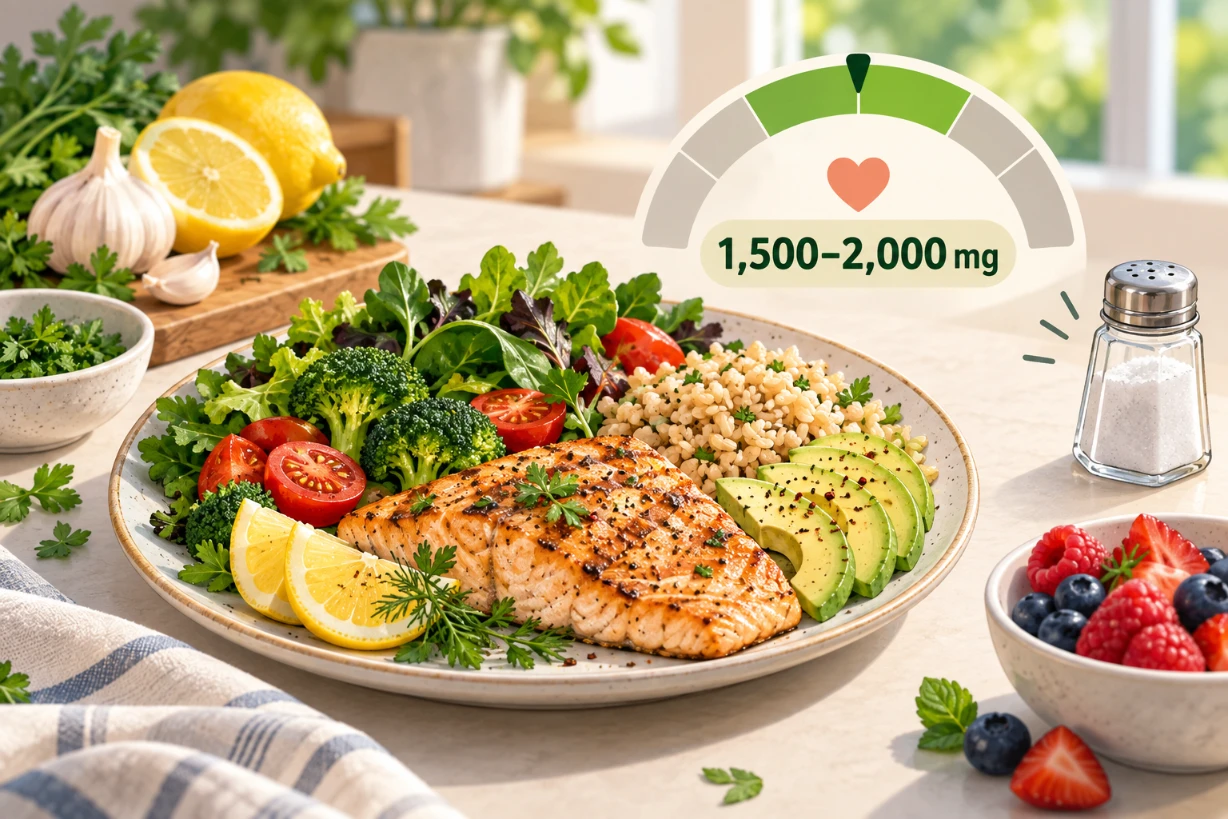
- Include some salt in meals, unless medically restricted
- Focus on potassium rich low carb foods like leafy greens and avocados
5. Track For A Short Period, Then Move To Visual Cues
Food tracking apps or a paper log can teach us how many carbs are in certain portions of food. After a couple weeks, many people can estimate well enough to stop tracking daily. We get a feel for which foods fill our carb bucket quickly and which ones barely move the needle.
How Low Carb Fits With Other Eating Styles
Low carb is not the only evidence based pattern. Mediterranean style diets, plant heavy diets, and animal based diets all have followings right now. Some readers ask if they need to “pick a side”. In real life, there is often more overlap than we expect.
For example, someone can eat lower carb and still follow many Mediterranean principles, focusing on olive oil, fish, vegetables, nuts, and some dairy. For those curious, here is a guide to foods common in that style: https://dietlinic.com/what-foods-are-in-the-mediterranean-diet/
Others prefer comparing animal based and plant based patterns, and then layering a carb target on top. The same carb number can look totally different depending on which side of that spectrum we lean toward.
Frequently Asked Questions About Carbs And Low Carb Diets
Is 100 Grams Of Carbs A Day Considered Low Carb?
Yes, for most people 100 grams per day is within the low carb or lower carb category, especially compared to the typical 225 to 300 grams many Americans eat. It is not “very low carb” or classic keto, but it usually leads to noticeable improvements in energy and appetite for many individuals.
How Few Carbs Is Too Few?
Some people go down to 20 or even fewer grams of carbs per day, often as part of a therapeutic ketogenic diet. Short term, this can be safe for many adults if they are otherwise healthy and get enough protein, minerals, and vitamins.
Long term, it becomes more important to check whether our chosen foods cover nutrient needs. If we cut out most plant foods and dairy, we need to be very intentional about micronutrients. People with certain medical conditions, children, and pregnant women should only try very low carb under close medical supervision.
Can We Do Low Carb Without Eating A Lot Of Meat?
Yes, though it can be a bit more challenging, especially below about 50 grams of carbs. Plant based proteins like tofu, tempeh, seitan (for those who tolerate gluten), and high protein soy yogurt can help. Nuts, seeds, eggs, and cheese (if we consume dairy) also support protein needs.
On a plant forward low carb plan, carbs might end up closer to 75 to 130 grams per day, which still counts as low or moderate low carb compared to typical intakes.
Do We Need To Be In Ketosis For Low Carb To Work?
No. Ketosis is more relevant for very low carb diets (usually under 50 grams of carbs per day). Many people see better weight control and blood sugar with 75 to 125 grams of carbs without ever measuring ketones. The key is how our body responds, not just a lab strip color.
Putting It All Together: Defining “Low Carb” For Yourself
So, how many carbs are in a low carb diet. From a practical standpoint, most definitions fall between 20 and 100 grams of carbs per day, sometimes stretching up to 150 grams for very active people or those who want a gentler approach.
The most helpful question is not just “What do experts say,” but “At what carb level do I feel steady energy, manageable appetite, and progress toward my goals.” Finding that sweet spot often takes 2 to 4 weeks of honest experimenting, tracking, and noticing how our body responds.
When we use carbs with intention instead of autopilot, low carb stops being a vague buzz phrase and becomes a clear, personal tool. We know how many grams we aim for, where they come from, and how they fit into the life we actually live, not some perfect schedule on paper.





Leave a Reply