
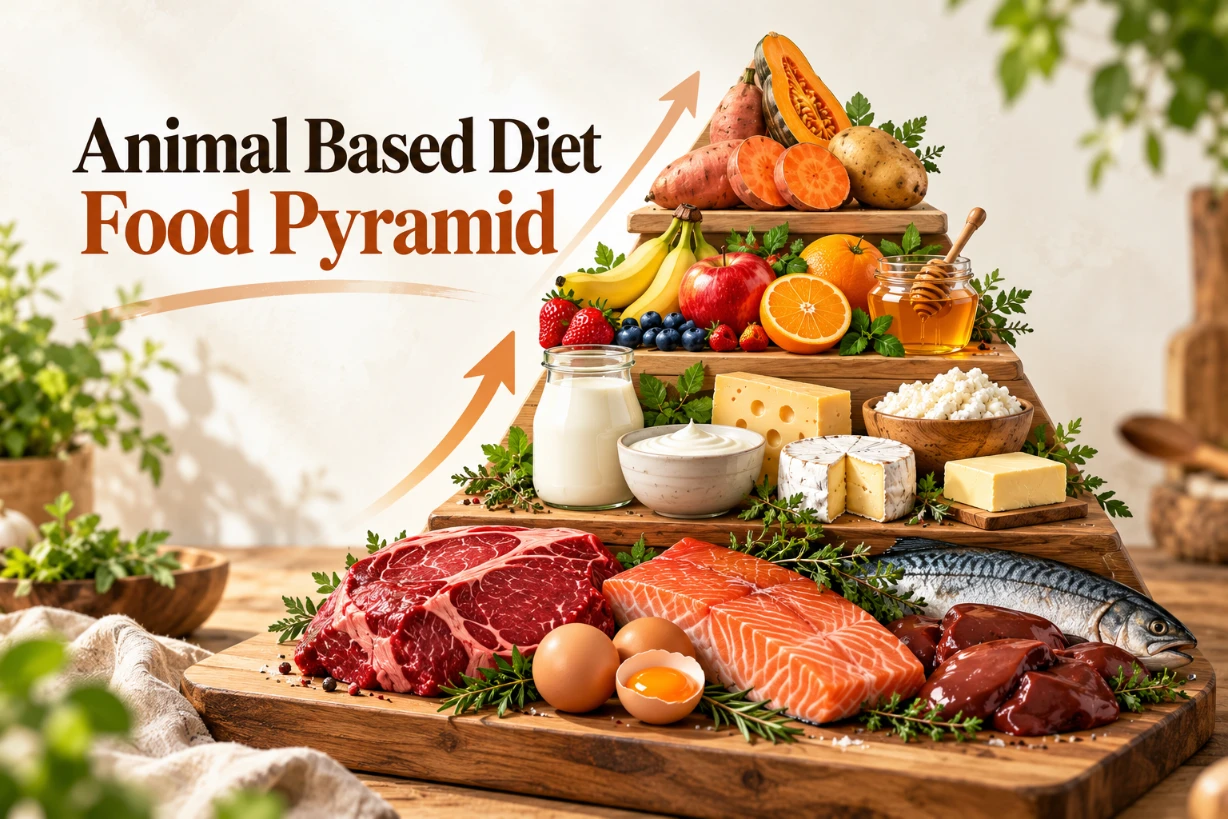

For many of us who care about strength, clarity, and how food actually make us feel, an animal based diet food pyramid offers a clear map. This guide lay out an animal based diet pyramid that balances nutrient density with comfort and taste. We focus on whole foods, nose-to-tail variety, smart carbs from fruit and roots, and methods you can follow on busy weeks. If you have been confused by conflicting charts, this version goes deep and stays practical, so you can cook dinner tonight and still plan next month.
What We Mean By An Animal Based Diet Food Pyramid
An animal based diet prioritizes animal foods as the most nutrient dense parts of the plate, then supports them with select fruits, roots, herbs, and minimal processing. We center ruminant meats like beef, bison, and lamb, along with eggs, seafood, dairy when tolerated, and organ meats for micronutrients. The animal based diet food pyramid below is flexible enough for athletes, parents, and anyone who wants better energy with fewer cravings.
Core Principles That Keep This Pyramid Grounded
We use a simple logic. Animal foods supply complete proteins and highly bioavailable vitamins and minerals. Fruits and certain roots offer clean carbs that digest gentle for many people. Fats from animals give steady fuel that dont spike you up then crash you down. Processed snacks slide far to the top of the pyramid because they add stress without much nutrition.
- Protein first – about 0.7 to 1.0 grams per pound goal body weight, adjusted for training age and recovery.
- Fats from whole animal foods for steady energy and vitamin absorption.
- Carbs targeted – fruits and roots around training, work days, and seasons.
- Minimal seed oils, minimal sugar beyond fruit and honey used with intent.
The Animal Based Diet Pyramid – Tier By Tier
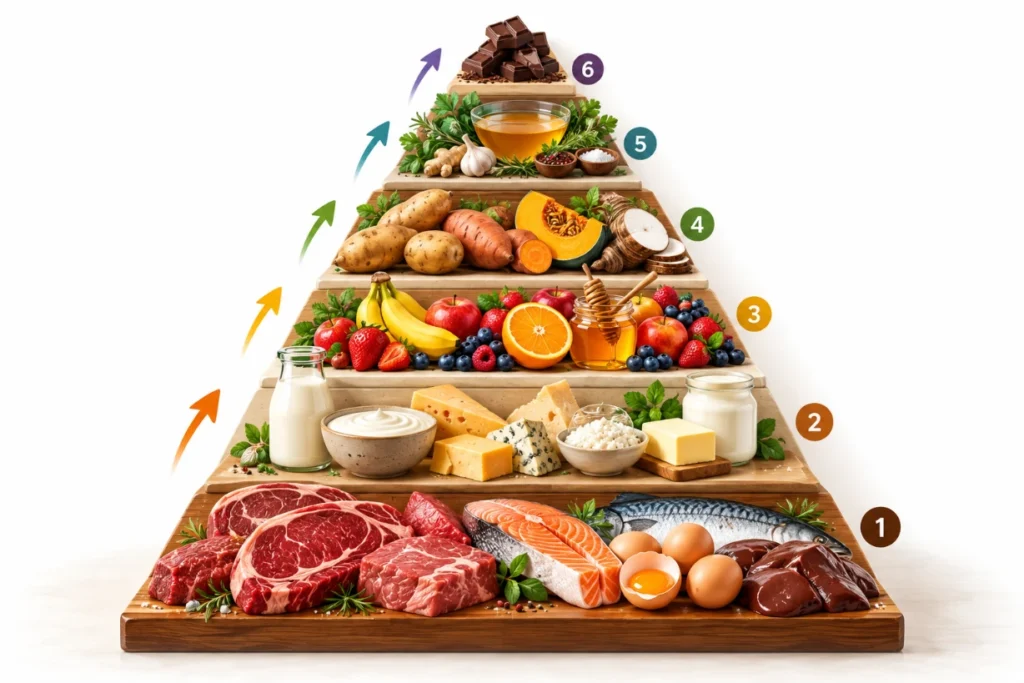
Use this table to understand what sits where, how often to eat it, and why it matters. Numbers isnt rules, they are signals. Listen to your body, and check how meals affect sleep, digestion, and mood.
| Tier | Foods | Frequency | Why It Matters |
|---|---|---|---|
| 1 – Foundation | Ruminant meats, eggs, wild or low-mercury fish, organ meats | Daily | Complete protein, iron, B12, zinc, DHA, choline, fat-soluble vitamins |
| 2 – Support | Full-fat dairy if tolerated – yogurt, kefir, aged cheese, butter, ghee | Daily to several times weekly | Calcium, K2, probiotics, easy calories for active days |
| 3 – Clean Carbs | Whole fruit, honey, some raw dairy sugar in moderation | Daily or training days | Glycogen support, antioxidants, potassium, fiber types many digest well |
| 4 – Roots and Tuber Options | White potatoes, sweet potatoes, squash, taro, yucca | Several times weekly | Satiating carbs, minerals, fuel for work capacity |
| 5 – Flavor Boosters | Herbs, spices, bone broth, fermented condiments with simple ingredients | As desired | Polyphenols, collagen, culinary joy, digestion support |
| 6 – Rare Treats | Dark chocolate, homemade desserts using fruit or honey, gluten-free flour blends | Occasional | Pleasure foods that respect blood sugar and gut calm |
Tier 1 – The Foundation Plate
Ruminant meat anchors the foundation because it is reliable, rich, and satisfying. A pan-seared ribeye smells like browned butter and summer smoke, but it also brings iron your body absorb well. Rotate cuts to manage budget and texture: ground beef, chuck roasts, bison sirloin, lamb shanks. Eggs add choline for brain health and feel almost like edible sunshine when you crack them into hot ghee. Fish such as salmon, sardines, or mackerel supply omega-3s that quiet down inflammation and support focus. Organ meats like liver once or twice a week keep micronutrient boxes checked without supplements.
How much to eat depends on output. If you lift or run, eat more total protein. If you sit more days, you still need protein to maintain muscle, so dont cut it too low. Fish portions might be 4 to 8 ounces per serving, eggs 2 to 4 at a time, red meat often 6 to 10 ounces for dinner in a single sitting, but appetite is a honest coach.
Cooking Notes That Save Time
Batch brown ground beef with sea salt and garlic, store in glass containers, and you can build lunches fast. Slow cook shanks on Sunday and slice leftover cold, it taste even better next day. For fish, keep it simple – salt, pepper, lemon. It is clean and it doesnt stink up the whole kitchen if your pan is hot.
Tier 2 – Dairy As A Helpful Ally
Dairy can be a friend or a roadblock. If you tolerate lactose and casein, full-fat yogurt, kefir, aged cheeses, and butter support calories, calcium, and vitamin K2. If dairy bloats you or cause skin flare, pull it for 30 days and re-test with one food at a time. Milk can works for some who train hard, but others feel better with fermented options. We love ghee for high heat cooking because milk solids are removed and flavor is rich.
Tier 3 – Fruit and Honey For Clean Carbs
Fruit refreshes the plate and soul. Cold oranges on a hot afternoon, crisp apples after a long walk, ripe berries that stain your fingers purple. Fruit brings potassium and vitamin C, and when paired with steak or eggs it supports better training sessions. Honey can be used around workouts or evenings when you need a gentle glycogen top up for sleep. If you want more detail on choices, this guide helps with variety and timing: fruits you can eat on an animal based diet.
Tier 4 – Roots, Tubers, and Squash When You Need More Fuel
Not everyone thrives on low carbs. If your energy dips hard, your sleep gets choppy, or your training stalls, try adding potatoes, sweet potatoes, squash, or yucca. Salt them well. Roast until edges go a little crispy and insides turn fluffy. These carbohydrates are simple to digest for many and fit clean inside an animal based framework. On heavy squat days or long hikes, they help you recover without feeling puffy.
Tier 5 – Flavor, Broth, and Ferments
Herbs and spices round meals into something you want again tomorrow. Rosemary on lamb, thyme and lemon zest on fish, cumin with ground beef. Bone broth adds collagen and a calm savory aroma that remind us of home kitchens. Choose ferments like sauerkraut or raw pickles that have short ingredient lists – they can support digestion for some, but others may feel gassy, so test slowly. Season your food. Salt is not the enemy when you cut processed snacks, and electrolytes often need attention.
Tier 6 – Occasional Treats With Respect
Food is culture and comfort, not just fuel. A square or two of dark chocolate, a cheesecake made with strained yogurt and honey, or bananas fried in butter for a weekend breakfast can fit if it doesnt send you into a spiral. We practice awareness here – enjoy the treat, then return to the foundation at the next meal, no guilt and no drama.
Portions, Macros, And A Sample Day
Macro ratios depend on tolerance and goals. A common starting place is 30 to 40 percent protein by calories, 40 to 60 percent fat, and carbs flexing 0.2 to 1.0 grams per pound of bodyweight depending on activity. If your blood sugar are high or you have stubborn cravings, lower carbs for a few weeks and see if things calm down. If workouts feel flat, add fruit or potatoes pre and post training.
A Simple Day Of Eating

Breakfast – 4 eggs fried in ghee, 6 ounces grass-fed beef sausage you made at home, and a bowl of strawberries with a spoon of raw cream.
Lunch – Leftover lamb roast sliced cold with sea salt, arugula salad with olive oil, baked sweet potato with butter.
Dinner – Pan seared salmon with lemon, roasted potatoes in beef tallow, bone broth with parsley. For dessert, a baked apple with cinnamon and a drizzle of honey if you trained that day.
If you want recipes and ways to keep it interesting, see these animal based diet meal ideas and recipes.
Hydration, Salt, And Electrolytes
When you move away from processed foods, sodium intake can fall. Headaches, low energy, or cramps sometimes show up. Add mineral salt to food liberally. Consider a pinch of salt in water once or twice daily, and include potassium from fruit or coconut water as needed. If you sweat heavy, you need more, not less. Thirst signals are decent but not perfect, so plan ahead.
Benefits You Can Feel And See
People often report steadier energy across the day, fewer swings in hunger, improved lipid markers, and better body composition. Skin sometimes clear up, digestion feels calmer, sleep deepen. We cannot promise miracles, but when you base meals on nutrient dense animal foods and dial carbs with intent, many systems of the body stop shouting and start cooperating. It feels quieter inside, like the mental fog has lifted and decisions become easier.
Who Might Thrive And Who Should Proceed Carefully
- Great fit – active adults, people who struggle with cravings, those sensitive to gluten and seed oils, busy parents needing simple meals that actually satisfy.
- Proceed with care – individuals with chronic kidney disease, gallbladder issues, or those needing strict carbohydrate control due to medical advice. Pregnant or breastfeeding women should eat enough carbs and calories for hormone balance.
- If you take medications for blood sugar or blood pressure, speak with your clinician because diet changes can shift needs fast.
Vegetables – What To Avoid Or Limit On An Animal Based Approach
Some vegetables are fine for many people, but others trigger bloating, reflux, or joint discomfort. If you suspect certain plants hit you wrong, trial a period without high lectin or high oxalate items, then reintroduce one at a time. For a deeper cut on this topic, read animal based diet vegetables – what to avoid.
Keto Versus Animal Based – Important Differences
People sometimes confuse keto with animal based eating. Keto is a carbohydrate threshold strategy where fat is the primary fuel. Animal based is a food-quality strategy where animal foods sit at center and carbs from fruit and select roots are used as needed. You can be animal based and low carb, or animal based with moderate carbs. That flexibility helps sustainability. For a detailed comparison, see animal based diet vs keto.
How To Start – A 30 Day Framework

Week 1 – Build the base. Eat red meat or fish daily, eggs most mornings, add fruit once or twice per day, and cut seed oils and refined grains. Notice sleep, bowel movements, and cravings. They tell you a lot.
Week 2 – Tune carbs. If you feel sluggish, increase fruit to 2 to 4 servings or add a potato at dinner. If cravings still shout, pull back on snacking and add more protein and salt with meals.
Week 3 – Test dairy and organ meats. A few ounces of liver or heart, once or twice. Try yogurt or kefir – if skin or sinuses get weird, pause dairy and re-test later. It not a failure, it just feedback.
Week 4 – Lock routines. Batch cook, freeze portions, keep a fruit bowl on the counter, and schedule grocery runs. Systems make this easy when life gets messy.
Shopping And Budget Tips
Buy family packs of ground beef, chuck roasts, and chicken thighs, then portion and freeze. Canned fish like sardines in olive oil are affordable and portable. Choose seasonal fruit – in-season often taste better and cost less. Butter and ghee last a long time in the fridge, so stock up when there is a sale. We like to plan 2 to 3 anchor proteins per week and rotate sides so meals dont feel repetitive.
For a broad overview of this eating pattern and how to personalize it, bookmark animal based diet. It helps tie together big ideas with daily habits.
FAQs About The Animal Based Diet Pyramid
Do I need organ meats every day
No. Once or twice per week is enough for most people. If you hate the taste, you can mince liver into ground beef, it disappears. Or make a pate with butter and spices so it spreadable and friendly.
Can I do this if I am an endurance athlete
Yes, but carbs likely need to be higher. Use fruit and honey in smoothies, and add potatoes or rice if you tolerate them. On long training blocks, your needs go up, so dont fear fuel. Recovery improves when glycogen is restored.
What about fiber
Fruit, cooked roots, and collagen-rich cuts provide gentle fibers and gelatin that many guts prefer. If you feel constipated, increase fluids, salt, and magnesium-rich foods. Too much raw roughage can actually slow you down.
How do I manage cholesterol
Dietary cholesterol does not equal blood cholesterol in a simple way. Many people see improved triglycerides and HDL profiles on this pattern. Work with your clinician, check labs after 8 to 12 weeks, and adjust fat sources if needed. Incorporating fatty fish regularly helps, as does daily movement and sleep that is consistent.
Signs Your Pyramid Is Working
You wake up hungry but calm. Meals keep you satisfied for 4 to 6 hours. Afternoon crashes fade. Workouts go better, and your joints creak less. Bloating reduces, and cravings lose their grip. Clothes fit different, and the mirror feel like a friend again. These aren’t fireworks, they are steady lights that tell you physiology is getting organized.
Common Mistakes And Easy Fixes
- Too little salt – fix by salting food and sipping electrolytes on training days.
- Under-eating protein – add 4 to 6 ounces at lunch and note how snacks just arent needed.
- Cutting carbs too low for your lifestyle – add fruit around workouts, then reassess sleep and mood.
- Forgetting to rotate fish and organ meats – set calendar reminders, it keeps nutrients balanced.
- Overcomplicating – simple meals done consistently beats fancy plans done rarely.
Cooking Methods That Respect Nutrients
Use gentle heat for fish and eggs so proteins dont go rubbery. Sear red meat quickly, then finish low and slow until the center is just how you like it. Pressure cook tough cuts to preserve minerals in the juices. Save the drippings and pour over veggies or potatoes, do not waste the flavor. Keep smoke points in mind – ghee, tallow, and butter are stable and taste right with these foods.
Where To Get Support
Community makes changes stick. Share meals with family, teach kids to brown meat safely, and plan a weekly grill night. If you need clarity on the basics again, revisit this core overview: animal based diet. Build two new recipes a month so your playbook grows even when life is busy.
Closing Thoughts
An animal based diet food pyramid should serve your real life, not the other way around. We put animal foods at the base because they satisfy and nourish, then we add fruit, tubers, and flavor so eating stays joyful. Keep protein steady, salt your food, and use carbs with purpose. With this animal based diet pyramid as your guide, you can listen to your body, adjust with seasons, and move toward better energy, clearer thinking, and a plate that feels honest and good.






Leave a Reply