


Acid reflux can turn even a simple meal into a uncomfortable experience. When stomach acid flows back into the esophagus, we feel burning in the chest, sour taste in the mouth, and sometimes coughing or hoarseness. Many people search online asking what is a good diet for acid reflux because medication alone often does not fix the root cause. Food choices matter a lot, and the right eating pattern can reduce symptoms day by day.
How Acid Reflux Works And Why Diet Matters
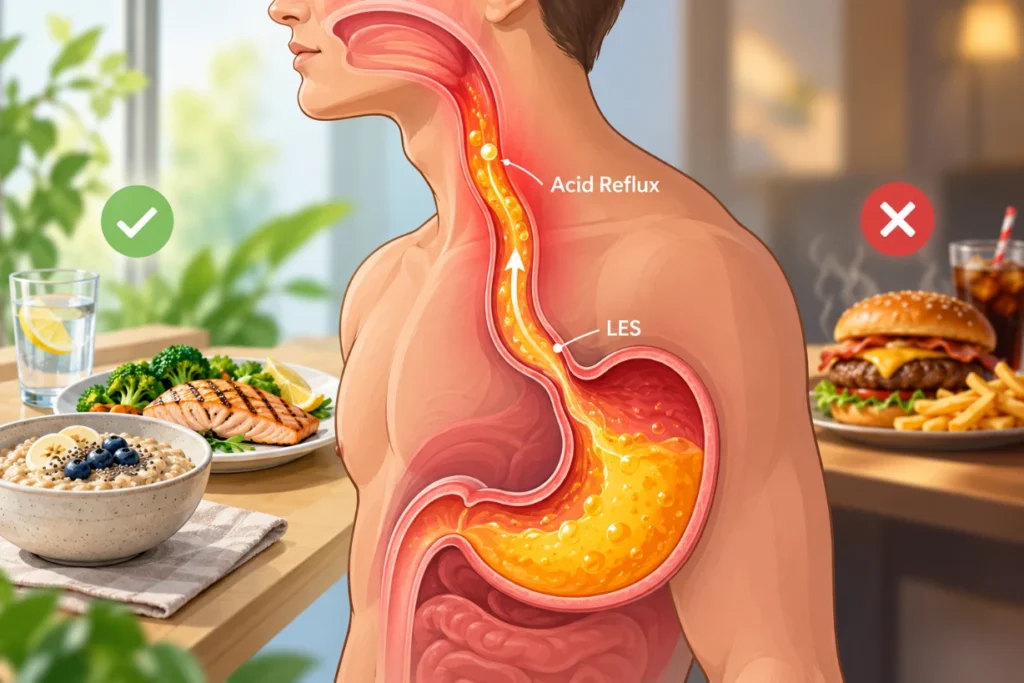
To build a useful plan, we first need to look quickly at what happens inside the body. Between the esophagus and stomach sits a ring of muscle called the lower esophageal sphincter (LES). Normally this valve closes after we swallow, keeping acid in the stomach. With acid reflux or GERD (gastroesophageal reflux disease), the LES becomes weak or relaxes at the wrong time. Then acid and sometimes bile can splash up into the esophagus.
Certain foods relax this valve, slow stomach emptying, or increase acid production. Other foods are gentler. They help the stomach empty smoother, keep pressure in the belly lower, and reduce irritation of the esophagus lining. That is why asking what is a good diet for acid reflux is not a small question. It is central to controlling the whole condition.
Recent data from the American College of Gastroenterology suggests GERD affects about 20 percent of adults in the United States. Many people rely on acid-blocking medication for years, even though lifestyle change, especially diet, can reduce symptoms for many. Based on current research and real life experience with readers, we see the strongest gains when people adjust what they eat, how much they eat, and when they eat.
Core Principles Of A Good Diet For Acid Reflux
Rather than memorize a long list of good and bad foods, it helps to focus on a few core rules. These principles show up again and again in clinical studies and in real kitchens.
1. Smaller Portions, More Often
Large meals stretch the stomach and increase pressure. That extra pressure pushes acid toward the LES. Many patients tell gastro doctors their heartburn is worst after big dinners or late-night restaurant meals. A gentler pattern is to eat 3 smaller meals and 1–2 light snacks instead of 2 huge plates a day.
Practical tips:
- Use a smaller plate at home to naturally reduce serving size.
- Stop eating when you feel about 70–80 percent full, not stuffed.
- Plan your biggest meal at lunch, not late at night.
2. Low To Moderate Fat, Not Heavy Fat
Fat stays in the stomach longer than carbs or lean protein. High-fat restaurant foods, creamy sauces, and fried snacks delay stomach emptying and relax the LES. That slow emptying is a common trigger for more reflux at night.
A good diet for acid reflux does not have to be fat-free. But we focus on:
- Healthy fats like olive oil, avocado in modest portions
- Baked, grilled, or air-fried dishes instead of deep fried
- Leaner cuts of meat and low fat dairy instead of heavy cream or full-fat cheese with every meal
3. Balanced Fiber From Non-Irritating Sources
Fiber helps digestion and may reduce reflux by lowering pressure in the abdomen and supporting a healthy gut microbiome. However, some high fiber foods, like raw onions or very gassy beans, can worsen symptoms. We want gentle fiber: cooked vegetables, oats, bananas, sweet potatoes, and whole grains that the stomach handle easier.
4. Less Acidic, Less Spicy, Less Caffeine
Tomato sauce, citrus fruits, coffee, and strong spices can irritate an already inflamed esophagus. That does not mean every person needs to quit them forever, but during a flare up we often see a big improvement when those strong triggers are pulled back for a while.
What Is A Good Diet For Acid Reflux: Food Lists
To answer more clearly what is a good diet for acid reflux, the next step is to break food into groups. Everyone has unique triggers, but these general patterns match both clinical guidelines and feedback from real people living with GERD.
Best Foods To Support Acid Reflux Relief
These are the foods we usually see tolerated well and even calming for many people.
Low-Acid Fruits
- Bananas (especially slightly ripe, not green and not too brown)
- Melons, such as cantaloupe and honeydew
- Pears
- Apples (baked or raw, if tolerated)
These fruits provide fiber and natural sweetness without the strong acid kick of oranges or grapefruits. Many people find a banana mid-morning or a slice of melon after lunch sits much better than a glass of orange juice.
Non-Starchy And Gentle Vegetables
- Leafy greens like spinach, romaine, and kale (cooked may be easier than raw for some)
- Broccoli, green beans, carrots, zucchini, yellow squash
- Sweet potatoes and regular potatoes (baked or boiled, not heavy fried)
- Beets and cucumbers without heavy vinegar dressing
Most people do better with vegetables cooked than raw when reflux is active. Steaming, roasting, or light sauteing in olive oil can soften fiber and make digestion smoother.
Lean Protein Sources
- Skinless chicken or turkey, baked, grilled, or poached
- White fish like cod, tilapia, haddock
- Salmon in moderate portions (for healthy fats)
- Egg whites or whole eggs if not fried in a lot of fat
- Tofu or tempeh if you like plant-based options
Protein helps keep blood sugar steady and can reduce overeating later in the day. The key is the cooking method and portion size. A grilled piece of fish with vegetables usually sits much better than a heavy cheeseburger with fries.
Complex Carbs And Whole Grains
- Oatmeal or overnight oats
- Brown rice or quinoa
- Whole grain or sourdough bread if tolerated
- Whole wheat pasta in moderate portions
Studies from 2023 have linked high fiber diets with lower GERD symptoms in some groups, likely because they improve gut motility and reduce constipation, which can increase abdominal pressure. Oats and brown rice also tend to be bland and soothing during a flare.
Low Fat Dairy Or Dairy Alternatives
- Low-fat yogurt (plain or lightly sweetened)
- Low-fat milk or lactose-free milk if regular milk causes gas
- Almond, soy, or oat milk without strong added flavorings
Some people find dairy worsens their reflux. Others find a small serving of yogurt or milk calms their stomach. It depends a lot on personal tolerance and if lactose intolerance is also present.
Foods That Often Trigger Acid Reflux Symptoms
Everyone has different triggers, but several foods show up consistently in medical literature and in personal stories from people living with GERD.
- Deep fried foods and fast food: French fries, fried chicken, onion rings
- High fat meats: sausage, pepperoni, bacon, fatty steak
- Full-fat cheese in large amount, creamy sauces, heavy gravies
- Chocolate (contains both caffeine and fat)
- Coffee (regular and sometimes decaf), strong black tea, energy drinks
- Alcohol, especially wine and spirits
- Tomato-based sauces, salsa, and ketchup
- Citrus fruits and juices like orange, grapefruit, lemon
- Spicy peppers, hot sauces, and chili powders
- Carbonated drinks, including seltzer and soda
- Mint and peppermint, especially in candy or tea
These foods can relax the LES, increase acid production, or directly irritate. Many people do not need to remove all of them forever, but during times of strong symptoms a temporary strict phase followed by slow reintroduction works best.
What A Sample Day Of Eating For Acid Reflux Can Look Like

To put the idea of what is a good diet for acid reflux into a real plate, here is a simple sample day. This is not one-size fits all, but it gives a practical starting point.
Breakfast Options
We want something satisfying but not greasy, with fiber and a little protein.
Example 1:
- Oatmeal cooked with water or low fat milk
- Topped with sliced banana and a spoon of chia seeds
- Herbal tea like chamomile instead of coffee
Example 2:
- Whole grain toast with mashed avocado and a poached egg
- A small side of melon or pear slices
Mid-Morning Snack
- A small apple with a tablespoon of peanut butter
- Or a plain low-fat yogurt with a few oats mixed in
Lunch Ideas
Midday is a good time for a bigger meal, since we are more active and upright, which reduce reflux.
Example 1:
- Grilled chicken breast
- Brown rice or quinoa
- Steamed broccoli and carrots with a drizzle of olive oil
Example 2:
- Turkey and avocado sandwich on whole grain bread (no raw onion, tomato only if tolerated)
- Side salad with mixed greens, cucumber, shredded carrots, light olive oil dressing, little or no vinegar
Afternoon Snack
- Sliced pear and a handful of unsalted almonds
- Or a small baked sweet potato with cinnamon
Gentle Dinner
We aim for light, not heavy, especially if dinner is within 3 hours of bedtime.
Example 1:
- Baked white fish with lemon-flavored herbs (use zest carefully or skip if citrus is a trigger)
- Mashed potatoes made with a little olive oil instead of butter
- Steamed green beans
Example 2:
- Stir-fry with tofu, zucchini, carrots, and snap peas cooked in a small amount of olive oil and low-sodium soy sauce
- Serve over brown rice
Evening Tips
Try not to snack right before bed. If you must eat, a small banana or some whole grain crackers usually causes less reflux than sweets or fatty foods. Also, avoid lying flat for at least 2–3 hours after dinner.
Meal Timing, Body Weight, And Lifestyle Factors
Diet for acid reflux is not only what you eat but when and how you live around your meals. Studies show several lifestyle habits strongly change reflux pattern.
Meal Timing And Positioning
Going to bed on a full stomach is a strong trigger. When we lie down flat, gravity no longer helps keep acid down. The American Gastroenterological Association recommends finishing dinner at least 2–3 hours before lying down or going to sleep. For night-time symptoms, raising the head of the bed by about 6–8 inches using blocks or a wedge pillow can cut down on reflux episodes.
Body Weight And Reflux
Extra belly weight increases pressure in the abdomen. This pressure pushes acid upward and can weaken the LES over time. Research between 2022 and 2024 continues to show that even a 5–10 percent weight loss in people with overweight often leads to clear reduction in heartburn frequency and intensity.
This does not call for crash diets, which often make reflux worse with irregular eating. Instead, a steady calorie deficit with the reflux-friendly foods listed above can slow weight gain and gently support loss. Some readers like to compare a more plant-leaning pattern to a more animal-leaning one, similar to what we discuss in detail here: https://dietlinic.com/animal-based-diet-vs-plant-based-diet/.
Smoking, Alcohol, And Stress
Smoking weakens the LES and reduces saliva, which normally helps neutralize acid. Alcohol also relaxes the LES and irritates the lining of the esophagus. Cutting back or quitting both can do more for reflux than any single food change.
Stress does not create acid reflux by itself, but it can make pain perception higher and change how we eat. Under stress, people often eat fast, overeat, or choose trigger foods. Gentle exercise, walking after meals, deep breathing, and better sleep routines all support digestion indirectly by calming the nervous system.
Choosing A Diet Pattern: Mediterranean, Plant-Forward, Or Mixed
Several studies suggest that a Mediterranean-style diet, rich in vegetables, fruits, whole grains, and olive oil, can improve GERD symptoms. In some comparison trials, people on this pattern had symptom relief similar to or better than people only on acid-blocking drugs, especially when combined with weight control.
A reflux friendly version of Mediterranean eating focuses on:
- Plenty of vegetables, mostly cooked at first
- Healthy fats mainly from olive oil and nuts, in reasonable portions
- Lean fish and poultry more often than red meat
- Whole grains like farro, brown rice, and oats
- Limited fried foods and strong alcohol
We explore the basic building blocks of this style in more detail here: https://dietlinic.com/what-foods-are-in-the-mediterranean-diet/. Many readers with acid reflux find this pattern a good long term structure, with only small personal tweaks.
Some people prefer a more animal-based diet with fewer grains. For them, the main reflux-protecting steps include limiting very fatty cuts, processed meats, and large evening meals. Lean meats, eggs, and small portions of full fat dairy can sometimes fit in a reflux plan when combined with enough low-acid vegetables and careful timing.
Managing Individual Triggers: Food Diary And Testing

While we can outline what is a good diet for acid reflux in general, no article can predict every persons exact trigger foods. That is where a food and symptom diary grow very useful.
For at least 2 weeks, write down:
- What you eat and drink at each meal and snack
- Time of eating
- Symptoms: burning, regurgitation, cough, chest discomfort
- Other factors: lying down after meals, stressful events, heavy exercise
After 2–4 weeks, look for patterns. Maybe your reflux is worst after tomato sauce, or only when you combine coffee plus fried food, or mainly if you eat after 9 p.m. That information lets you personalize the broad guidelines from this article.
Many dietitians also use a short “elimination and challenge” method. For 10–14 days, you remove the most common triggers at once: caffeine, chocolate, alcohol, mint, spicy and fried foods, citrus and tomatoes. Then you slowly reintroduce one at a time every few days, watching for reactions. This process can be tedious but gives the clearest answer to what is a good diet for acid reflux for your specific body.
When To Seek Medical Care Or Professional Nutrition Help
Diet changes help many people, but they are not a full medical plan by themselves. Persistent heartburn more than twice a week, difficulty swallowing, unintentional weight loss, or vomiting can signal more serious problems. These symptoms always deserve a talk with a health professional.
Doctors may recommend:
- Short term or long term medications such as PPIs or H2 blockers
- Testing like endoscopy to check the esophagus lining
- Evaluation for complications such as Barretts esophagus or ulcers
Working with a registered dietitian can be helpful, especially if you also deal with IBS, celiac, food allergies, or diabetes. A dietitian can help you design meals that protect your esophagus while still meeting all nutrient needs and fitting your culture, budget, and cooking skills.
Making A Reflux-Friendly Diet Sustainable
One of the biggest struggles readers share is staying consistent. It is easy to follow a strict list for a week, but social events, family meals, and cravings soon test willpower. Here are realistic ways to hold a reflux-safe eating plan long term.
Plan Ahead For Busy Days
Having ready-to-go meals reduces the chance of grabbing greasy fast food at the last minute. Batch cook large pots of brown rice, baked chicken, or roasted vegetables on weekends. Store in containers so weekday lunches are simple to assemble. Frozen vegetables, prewashed salad greens, and canned low-sodium beans cut prep work when energy is low.
Modify, Do Not Just Avoid
For many classic American dishes, small tweaks transform them into reflux-friendlier versions. For example:
- Swap heavy cream sauces for tomato-free broth-based sauces with herbs (if tomatoes trigger you).
- Choose grilled chicken tacos with lettuce and mild salsa instead of deep fried chimichangas.
- Order pizza with light cheese, lots of vegetables, and a thinner crust, and limit yourself to one or two slices.
Eat Slower And Chew Well
Rushing meals loads the stomach quickly. Slowing down gives your brain time to register fullness and may reduce overeating. Digestion also begins in the mouth, so better chewing reduces the work your stomach must do.
Pay Attention To Beverage Choices
What we drink can be as influential as what we chew. Try:
- Water between meals instead of big gulps during meals
- Herbal teas like chamomile, ginger, or licorice root (if you do not have high blood pressure, since licorice can affect it)
- Limit carbonated water or soda, since bubbles expand in the stomach and increase pressure
Psychological Side Of Eating With Acid Reflux
There is also an emotional piece to all of this. Food is joy, comfort, culture, family connection. Being told to cut cherished foods can feel like losing part of identity. When readers share their stories, many describe a grieving period after a reflux diagnosis.
We can reduce that emotional weight by focusing on what we can still enjoy and building new traditions. A lighter pasta with olive oil and vegetables at a family dinner can still feel warm and shared. A weekend brunch of oatmeal with fruit, instead of greasy breakfast sandwiches, can still be a treat if prepared with care and favorite toppings.
Sustainable change grows when we see the connection between choices and how our body feel. Once someone notices three calm evenings in a row without chest burning, they usually feel more willing to order grilled fish instead of a stacked burger during the next outing.
Bringing It All Together: What Is A Good Diet For Acid Reflux
When we bring all these pieces together, what is a good diet for acid reflux looks like this in plain terms: mostly whole foods, modest fat, gentle fiber, minimal large late meals, very limited fried and heavily processed foods, careful use of caffeine, chocolate, and alcohol, and an eating pattern that supports a healthy body weight. It is less about perfection and more about consistent patterns that keep pressure on the stomach low and the esophagus calm.
Everyone journey with reflux is different, but food remain one of the strongest levers we can control every day. By paying attention to both science and personal response, we can build a eating style that protects our throat and chest, supports our long term health, and still lets us enjoy satisfying, flavorful meals with the people we care about.




Leave a Reply