
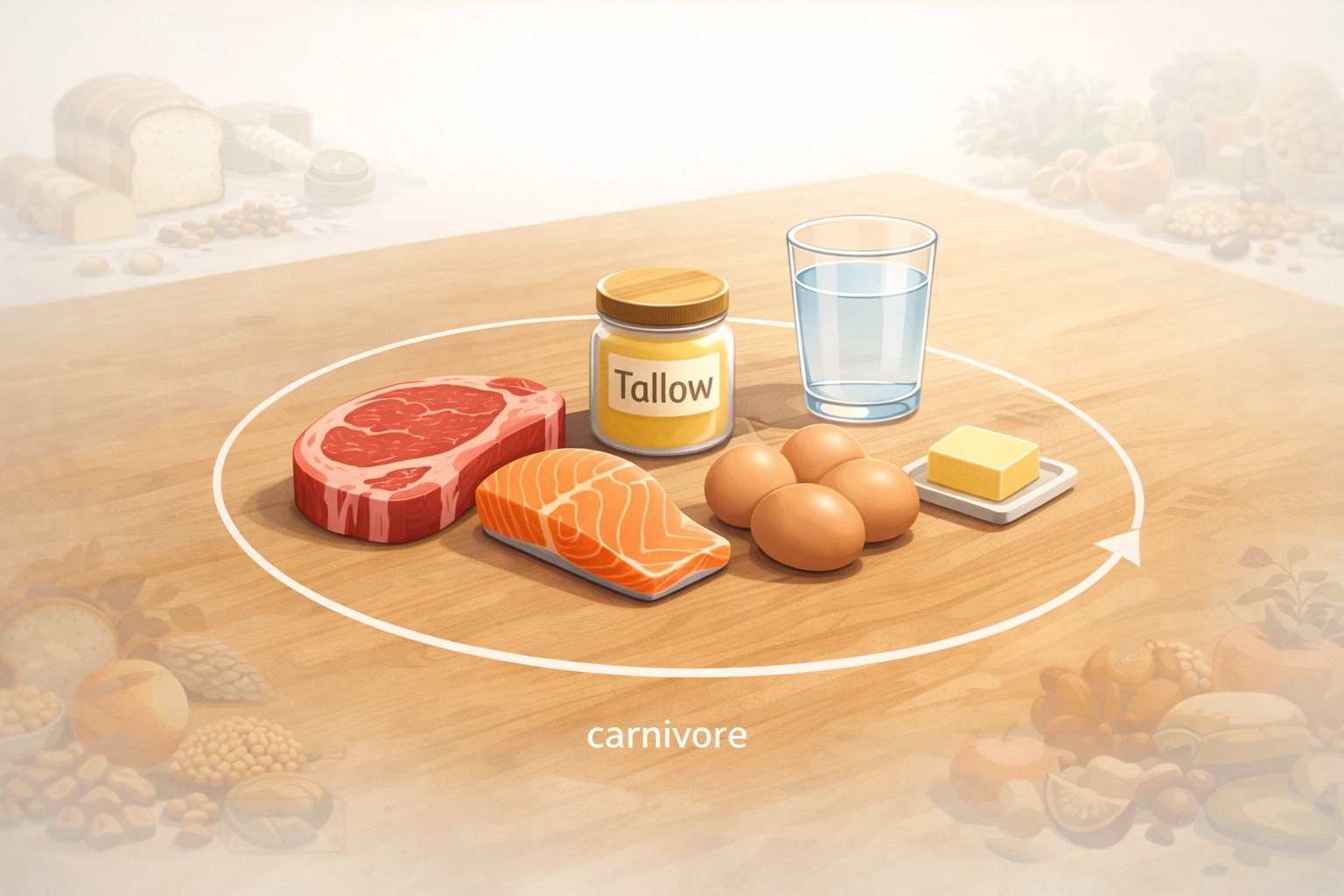

Many people who first hear about an all meat way of eating have the same question right away. What does the carnivore diet consist of, and how could a menu with almost only animal foods even work in real life. The carnivore approach is simple on paper, but living it day to day raises real questions about nutrition, health, social life, and long term goals like weight loss or better blood sugar.
What does the carnivore diet consist of at the most basic level
At its core, the carnivore diet consist of animal foods only or almost only. Plants are removed or kept very low. The idea is that humans can do well on meat, fish, eggs, and sometimes dairy, while avoiding carbs from grains, fruits, and vegetables.
Different people follow different versions, but most carnivore style diets include some mix of:
- Red meat (beef, lamb, bison, goat)
- Poultry (chicken, turkey, duck)
- Seafood (fish and shellfish)
- Eggs
- Animal fats (tallow, lard, duck fat, butter, ghee)
- Sometimes low lactose dairy (cheese, cream)
- Salt and water as the only sure condiments
So when we ask what does the carnivore diet consist of, the short answer is: mostly meat and other animal products, usually without plant foods, sugar, or grains. But for real life use, we need to break this farther down.
Main food groups in a carnivore diet
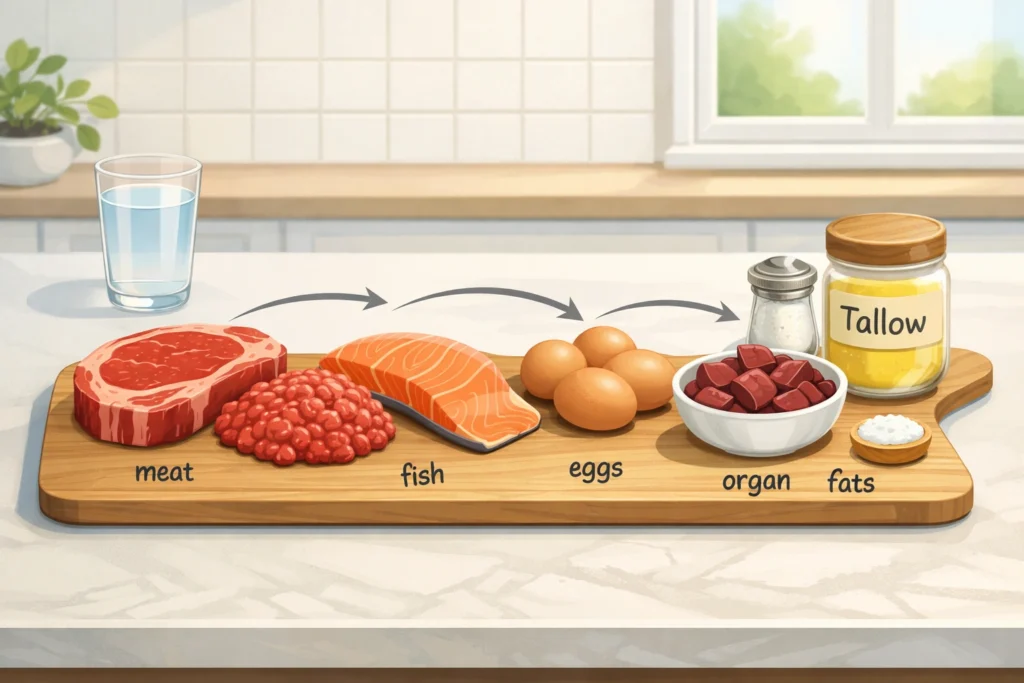
1. Red meat as the foundation
Most long term carnivore followers build their diet around red meat. Beef is the most common choice in the United States because it is easy to find and comes in many affordable cuts. The fattier cuts provide both protein and energy from fat, since carbs are almost fully removed.
Common beef choices include:
- Ground beef (70 to 85 percent lean for more fat)
- Ribeye steaks
- Chuck roast and brisket
- Short ribs, oxtail, and shanks
Lamb and bison are also used, but tend to cost more in many grocery stores. From a nutrient view, red meat gives iron, zinc, B12, and a full range of amino acids that help muscle, brain, and hormone function.
Practical tip: For people trying carnivore on a budget, 80/20 ground beef, chuck roast in a slow cooker, and store brand eggs usually give the best mix of cost and nutrition.
2. Poultry and white meat
Chicken, turkey, but many strict followers treat them as add-ons rather than the main base. White meats tend to be lower in fat, so they work better for people who want high protein and slightly lower fat intake.
Some examples:
- Chicken thighs with skin (higher fat, more filling)
- Whole roast chicken or turkey
From a health view, poultry is fine, but when we remove plant foods, getting enough fat and micronutrients from mostly lean chicken breast is much harder. That is why many experienced carnivore followers still center meals on beef or lamb then use chicken for variety only.
3. Seafood and fish
Seafood gives omega 3 fats that support heart and brain health. On a diet low in plant foods, these healthy fats may matter even more, because we are not getting omega 3 from plant sources like flax or chia.
Helpful options include:
- Fatty fish like salmon, sardines, mackerel, herring
- Lean fish like cod, tilapia, pollock
- Shellfish like shrimp, crab, mussels, oysters
A 2023 analysis from the American Heart Association highlighted that eating fish rich in omega 3 a few times per week is linked with lower risk of heart disease. People on a carnivore diet who tend to rely heavy on red meat can balance fatty intake a bit by adding fish one to three meals per week.
4. Eggs
Eggs might be one of the most nutrient dense foods in the diet. A single large egg gives about 6 grams of protein plus choline, B12, folate, and fat soluble vitamins. Many carnivore plans use eggs as a easy breakfast or a quick add to bump protein at lunch.
For many folks, 2 to 4 eggs per day fit very nicely into this eating pattern, unless they have egg allergies or digestive issues. The yolk holds most of the vitamins and minerals, so carnivore style diets do not throw away the yolk.
5. Organ meats (optional but recommended by many)
Some carnivore advocates call organ meats “nature’s multivitamin” because organs like liver, kidney, and heart are rich in nutrients that can be harder to get from muscle meat alone. Liver, for example, has high vitamin A, B12, folate, and iron. Heart gives extra CoQ10 which support energy production in cells.
Not everyone enjoys the taste, and some people skip organ meats fully. But when we ask what does the carnivore diet consist of from a nutrient strategy view, including a few ounces of liver or other organs once or twice a week can fill some of the possible gaps from a very limited food list.
6. Animal fats
Since carbs are near zero, fat takes over as the main energy source. Without enough fat, many new carnivore eaters feel tired, hungry, or cold. Common fats used include:
- Beef tallow
- Lard
- Duck fat
- Butter or ghee (for those ok with dairy)
These fats are used for cooking, poured over lean meat, or added to meals so that total calorie intake meets the needs of the body. People coming from low fat diets often under eat fat at first and then feel awful, which they sometimes blame on carnivore itself rather then the transitional mistakes.
7. Dairy products (depends on personal tolerance)
Dairy is one of the most debated parts of what the carnivore diet consist of. Some strict versions allow only ruminant meat, water, and salt, while other more flexable forms allow cheese, cream, yogurt, and whey protein.
Potential pros of dairy:
- Extra calcium and vitamin K2 from aged cheeses
- Easy calories for people who struggle to eat enough meat
- Flavor variety from cheese, cream sauces, and whipped cream
Potential cons:
- Digestive issues or bloating from lactose
- Possible acne flares, sinus congestion, or joint stiffness in sensitive people
- Cheese can be very easy to overeat for calories
In practice, many people on carnivore start with a dairy free or low dairy base for 30 to 60 days, then experiment with adding some back slowly while watching symptoms honestly.
What drinks and condiments are allowed
Drinks on a carnivore diet
Most strict carnivore plans keep drinks simple. Typical choices include:
- Water (still or sparkling)
- Mineral water
- Salted water or electrolyte drinks without sugar
- Coffee and tea, for more relaxed versions
More purist followers remove coffee and tea because they are plant based and can trigger reflux, anxiety, or sleep issues for some. But many average working adults find that quitting coffee fully is much harder than dropping bread, so they may keep 1 to 2 cups while still getting most of the benefits of a low carb, animal focused way of eating.
Condiments and seasonings
A strict answer to what does the carnivore diet consist of would say: just meat, salt, and water. But in the real world, lots of people use small amounts of seasonings to keep meals interesting. Some common choices:
- Salt (sea salt or mined salt)
- Pepper, garlic powder, onion powder for less strict plans
- Mustard, hot sauce, or vinegar in small amounts
From a metabolic view, a light sprinkle of spices will not erase the benefits of removing large carb loads. Still, people with autoimmune issues or very sensitive guts sometimes find that even small seasoning tweaks can change joint pain or skin flares. So the level of strictness often depends on your personal health story.
What foods are excluded on a carnivore diet

To fully answer what does the carnivore diet consist of, we also need to be clear about what is removed. Carnivore style eating cuts out almost all plant based foods, including:
- Grains: wheat, oats, rice, corn, barley, quinoa
- Legumes: beans, lentils, peas, soy
- Vegetables: leafy greens, roots, nightshades, all types
- Fruits: berries, tropical fruits, apples, etc.
- Nuts and seeds
- Plant oils: canola, soybean, corn, sunflower, peanut
- Added sugar and sweets
- Alcohol
For someone used to a classic balanced diet with half the plate as vegetables, this looks radical. Supporters argue that many people with digestive issues, bloating, IBS, or autoimmune symptoms feel better when they remove certain plant compounds like lectins, oxalates, and gluten. Critics point out that long term data on fully carnivore eating is limited and that the loss of plant based fiber may harm gut health over time.
Typical daily meal pattern on a carnivore diet
While there is no one single schedule, many people settle into 2 meals per day because meat is very filling. A simple day might look like this:
Sample day of eating
Meal 1 (late morning)
3 whole eggs cooked in butter
8 ounces ground beef or breakfast sausage
Coffee with heavy cream (for those using dairy)
Meal 2 (early evening)
10 to 12 ounces ribeye steak with extra tallow
Side of shrimp cooked in butter
Bone broth with salt
This kind of day can easily reach 1800 to 2400 calories depending on portion sizes and fat levels, with carbs close to zero grams. People trying to lose weight might adjust amounts down, while people lifting heavy weights might need even more portions.
For more flexible animal focused meal ideas that still leave room for some fruit of fermented foods, some readers might prefer an animal based diet approach rather then fully strict carnivore. We walk through that style in detail here: https://dietlinic.com/animal-based-diet/.
Nutrient profile: what you get and what you miss
Macronutrients
When we look at macronutrients, carnivore eating is high protein, high fat, and very low carb.
For example, a standard 8 ounce ribeye steak plus 3 eggs and some butter can easily give:
- Protein: 90 to 120 grams per day or more
- Fat: 120 to 200 grams per day, depending on cuts
- Carbs: usually under 10 grams
This macro setup can push the body toward ketosis, where fat is burned for fuel instead of glucose. That shift may help some people with blood sugar control or appetite regulation. A 2022 paper in the journal Frontiers in Nutrition noted that very low carb diets can lower HbA1c and reduce diabetes medicine use in type 2 diabetics, though pure carnivore studies are still limited.
Micronutrients and possible gaps
Animal foods supply many key nutrients:
- B vitamins, especially B12 and niacin
- Iron and zinc
- Selenium from meat and eggs
- Fat soluble vitamins A, D, K2 (especially from liver and full fat dairy)
Possible concerns include:
- Vitamin C deficiency if no organ meats or fresh meats are eaten
- Low fiber intake and possible shifts in gut microbiome
- Lower magnesium and potassium if salt and meat choices are narrow
Some long term carnivore eaters report normal blood levels of vitamin C, likely because they are not consuming sugar, which uses vitamin C in certain metabolic steps. But we simply do not have strong 10 to 20 year data on large groups to prove this is safe for everyone.
From a practical view, people who want to try this style and stay as safe as possible tend to:
- Include fresh meat, not just long stored dried meats
- Eat 2 to 4 ounces of organ meats weekly
- Use mineral rich salt and maybe supplemental electrolytes
- Get basic blood work at least once or twice per year
Why some people choose a carnivore diet
Understanding why people ask what does the carnivore diet consist of helps us see the different goals behind it. Most of the time, people are looking for one of these outcomes:
1. Weight loss and appetite control
High protein diets usually help people feel full on fewer calories. Protein has a strong effect on satiety hormones. When we combine that with stable blood sugar and the mental boundary of “I only eat animal foods,” some people find it easyer to avoid snacking or emotional eating.
Anecdotally, there are many stories of people who have lost 20, 50, or even over 100 pounds by switching to a carnivore or animal based pattern. But most of these success stories mix many factors: higher protein, lower carbs, removal of ultra processed junk foods, and stricter eating windows. So the magic may not come only from cutting all plants, but from the total lifestyle shift. For readers who want a more moderate but still animal centered weight loss path, we cover that here: https://dietlinic.com/animal-based-diet-for-weight-loss-does-it-work/.
2. Blood sugar and insulin control
With carbs near zero, blood sugar spikes all but disappear. People with prediabetes or type 2 diabetes often see lower fasting blood sugar within a few days. A 2023 systematic review in Nutrients showed that low carb and ketogenic diets can reduce HbA1c and sometimes allow medication reductions under medical supervision.
Anyone on insulin or strong diabetes drugs should only try carnivore with close guidance from a healthcare provider, because blood sugar can drop quickly once carbs are reduce.
3. Digestive and autoimmune symptom relief
Many people with IBS, Crohn’s, ulcerative colitis, or autoimmune issues speak about less bloating, less pain, and more stable energy when they cut plant fibers, gluten, and certain plant compounds. The carnivore diet, by design, removes many common triggers:
- Gluten from wheat and barley
- Lectins from grains and beans
- Nightshade alkaloids from tomatoes, peppers, eggplants
- Oxalates from spinach, almonds, potatoes, and beets
That said, the research base here is still small. We have case reports and personal journals more than large randomized trials. From a careful view, carnivore can work as a short term elimination diet to identify triggers before slowly testing back selected plant foods as tolerate.
Risks, concerns, and who should be cautious
Any serious discussion of what does the carnivore diet consist of has to admit the possible downsides as well as the benefits. Major concerns include:
1. Heart health and lipid changes
High intakes of saturated fat from red meat and butter can raise LDL cholesterol in some people, sometimes quite a lot. Others see their HDL and triglycerides improve even while LDL climbs. A 2022 study in Current Opinion in Lipidology noted that individual response to saturated fat is highly variable, with genetic factors playing a large role.
Because of this, regular lipid panels, ApoB, and other markers are wise if someone plans to stay on a high meat diet long term. Changes in exercise, stress control, and sleep also affect heart risk and need to sit in the picture.
2. Kidney function and protein load
For healthy kidneys, high protein intake is usually safe, based on multiple modern reviews. But people with known chronic kidney disease, or those with a family history, should talk with a doctor before shifting to such a protein heavy diet. Mild dehydration, common when carbs are low, can also strain kidneys if people do not drink enough water or get enough electrolytes.
3. Gut microbiome and lack of fiber
Fiber feeds beneficial gut bacteria. When fiber goes almost to zero, the gut flora changes. Some people feel better, but we do not fully know the long term effects of such a pattern. Early data suggests that some helpful species drop while others that can live on mucous or protein grow.
Symptoms like constipation can show up during the first weeks. Hydration, enough fat, and gentle movement can soften this adjustment. If constipation becomes chronic or painful, a fully carnivore pattern may not be ideal for that body.
4. Social and mental health aspects
Food connects us socially. A diet that cuts out almost every shared meal, holiday dish, or restaurant menu item can feel isolating. Some people thrive with the firm structure, while others feel anxious or obsessed about food choices after a while.
Mentally, living on a strict list can remove decision fatigue at first, but later on may raise stress when travel, work events, or family visits make strict rules hard to hold. This emotional load matters as much as blood markers when we talk about sustainable healthy habits.
Carnivore vs other low carb or animal based diets
There is a growing whole field of animal centered diets. So we should place carnivore within that wider picture.
- Keto diet: Low carb, higher fat, but still includes non starchy vegetables, low sugar fruits, nuts, and seeds. Carnivore is like a stricter subset of keto that removes most plant foods.
- Animal based diet: Mostly animal foods with some fruit, honey, and maybe raw dairy added in. This gives more carbs and variety. We compare animal based vs keto in more detail here: https://dietlinic.com/animal-based-diet-vs-keto-which-is-better/.
- Balanced omnivore: Mix of lean proteins, whole grains, fruits, vegetables, and healthy fats, which is still the pattern most large health groups like the American Heart Association promote.
Choosing between these options depends on your health history, lab results, and most of all, what you can stick with while still living a life that feels rich and not chased by fear of food.
How to try a carnivore style diet safely

If you are still asking what does the carnivore diet consist of, and feel curious enough to test it, a careful trial can give real life feedback for your body.
Smart steps include:
- Talk with your primary care provider, especially if you take medicine for blood pressure, diabetes, or mood.
- Get baseline labs: lipid panel, HbA1c, kidney and liver function, iron status, B12, vitamin D.
- Plan a 30 day window where social events and travel are low, so you can be consistent.
- Build a simple food list of meats you enjoy, aiming for a mix of fatty and lean cuts.
- Drink enough water and add salt to avoid headaches and fatigue during the first week.
- Track how you feel: sleep, mood, energy, digestion, joint pain, skin, and cravings.
After 30 days, recheck labs if possible, and make a honest call on whether the benefits outweight the downsides for you. Some people keep a strict pattern. Others gradually shift to a more flexible animal based or low carb omnivore style that still reflects what they learned about their own body.
When we zoom out, what the carnivore diet consist of is not just steak and eggs. It is a large lifestyle change that reorganizes how we shop, cook, socialize, and relate to hunger and comfort food. For some people it works almost like a reset button after years of roller coaster eating. For others it feels too narrow or leaves them missing fruits and vegetables that they truly enjoy.
The most useful question is not only “what does the carnivore diet consist of” but also “what does my personal healthiest pattern consist of, based on my health, values, and daily life.” Using the structure and lessons from carnivore, you can build a simple, mostly whole food approach, whether you lean fully meat only or keep a mix of high quality animal and plant foods on your plate.




Leave a Reply