
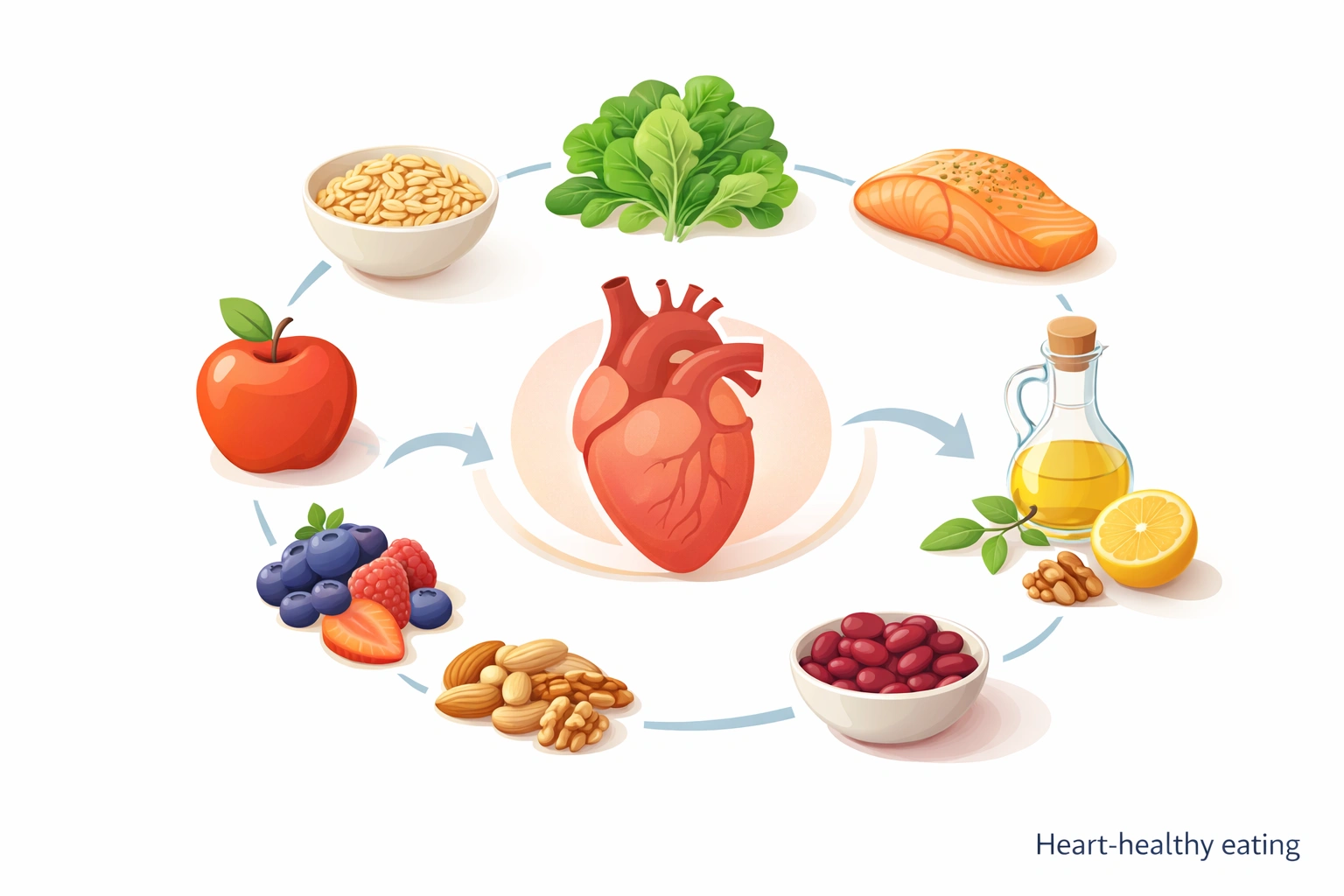

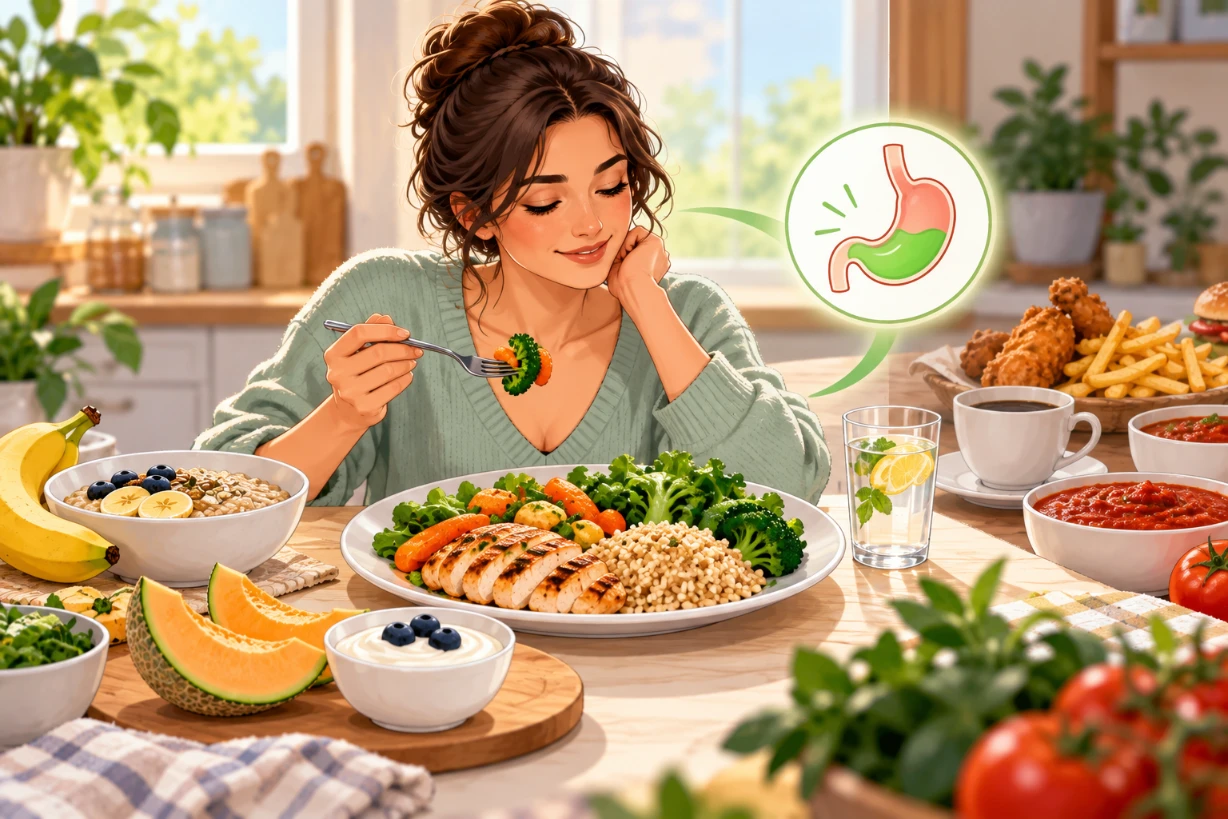
What is a good diet for high cholesterol. This is one of the most common questions people ask right after they see a scary number on a lab report. Many of us grew up hearing that cholesterol is just bad, or that we only need to avoid eggs or butter. In reality, a heart healthy eating pattern is more about the big picture. What we eat every day, and how we cook, matters more than a single “good” or “bad” food.
What is a good diet for high cholesterol: the core idea
When we talk about what is a good diet for high cholesterol, we are really talking about a way of eating that:
- Lower LDL cholesterol (the “bad” kind that clogs arteries)
- Supports healthy HDL cholesterol (the “good” kind that helps clear LDL)
- Reduces chronic inflammation in the body
- Helps with weight management and blood sugar control
Instead of chasing one miracle food, a good diet for high cholesterol focuses on patterns. That means more fiber rich plants, heart friendly fats, and fewer ultra processed foods and refined carbs. Based on recent guidelines from the American Heart Association and big studies published up through 2024, the eating style with the most support is a mix of Mediterranean style and DASH style eating, adjusted to your culture, budget, and daily routine.
How high cholesterol harms the body
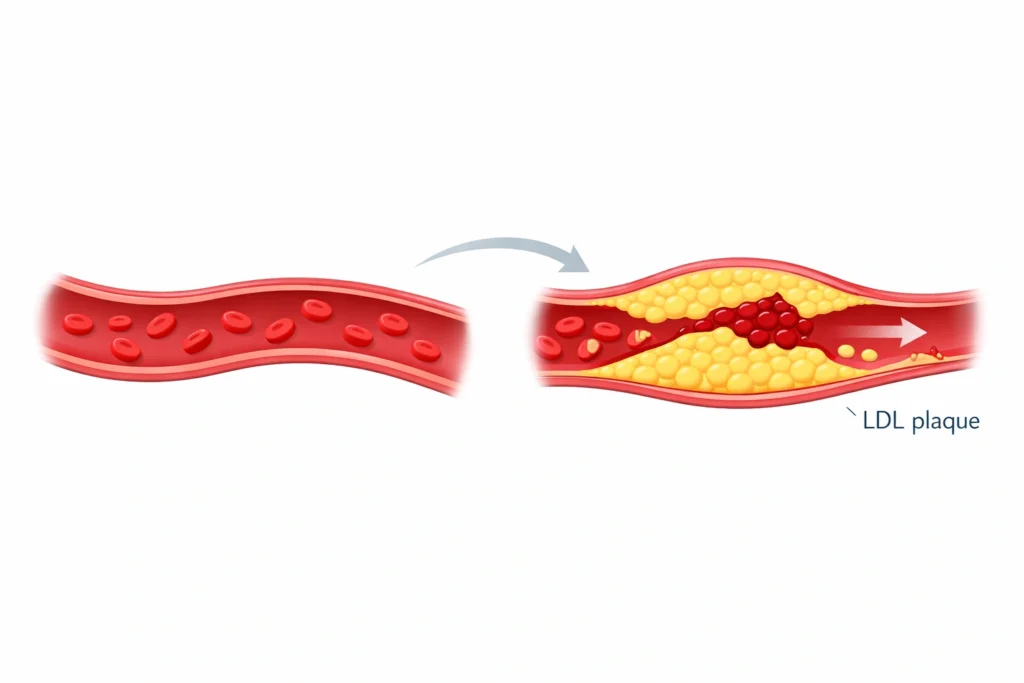
Before building a diet plan, it helps to know why cholesterol levels matter. Cholesterol itself is not evil. Our body needs it to make hormones, vitamin D, and cell membranes. The problem comes when LDL cholesterol and other blood fats, like triglycerides, rise too high and stay high over years.
Extra LDL tends to slip into the inner wall of arteries. The immune system tries to “fix” it, leading to plaque build up. That plaque can:
- Narrow arteries to the heart, brain, and legs
- Rupture and create a blood clot
- Trigger heart attack or stroke
Recent data from the CDC show that about 2 in 5 adults in the United States have high cholesterol or are close to that range. Many feel fine and do not notice symptoms. Food choices, movement, sleep, and stress all play a role. Our genes set the stage, but what we eat often decides how fast plaque builds up.
The main building blocks of a diet for high cholesterol
When we answer “what is a good diet for high cholesterol,” we can break it into six big building blocks:
- More soluble fiber
- Healthy fats instead of saturated and trans fats
- Smart protein choices
- Whole grains instead of refined grains
- Less added sugar and ultra processed foods
- Balanced calories and portion control
1. Soluble fiber: a natural “sponge” for LDL
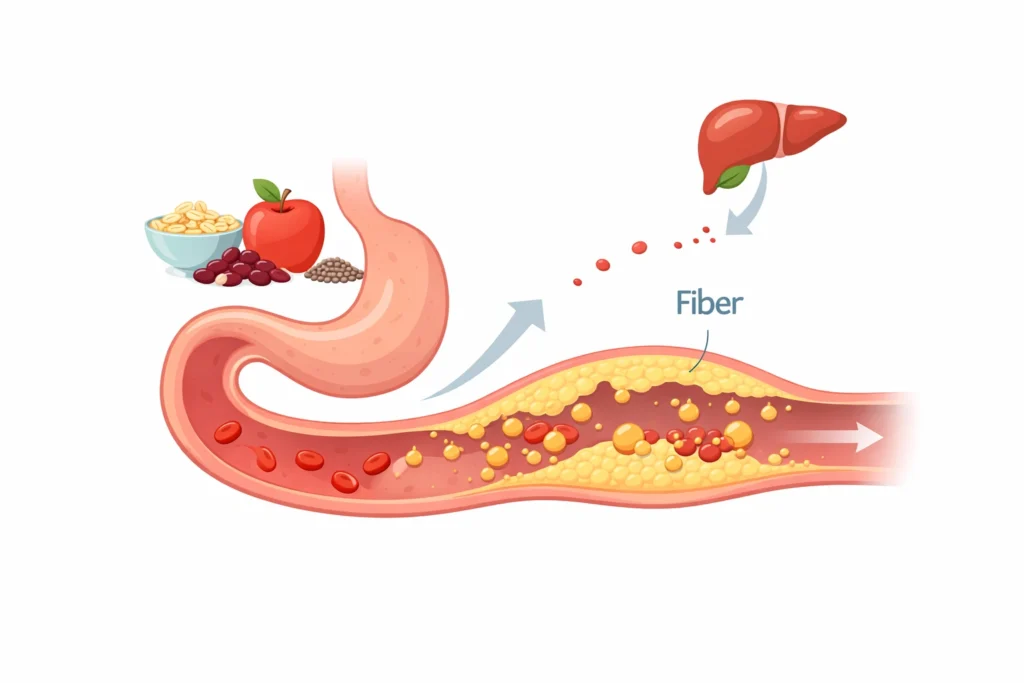
Soluble fiber act almost like a sponge in the digestive tract. It binds to bile acids (which are made from cholesterol) and helps carry them out of the body. To replace those bile acids, the liver pull LDL cholesterol out of the blood. Over time, this can lower LDL numbers in a gentle but steady way.
Foods rich in soluble fiber include:
- Oats and oat bran
- Barley
- Beans (black, kidney, pinto, cannellini, etc.)
- Lentils and split peas
- Apples, pears, oranges, berries
- Ground flaxseeds and chia seeds
Recent studies suggest that for every extra 5 to 10 grams of soluble fiber per day, LDL can drop by about 5 to 10 percent. That might sound small, but stacked over years, it lowers risk a lot, especially combined with movement and other changes.
2. Fats that help instead of harm
Fat is not the enemy. The kind of fat, and the overall pattern, matters. Saturated fat (found in fatty cuts of red meat, full fat dairy, butter, and many baked goods) tends to raise LDL cholesterol. Trans fats (often in shelf stable snacks and cheap shortenings) also raise LDL and lower HDL. Both of these patterns push the body toward plaque build up.
Better options include:
- Monounsaturated fats: olive oil, canola oil, avocado, almonds, peanuts
- Polyunsaturated fats: walnuts, sunflower seeds, soybeans, tofu
- Omega 3 fats: salmon, trout, sardines, mackerel, flaxseeds, chia seeds
In a 2023 review, replacing 5 percent of calories from saturated fat with polyunsaturated fat lowered LDL and reduce cardiovascular risk by several percent. That might sound small, but for a population it is huge. For daily life, that can look like using olive oil instead of butter, snacking on nuts instead of chips, or choosing fatty fish instead of fried chicken.
3. Protein choices that support heart health
Protein is needed for muscle, immune health, and hormone balance. When cholesterol is high, we want to get protein in ways that do not overload the system with saturated fat.
Better protein sources include:
- Beans and lentils
- Tofu and tempeh
- Skinless poultry (baked or grilled, not deep fried)
- Fish and seafood, especially rich in omega 3
- Low fat or nonfat dairy, if tolerated
Red meat, especially processed types like bacon, sausage, and deli meats, has been linked with higher LDL and higher heart disease risk. Some people still include small amounts of lean red meat once or twice per week, but shifting the main protein base toward plants often makes the biggest diference in cholesterol numbers.
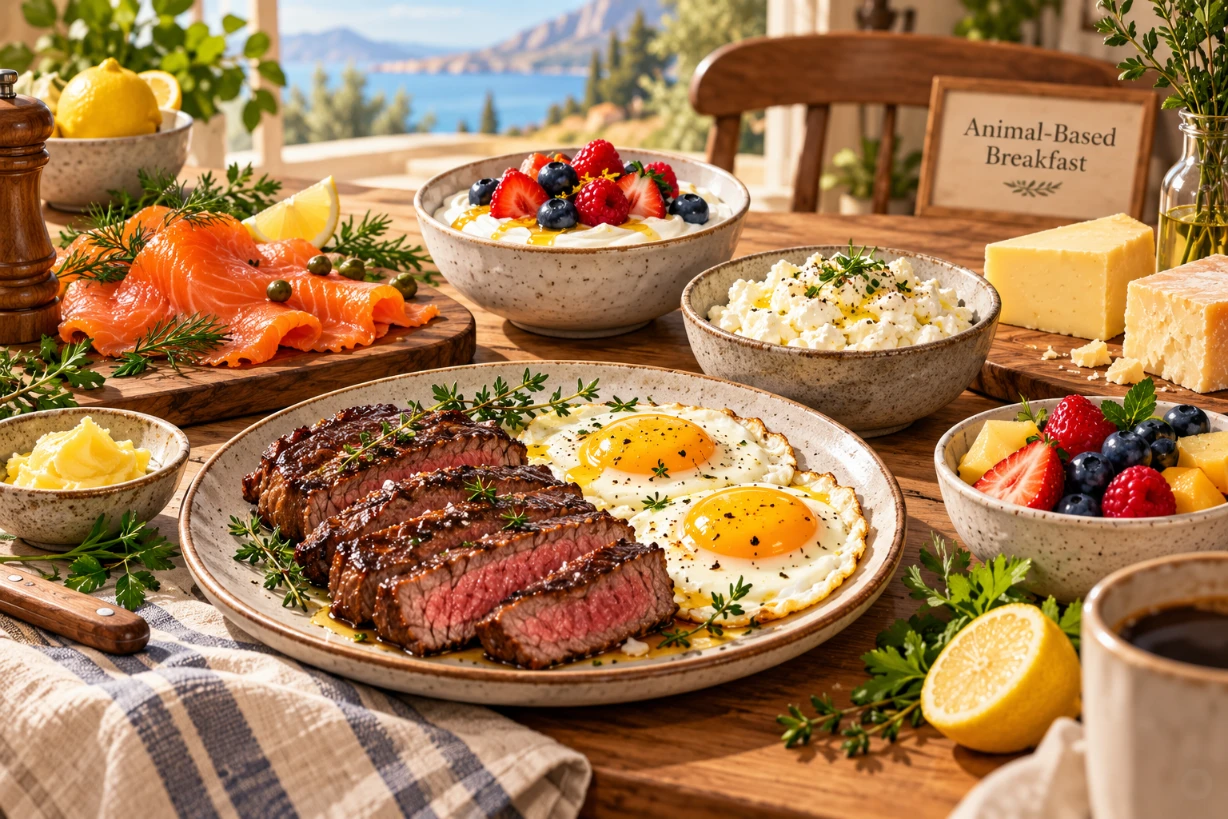
For readers curious about patterns that use more animal foods, we discussed some pros and cons of higher animal intake in this article: https://dietlinic.com/animal-based-diet-vs-plant-based-diet/. For cholesterol, a mostly plant centered plate still show the most consistent benefits.
4. Whole grains instead of white flour and sugar
Whole grains keep the bran and germ part of the grain, where most of the fiber and nutrients sit. Refined grains remove those parts and digest much faster, giving quick spikes in blood sugar. Over time, this can lead to weight gain, insulin resistance, and higher triglycerides, which all tie into poor cholesterol patterns.
Good whole grain choices for a high cholesterol diet include:
- Oats
- Brown rice or wild rice
- Quinoa
- Whole wheat bread and pasta (look for “100% whole wheat” on label)
- Barley, farro, bulgur
When someone shifts from white bread, sugary cereal, and white rice to whole grain versions, they often feel fuller longer, crave less sugar, and see better cholesterol and blood sugar numbers within months.
5. Less added sugar and ultra processed foods
Sugar does not contain cholesterol, but it strongly affect cholesterol levels. Excess added sugar and refined carbs can raise triglycerides and lower HDL. Ultra processed foods are often packed with a mix of sugar, salt, cheap fats, and additives that make it very easy to overeat and very hard to manage weight.
Recent U.S. data still show that many adults get 13 to 17 percent of their calories from added sugar, while guidelines call for less than 10 percent. For someone eating 2000 calories per day, that means aiming under 50 grams of added sugar, and better yet under 30 grams. That often means cutting back on:
- Sodas and sweet teas
- Energy drinks
- Pastries, cookies, candies
- Sweetened yogurt and flavored coffee drinks
Replacing these with water, unsweet tea, plain yogurt with fruit, or dark chocolate in smaller amounts can slowly re train the taste buds toward less sweetness and more subtle flavors.
6. Calorie balance and body weight
Weight loss is not the only tool for high cholesterol, but it often amplifies the effects of diet quality. Even a modest 5 to 10 percent weight loss can lower LDL, triglycerides, and blood pressure. Many people find that when they shift toward higher fiber, more plants, and better fats, calorie intake drops almost automatically because these foods are more filling.
We see this a lot in real life: a person does not count calories at first, they just focus on a heart friendly pattern and portions that feel reasonable. After several months, they notice looser pants, more energy, better sleep, and better lab numbers. Cholesterol care is rarely about perfection, but about small sustainable shifts that fit your real life.
Foods to focus on in a cholesterol friendly eating plan
When someone asks what is a good diet for high cholesterol, they usually want a concrete grocery list and meal ideas, not just theory. Here we highlight food groups that deserve a regular spot in your kitchen.
1. Fruits and vegetables
Goal: at least 5 servings per day, aiming for 7 to 9 if possible.
Why they matter:
- High in fiber (including soluble fiber), vitamins, and antioxidants
- Very low in calories per volume, which helps with satiety
- Phytochemicals in colorful produce help calm inflammation and protect blood vessels
Practical tips:
- Add berries or sliced apple to morning oats
- Keep baby carrots, grape tomatoes, or cucumber slices ready in the fridge
- Use frozen vegetables for quick stir fry or soups when time is short
2. Whole grains and high fiber starches
Include at most meals, in moderate portions.
Examples:
- Steel cut or rolled oats
- Brown rice, wild rice, barley
- Quinoa, farro, buckwheat
- Whole grain breads and tortillas
These grains help keep blood sugar steadier, which is key since insulin resistance and high triglycerides usually travel together with high LDL. Based on current trends, people who move from low fiber to higher fiber meals often report less afternoon crashes and fewer cravings for sweets.
3. Legumes (beans, lentils, peas)
These work double duty: they provide protein and soluble fiber at the same time. Several meta analyses up to 2023 show that just one serving of beans per day can lower LDL and improve blood sugar control.
Easy ways to use them:
- Add black beans or pinto beans to tacos or burrito bowls
- Use lentils in soups, stews, or even pasta sauce instead of some of the meat
- Try hummus as a spread instead of mayo on sandwiches
4. Fish and seafood
Goal: two servings per week of fatty fish, if you eat animal foods and no allergy.
Fatty fish such as salmon, sardines, trout, and mackerel supply omega 3 fats that reduce triglycerides, help support normal heart rhythm, and slightly lower blood pressure. They do not directly drop LDL as strongly as fiber, but they support the whole cardiovascular picture.
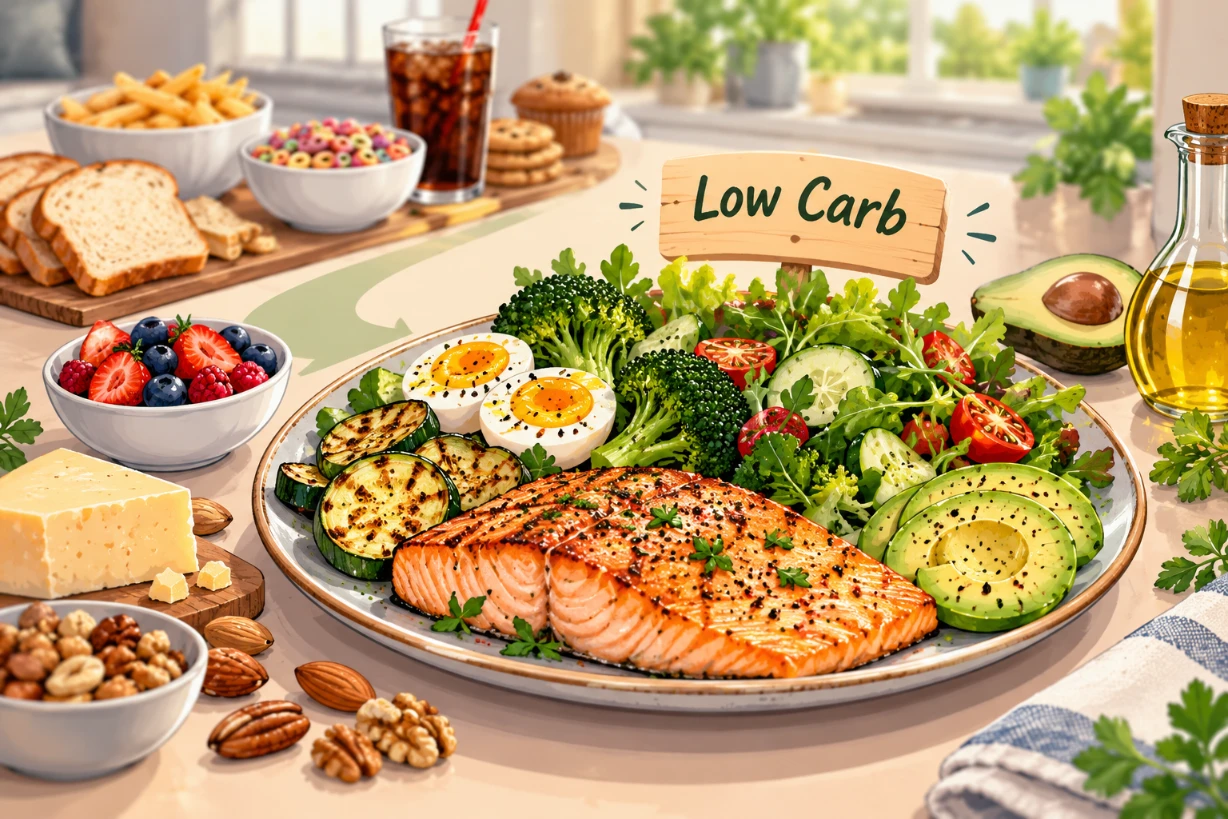
For readers comparing different high protein styles, we also broke down some of the debates around animal heavy diets and keto patterns here: https://dietlinic.com/animal-based-diet-vs-keto-which-is-better/. When cholesterol is high, most people still do better with a more balanced, plant forward pattern than strict keto.
5. Nuts, seeds, and healthy oils
Though energy dense, nuts and seeds often improve cholesterol when they replace less healthy snacks. A 2022 analysis showed that daily nut intake was linked with lower LDL and lower risk of coronary heart disease.
Good choices:
- Almonds, walnuts, pistachios, peanuts
- Chia seeds, flaxseeds, sunflower seeds, pumpkin seeds
- Olive oil, avocado oil, canola oil
Portion wise, a small handful of nuts (about 1 ounce) or 1 to 2 tablespoons of seeds are usually enough. We often suggest people replace croutons with nuts on salads for extra crunch and better fat profile.
Foods to limit or avoid when cholesterol is high
Knowing what to limit is just as important as knowing what to eat more of. Restriction alone can feel harsh, but when paired with tasty alternatives, it becomes more about choice than about punishment.
1. Saturated fat heavy foods
Try to limit these to small amounts and less often:
- Fatty cuts of beef
- Sausage, bacon, hot dogs, and deli meats
- Full fat cheese, cream, butter
- Fast food burgers and fried chicken
The American Heart Association suggests keeping saturated fat under 6 percent of total calories for people with high cholesterol. For a 2000 calorie diet, that is about 13 grams per day. Reading labels can be confusing at first, but after a few weeks people usually get a feel for which foods are major sources.
2. Trans fats and industrial shortenings
Although trans fats were largely removed from many U.S. foods after FDA action, trace amounts still show up. Watch for words like “partially hydrogenated oils” on ingredient lists. These fats not only raise LDL but also lower HDL, and really no safe level has been shown.
3. Sugary drinks and desserts
High sugar intake can raise triglycerides and drive fat storage around the belly. This pattern often goes hand in hand with low HDL and small dense LDL particles, which are more harmful. Swapping regular soda with sparkling water plus a splash of juice, or choosing fruit instead of pastry a few times a week, add up quicker than they seem.
4. Highly processed snacks and fast food
These products tend to combine white flour, sugar, salt, and cheap fats in a way that is very easy to overeat. When cholesterol is high, limiting these to rare treats rather than everyday staples can make a big difference.
A sample one day meal plan for high cholesterol
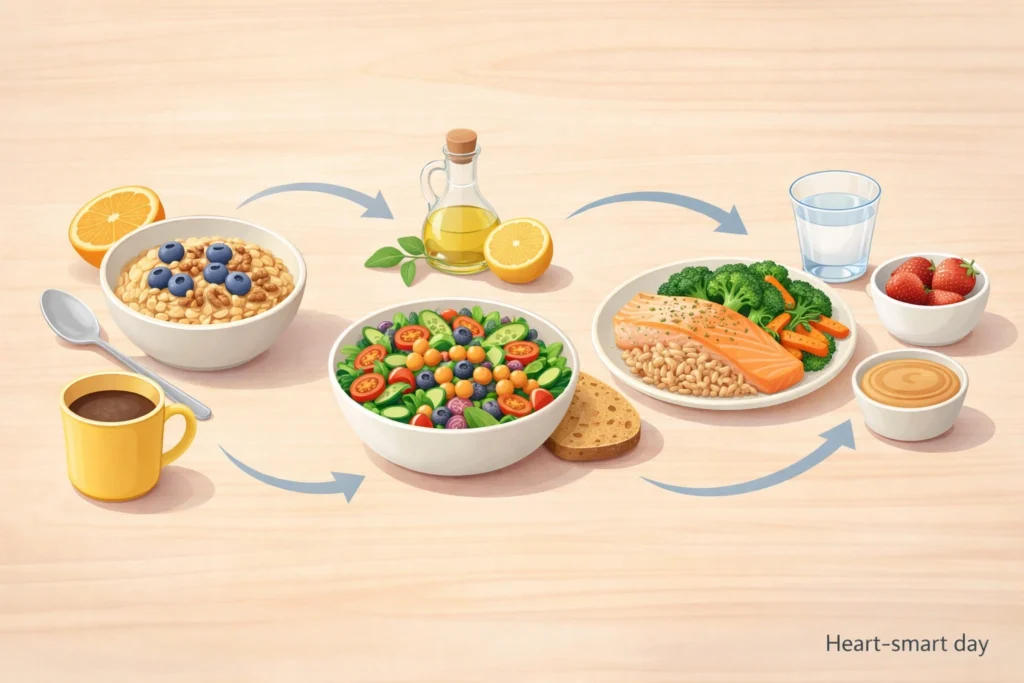
To bring all this together, here is a sample day that shows what is a good diet for high cholesterol in action. This is only one example; it can be adjusted for cultural foods, allergies, and preferences.
| Meal | Example | Why it helps cholesterol |
|---|---|---|
| Breakfast | Oatmeal cooked with low fat milk, topped with blueberries, ground flaxseed, and a few walnuts | Oats and flax provide soluble fiber; berries add antioxidants; walnuts add omega 3 fats |
| Snack | Apple slices with 1 tablespoon peanut butter | Fiber from apple plus healthy fats and protein from peanut butter improve satiety |
| Lunch | Big salad with mixed greens, chickpeas, cherry tomatoes, cucumber, grated carrots, olive oil and lemon dressing, plus a slice of whole grain bread | Beans for soluble fiber and plant protein; veggies for volume and micronutrients; olive oil for heart friendly fat |
| Snack | Plain yogurt (low fat) with sliced strawberries and a sprinkle of oats | Protein and calcium from yogurt; fiber from fruit and oats; no added sugar if you sweeten lightly at home |
| Dinner | Baked salmon, 1/2 cup brown rice, and roasted broccoli and carrots tossed in a bit of olive oil | Omega 3 fats from fish, fiber from vegetables and brown rice, low in saturated fat |
| Optional dessert | 1 small square dark chocolate (70 percent or higher) and herbal tea | Moderate treat with some antioxidants and minimal sugar compared to larger sweets |
How fast can diet lower high cholesterol
People often hope to see a miracle in a week, and then feel dissappointed when numbers do not crash overnight. Based on both research and real world experience, here is a more realistic timeline once you start a solid diet for high cholesterol:
- First 4 to 6 weeks: Small but real shifts in LDL and triglycerides. Many notice less bloating and better digestion due to more fiber.
- Three months: Doctors often recheck labs at this point. With consistent changes, LDL can drop 10 to 20 percent, sometimes more, especially if weight drops as well.
- Six to twelve months: Improvements in HDL, blood pressure, energy levels, and waist size become more clear. For some, medications can be adjusted, but this is always a decision between you and your health care team.
One thing we see often is that small habits, like walking after dinner or cooking at home three nights per week, combine with dietary choices to give better results than one big drastic diet attempt that only lasts two weeks.
Practical tips to stick with a high cholesterol diet
Knowing what is a good diet for high cholesterol is one thing. Actually living it during busy weeks, family dinners, and social events is another. These practical strategies can help:
Plan simple, not perfect
Instead of aiming for gourmet meals every day, pick 3 to 5 easy recipes you can rotate. For example: a bean chili, a sheet pan salmon and veggies dinner, a stir fry with tofu and frozen vegetables, and a big salad with rotisserie chicken (skin removed). Planning these in advance makes it easier to say no to last minute fast food.
Use the “half plate plants” rule
At lunch and dinner, aim to fill at least half your plate with vegetables and some fruit. The rest can be divided between lean protein and whole grains. This single visual rule helps balance calories and fiber without heavy tracking.
Keep heart healthy snacks ready
Hunger and stress are when most of us fall back to old patterns. Stock the kitchen with options that fit your goals, such as:
- Fresh fruit
- Cut raw veggies plus hummus
- Plain yogurt cups
- Single serve packs of nuts
When the better choice is already available, it takes less willpower to use it.
Read labels with two main targets
Labels can feel overwhelming, but for high cholesterol, focusing on just two lines makes it more doable at first:
- Look at saturated fat grams per serving, aim low or moderate
- Check fiber grams per serving, aim higher when you can
As you get used to that, you can start to watch added sugar grams too. Many people are suprised to find sugar hiding in places like salad dressings and flavored yogurts.
Special situations: statins, genetics, and lifestyle
Sometimes diet alone cannot fully control cholesterol. Conditions such as familial hypercholesterolemia mean the liver quirks lead to very high LDL even at young ages. In these cases, medication like statins may be essential to lower risk. Still, diet and lifestyle remain key partners, not optional extras.
For people on statins, a good diet for high cholesterol still provide several benefits:
- May allow lower medication dose or fewer added drugs, under medical guidance
- Helps manage side effects such as weight gain or high blood sugar
- Improves blood pressure, gut health, and overall wellbeing
Sleep, stress, and movement also shape cholesterol patterns. Chronic stress, for example, push people toward comfort foods and raises certain hormones that affect fat storage. Gentle practices like walking outside, mindfulness, or simply turning off screens earlier at night can support your diet efforts more than many people realize.
Putting it all together: what is a good diet for high cholesterol
When we step back and look at the big picture, what is a good diet for high cholesterol comes down to a pattern where:
- Plants (vegetables, fruits, beans, whole grains, nuts, seeds) take center stage
- Healthy fats from olive oil, nuts, seeds, and fish replace much of the saturated and trans fats
- Added sugar, refined flour, and ultra processed snacks are kept for rare treats
- Portions are mindful, supporting a comfortable body weight over time
This kind of eating style does not need to feel like punishment. Many people find their taste buds adjust within a few weeks, and food starts to taste deeper and more satisfying. Instead of asking “what am I allowed to eat,” it become “what can I add to my plate that helps my heart today.”
For anyone ready to start, choose one or two changes from this guide that feel doable this week. Maybe it is a bowl of oats instead of sugary cereal, or adding beans three times a week. Those small moves are exactly how a heart healthy pattern begins. Over months, they are also how we answer in a very real way the question: what is a good diet for high cholesterol, and how can it protect the heart for years to come.

Leave a Reply