
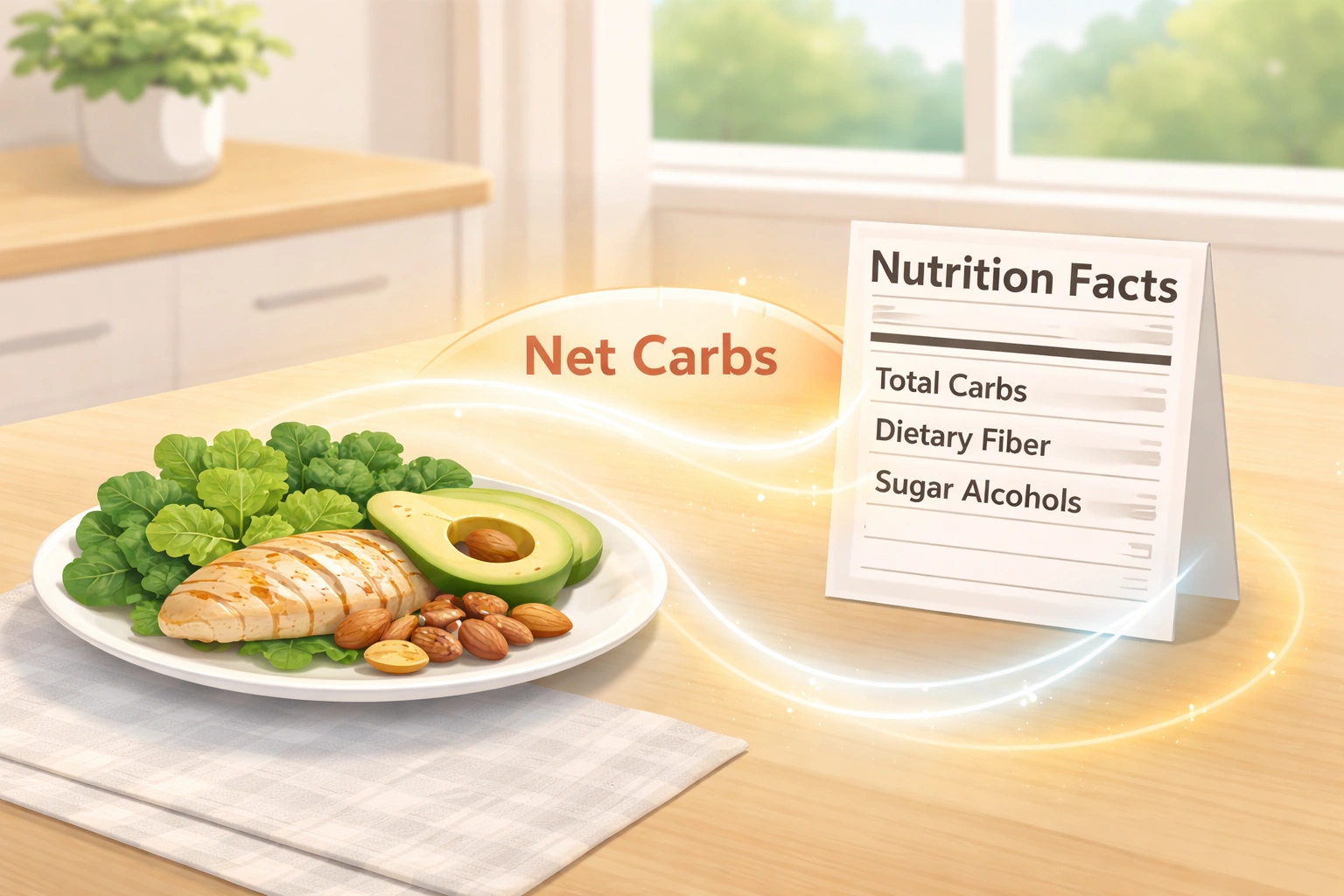

Learning how to calculate net carbs on Atkins diet is one of those skills that sounds confusing at first, but quickly becomes second nature. Once we get the basic formula and a few food-label tricks, it feels a lot less like math homework and more like a simple habit that supports our health goals.
What “net carbs” really means on Atkins
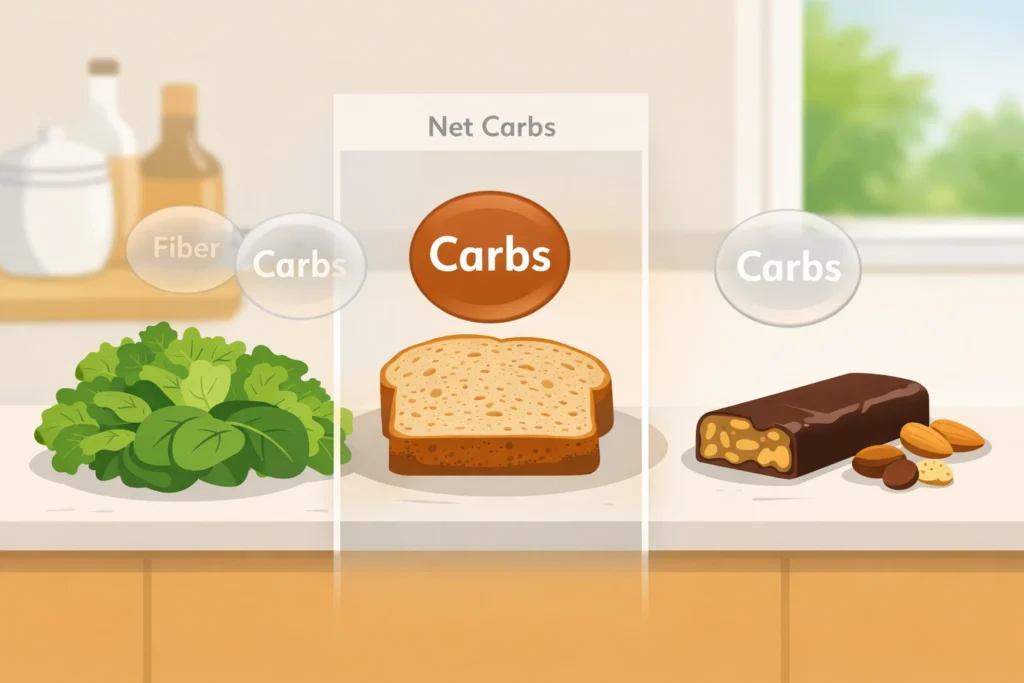
The Atkins plan focus on carb control, not complete carb removal. Total carbs on a label include every kind of carbohydrate in that food. Net carbs try to show only the carbs that have a clear impact on blood sugar.
On Atkins, net carbs are the grams of carbohydrate that are digested, absorbed, and likely to raise blood glucose. Fiber and some sugar alcohols pass through the body partly or mostly undigested, so they usually do not affect blood sugar in the same way.
So when we talk about how to calculate net carbs on Atkins diet, we are really talking about finding the carbs that “count” for weight loss, appetite control, and ketosis in the early phases.
The official Atkins net carb formula
Atkins has used a fairly clear formula for years. For most packaged foods sold in the United States, the basic rule is:
Net Carbs = Total Carbohydrates − Fiber − Sugar Alcohols (with some adjustments)
However, that is the short version. In practice, Atkins offers more detail:
- Subtract all grams of dietary fiber
- Subtract all grams of sugar alcohols except maltitol
- Subtract only half of the grams of maltitol
So a more precise formula for Atkins products looks like this:
Net Carbs = Total Carbs − Fiber − Sugar Alcohols (except maltitol) − 50% of maltitol
Many people on Atkins do not track sugar alcohols this carefully for regular grocery foods, but if your progress slows, this extra level of detail can make a big difference.
Why Atkins uses net carbs instead of total carbs
Low carb diets sometimes get criticized for being too strict or unrealistic. Net carb counting is Atkins way to make the diet more livable while still focusing on blood sugar control.
Here is the logic behind it:
- Fiber: Most fiber does not break down into glucose in the small intestine. It may be fermented in the colon and used by gut bacteria, but that process does not spike blood sugar the way starch or sugar does.
- Sugar alcohols: Sugar alcohols such as erythritol and xylitol are partly absorbed and partly excreted. Their effect on blood sugar is much lower than table sugar, though there is a wide range between different types.
- Better appetite control: Studies over the past ten years show that controlled carb intake, higher protein, and healthy fats help many people feel full longer and eat fewer calories without forcing it. Net carb counting supports that pattern with more flexibility than just slashing total carbs across the board.
From a practical angle, net carbs are a way to let us enjoy low carb vegetables, nuts, and some specialty products without blowing our daily carb limit.
Step by step: how to calculate net carbs on Atkins diet from a nutrition label
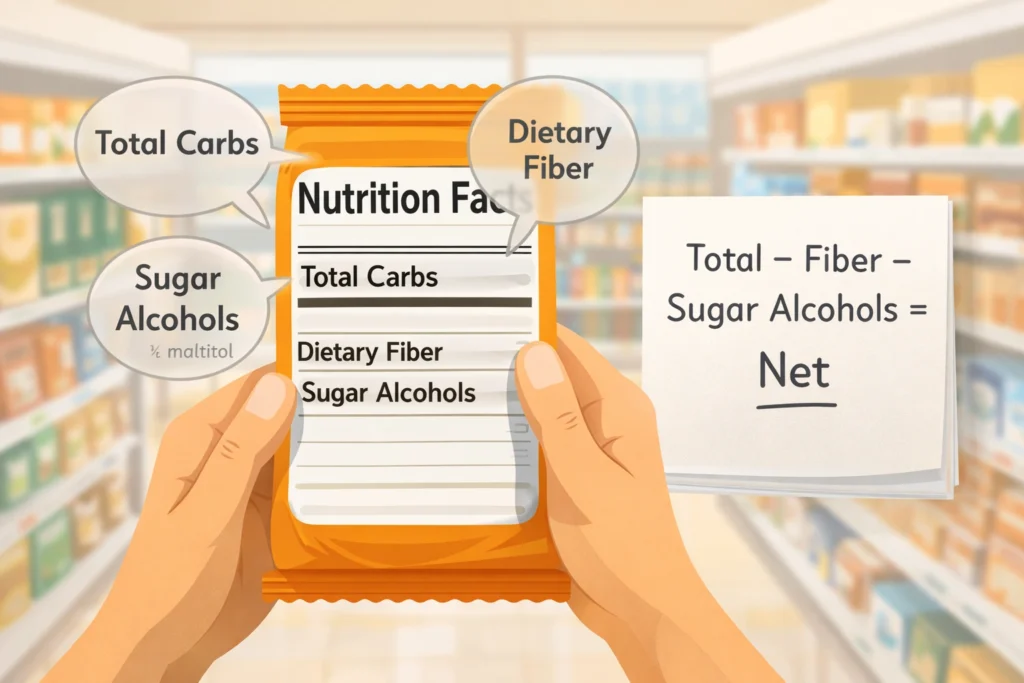
For many of us in the U.S., most carb counting happens while we stare at a nutrition label under bright grocery-store lights. Here is a simple walk through that matches the Atkins method.
1. Find the serving size first
Before we touch the carb numbers, check the serving size. This point trips up even experienced dieters. If the label says 1 serving is 30 grams, but we plan to eat 60 grams, we need to double every number, including total carbs and fiber.
2. Locate “Total Carbohydrate”
Under the Nutrition Facts panel, we see “Total Carbohydrate” listed in grams. That number includes:
- Starch
- Sugar (both natural and added)
- Fiber
- Sugar alcohols (if present)
Write this total down or remember it mentally. This is our starting point.
3. Subtract dietary fiber
Right below total carbs, we see “Dietary Fiber.” On Atkins, we subtract all dietary fiber to get closer to net carbs. For example:
If a bar has:
- Total carbohydrate: 18 g
- Dietary fiber: 9 g
Then start with: 18 g − 9 g = 9 g remaining.
4. Look for sugar alcohols and type
If the product contains sugar alcohols, they are often listed as “Sugar Alcohol” under total carbs. Sometimes the label also names the type in the ingredients list, such as erythritol, xylitol, sorbitol, or maltitol.
Atkins guidance for sugar alcohols:
- Subtract all grams of erythritol. It is mostly not absorbed.
- Subtract all grams of other sugar alcohols, but monitor your body response.
- For maltitol, subtract only half, because it has a stronger blood sugar impact.
So if our snack has:
- Total carbohydrate: 22 g
- Fiber: 10 g
- Sugar alcohol: 6 g (maltitol)
Then net carbs would be:
Start with total carbs 22 g
Subtract fiber: 22 − 10 = 12 g
Subtract half maltitol (3 g): 12 − 3 = 9 g net carbs
5. Adjust for how much you actually eat
If you eat more or less than the listed serving size, adjust the numbers. Eating 1.5 servings means 1.5 times the net carbs. Eating two servings doubles the net carbs.
Many stalls in weight loss happen because we forget about serving sizes and actual portions. When in doubt, measure at least for the first few weeks of Atkins.
How to calculate net carbs on Atkins diet for whole foods without labels
Fresh meat, fish, eggs, and most cheeses have either zero or very low net carbs, but vegetables, nuts, and some dairy definitely count. Since whole foods do not come with nutrition labels, we lean on carb-tracking apps or a simple carb reference list.
General process for unpackaged foods
For any food without a label, we can use this approach:
- Look up the food in a trusted database like USDA FoodData Central, Cronometer, or Carb Manager.
- Check carbs and fiber for the portion you plan to eat (for example, 1 cup chopped, or 100 g).
- Use the same net carb formula: Net Carbs = Total Carbs − Fiber.
For example, 1 cup of raw broccoli (about 91 g) roughly has:
- Total carbohydrate: around 6 g
- Fiber: about 2.4 g
Net carbs: 6 − 2.4 = 3.6 g (many people round to 4 g).
Typical net carbs for common Atkins friendly foods
The exact numbers change a little between sources, but this table gives a helpful starting point. All values are approximate.
| Food | Serving size | Total carbs (g) | Fiber (g) | Net carbs (g) |
|---|---|---|---|---|
| Spinach, raw | 1 cup | 1.1 | 0.7 | 0.4 |
| Broccoli, raw | 1 cup | 6.0 | 2.4 | 3.6 |
| Cauliflower, raw | 1 cup | 5.3 | 2.1 | 3.2 |
| Avocado | 1/2 medium | 6.0 | 4.6 | 1.4 |
| Strawberries | 1/2 cup | 5.5 | 1.4 | 4.1 |
| Almonds | 1 oz (about 23) | 6.1 | 3.5 | 2.6 |
| Walnuts | 1 oz (about 14 halves) | 3.9 | 1.9 | 2.0 |
| Heavy cream | 2 tbsp | 1.0 | 0.0 | 1.0 |
| Greek yogurt, plain (full fat) | 1/2 cup | 3.5 | 0.0 | 3.5 |
When we repeat this kind of checking for a week or two, we start to memorize the rough net carbs of our favorite foods. That makes day to day tracking much easier.
Net carb targets by Atkins phase
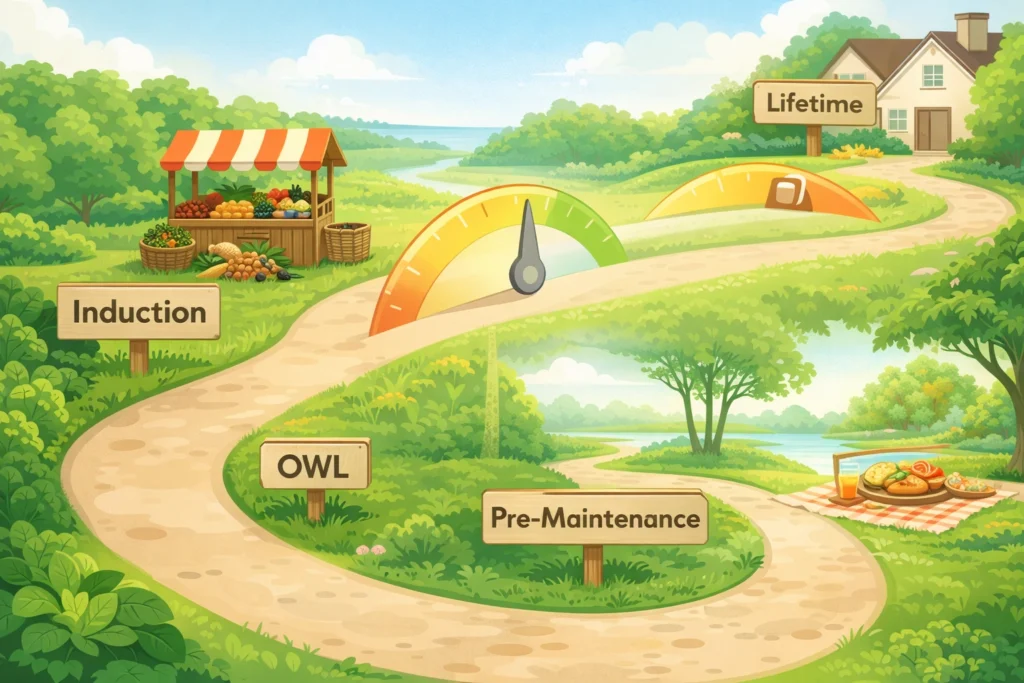
Knowing how to calculate net carbs on Atkins diet only really helps if we also know our daily carb targets. Atkins is split into phases, each with a different net carb allowance and food list.
Phase 1: Induction
Phase 1 is the strictest part, usually 2 weeks or longer. Here, the goal is to shift the body to burning fat for fuel and to reset appetite signals.
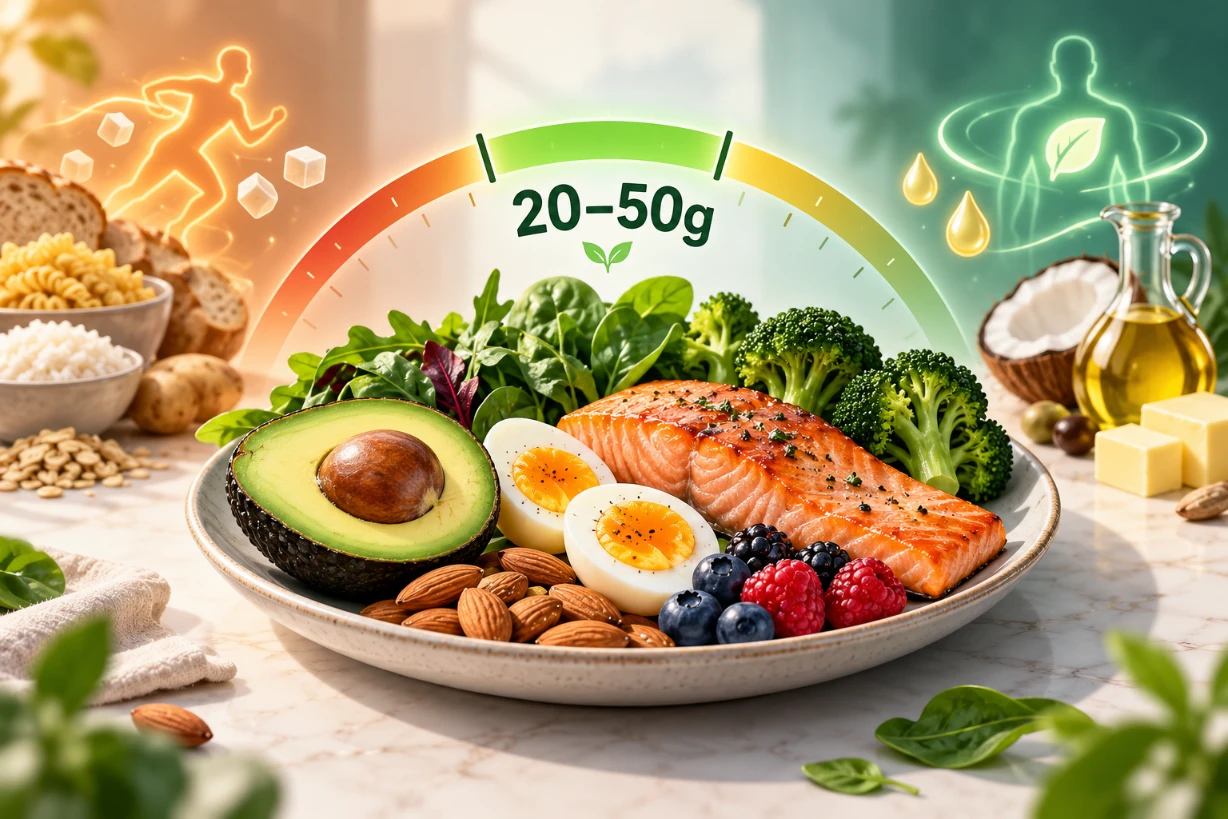
- Typical net carb limit: 20 g net carbs per day
- Most of those carbs come from leafy greens and low starch vegetables
- Fruit, grains, starchy veg, and most legumes are off the menu at this stage
At 20 g, every gram counts. That is where precise label reading for net carbs is extremely valuable. Many people discover “hidden” carbs in sauces, dressings, sugar free candies, and flavored yogurts.
Phase 2: Ongoing Weight Loss (OWL)
In phase 2, we slowly lift carb intake while watching weight and hunger levels. The idea is to find a sweet spot where weight loss continues, but we have a little more food freedom.
- Net carbs usually increase by 5 g per day per week
- We add nuts, seeds, berries, and some dairy depending on tolerance
- Carb tracking is still net carb based, just with a higher daily cap
Many people settle around 30 to 40 g net carbs in this phase, though the number varies a lot by person and activity level.
Phase 3: Pre-Maintenance
Phase 3 bring carbs up more while fine tuning what Atkins calls “your carb tolerance.” This limit is the highest net carb level where your weight remains stable or slowly trends down.
- Net carbs may reach 50 to 80 g per day for some people
- More fruits and some whole grains might be reintroduced
- Net carb calculation remains the primary tracking method
At this stage, many people notice that processed Atkins products and sugar alcohol heavy items can cause cravings. So even though net carbs allow them, real world results sometimes say otherwise. Listening to the body is just as important as the formula on paper.
Phase 4: Lifetime Maintenance
Once we hit a stable weight and feel good, we shift into a long term strategy. Net carbs still matter, but the focus changes from rapid loss to keeping results and supporting health markers.
- Net carb range is individual, often between 50 and 100 g per day
- Many people continue to favor whole foods over low carb products
- Tracking may become more relaxed, but the net carb concept remains handy
Over time, people often discover that certain carbs, maybe bread or sugary drinks, trigger cravings or bloating, even if they technically “fit” their net carb allowance. That is where personal experience shapes how we use the Atkins structure.
Common mistakes when calculating net carbs on Atkins
Even with a simple formula, small errors add up. Here are frequent problems that can slow weight loss or cause frustration.
Ignoring serving size and portion creep
Bags of nuts, cheese slices, and sugar free candy are classic traps. The label might show 2 g net carbs per serving, but the bag quietly stretches that over 3 or 4 servings.
We think we are eating 2 g net carbs, but really we had 6 or 8 g. Do that several times a day, and we can double our target without noticing.
Trusting “net carb” claims on the front of packages
Front labels often shout “2 g net carbs” or “keto friendly,” but these claims use different formulas or aggressive rounding. It is much safer to do our own calculation from the Nutrition Facts.
In my own experience, people who start checking labels themselves often find 1 to 3 extra net carbs per serving compared to the big print on the front. Over a full day, that adds up.
Over subtracting sugar alcohols
Research over the last few years has made it clear that sugar alcohols are not all equal:
- Erythritol has almost no impact on blood sugar in most people.
- Xylitol and sorbitol raise blood sugar a little.
- Maltitol can raise blood sugar close to sugar for some people.
If someone subtracts all sugar alcohol grams as if they were fiber, they may think a candy bar has 2 g net carbs when real impact feels more like 10 g or more. That can kick some people out of ketosis during the induction phase.
Forgetting about condiments and “small bites”
Ketchup, BBQ sauce, salad dressings, creamers, and “just one bite” of bread or potato can add hidden carbs. No single teaspoon feels important, but together they can be half of a day carb allowance in phase 1.
For at least 2 weeks, it helps to log even small tastes and extra spoonfuls. Once results and patterns look steady, we may not need to track quite as strictly.
Using apps and tools to make Atkins net carb counting easier
Technology can be a serious ally when we learn how to calculate net carbs on Atkins diet. Several free or low cost apps offer carb tracking, barcode scanning, and saved meals.
Some support options include:
- MyFitnessPal or Cronometer: Track total carbs and fiber, then either use their net carb setting or do mental subtraction.
- Atkins app: Built around the official net carb method and phase guidance.
- Paper food journal: Some people prefer to write their foods, total carbs, fiber, and net carb math by hand. This can increase awareness, especially in the beginning weeks.
Whichever method we choose, the goal is not perfect numbers but honest, consistent data so we can connect how our choices affect weight, hunger, and energy.
Real world example: a day of Atkins induction net carb math
To see it all together, imagine a typical phase 1 day with rough net carb values. These numbers are estimates, but they show how the method plays out.
Breakfast:
- 3 eggs scrambled in butter
- 1/2 avocado
- Black coffee
Net carbs: eggs and butter 0 g, avocado about 1.4 g net. Total so far about 1 to 2 g net carbs.
Lunch:
- Grilled chicken salad with 2 cups romaine, 1/2 cup cucumber, 1/2 cup cherry tomatoes
- 2 tbsp full fat dressing (low sugar)
Romaine and cucumber about 3 g net, tomatoes about 3 g net, dressing maybe 2 g net. Lunch total around 8 g net. Daily total so far about 9 to 10 g net.
Snack:
- 10 almonds
About 1 g net carbs. Daily total moves to about 11 g net.
Dinner:
- Salmon fillet with olive oil
- 1 cup roasted cauliflower
- 1 cup sautéed spinach
Cauliflower roughly 3 g net, spinach maybe 1 g net. Dinner adds about 4 g net carbs. Daily total now about 15 g.
That leaves room for 5 more grams of net carbs. We might use those on a small serving of sugar free gelatin, a bit more veggies, or save that space for sauces used in cooking.
Going through this kind of day reveals why Atkins encourages plenty of non starchy vegetables. They add volume, color, and fiber without blowing the net carb budget.
Comparing Atkins net carbs with other low carb approaches
Atkins is not the only low carb method people use in the United States. Some follow standard keto, and others mix animal based or plant heavy low carb styles.
A few key differences:
- Standard keto: Many keto plans use net carbs similarly, but some stricter versions count total carbs and keep them under 20 to 30 g. That can make nuts, berries, and low carb products harder to fit in.
- Animal based or carnivore style diets: These focus almost fully on animal foods and usually keep carbs near zero. For people curious about how this compares to more classic keto or Atkins, this guide goes deeper: https://dietlinic.com/animal-based-diet-vs-keto-which-is-better/
- Plant forward low carb: Some people prefer to keep more vegetables and fruits while trimming grains and sugar. Net carb rules still apply, just with higher daily targets and more plant variety.
Atkins sits in the middle. It uses net carbs to ease people into carb awareness without forcing them to give up all variety, which is one reason it continues to be popular decades after it first appeared.
How to listen to your body while tracking net carbs
Numbers matter, but they are not everything. Two people can eat the same 20 g net carbs and feel completely different. Our hormones, sleep, stress levels, and movement all change how we respond to carbohydrates.
While we use the Atkins formula, it helps to also track:
- Hunger: Are you ravenous between meals, or mostly steady and calm?
- Cravings: Are sugar alcohol heavy snacks making you want more snacks, even if their net carbs looks low?
- Energy: Do you feel sluggish after adding new carb foods in phase 2 or 3?
- Digestive comfort: Some people get gas or bloating from large sugar alcohol amounts or fast fiber increases.
In real life, this can mean adjusting how strict we are with certain food types. For one person, a sugar free bar with 3 g net carbs is a harmless treat. For another, it might stall weight loss or spark cravings. The formula is a guide, but experience is the final judge.
Bringing it all together
Learning how to calculate net carbs on Atkins diet comes down to a few simple habits.
We start with total carbs, subtract fiber, and adjust for sugar alcohols, especially maltitol. We keep an eye on serving sizes, track our daily total within the target for our Atkins phase, and notice how specific foods make us feel. When we layer this math with honest feedback from our bodies, net carb counting stops feeling like a strict diet rule and start feeling like a personal tool for steady, healthy control over what we eat.





Leave a Reply