


Low glycemic index diet for weight loss is getting a lot more attention lately, and honestly, for good reason. Many of us are tired of crash diets, strict rule books, and the feeling that food has turn into math homework. A low GI approach offers something different. It focuses on how foods affect our blood sugar, energy, hunger levels, and long term health, not just the number on the scale.
What does low glycemic index diet for weight loss actually mean
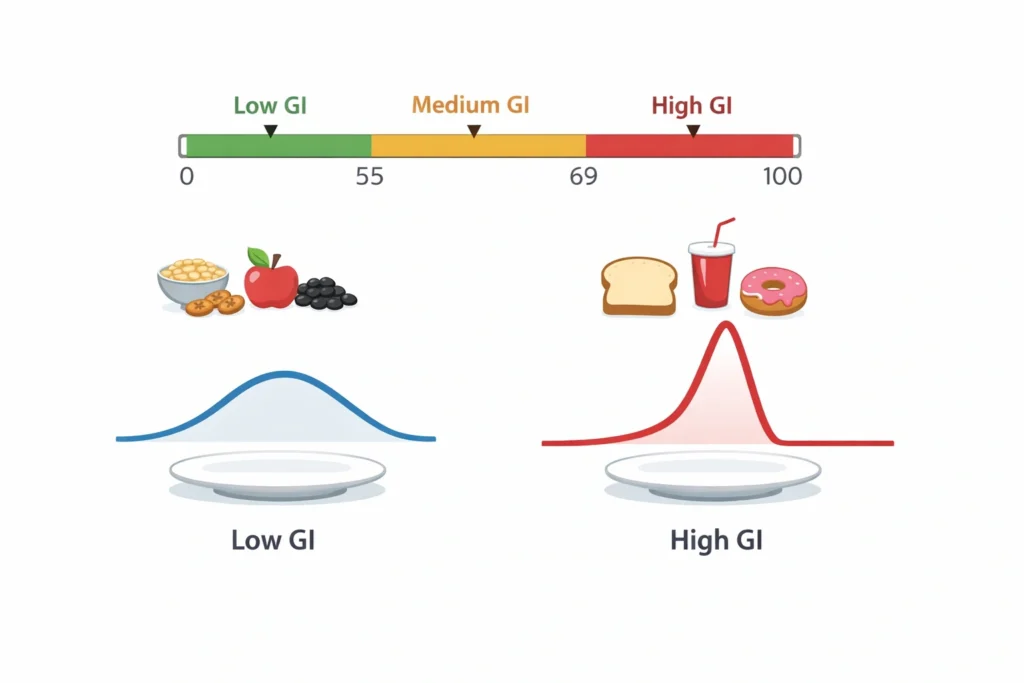
The glycemic index, often called GI, is a scale from 0 to 100 that ranks carbohydrate foods by how fast and how high they raise blood sugar after we eat them. Pure glucose is given a value of 100. Foods that digest slowly and raise blood sugar gently get a lower number. Foods that digest very fast and spike blood sugar get a higher number.
General ranges used in research and practice look like this:
- Low GI: 55 or less
- Medium GI: 56 to 69
- High GI: 70 or higher
A low glycemic index diet for weight loss focuses mostly on low and moderate GI foods, eaten in portions that match your energy needs. This pattern reduce blood sugar spikes, helps insulin work more smoothly, and supports steady energy across the day.
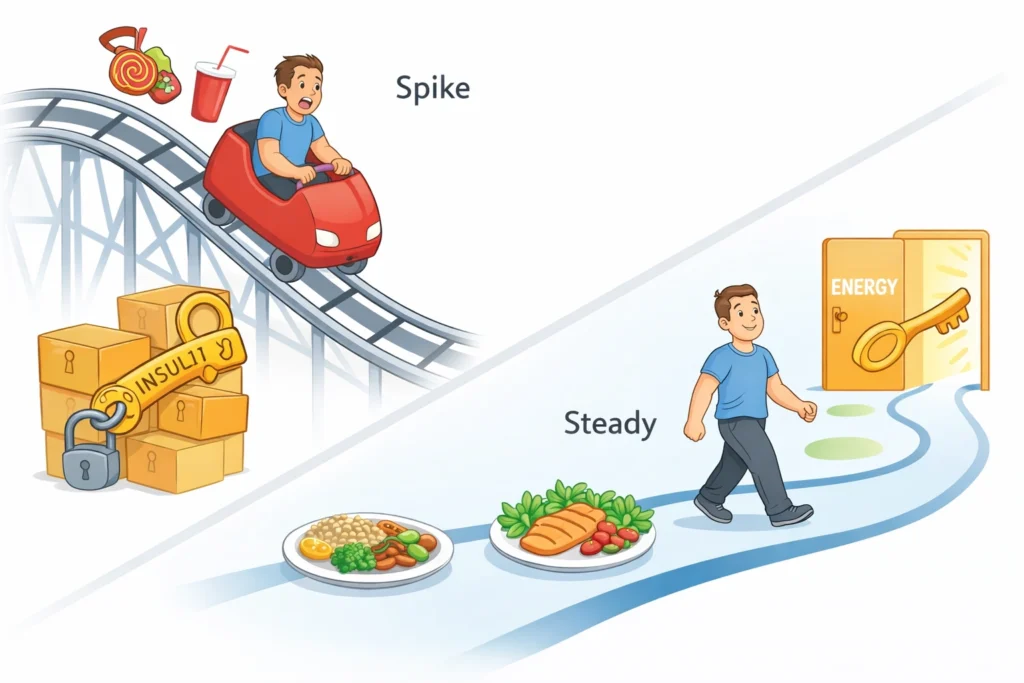
In simple terms, we are trying to trade roller coaster blood sugar for a gentle wave. That gentle wave makes it easier to control hunger, make good food choices, and avoid the tired, shaky feeling that often leads to overeating later.
How blood sugar affects weight: the missing link many people ignore
Weight is not only about calories. Calories matter, but hormones, sleep, stress, and even timing of meals play roles too. Blood sugar sits in the middle of many of these factors.
When we eat a high GI meal like white bread, sweet drinks, or candy, blood sugar can shoot up fast. The body responds by release a large amount of insulin. Insulin helps move sugar from the blood into our cells, where it can be used or stored. If this happen over and over, several things start to show up:
- We feel hungry again soon, sometimes within 1 to 2 hours.
- We crave more carbs to bring blood sugar back up.
- The body gets more efficient at storing fat, especially around the belly.
Over time, high insulin levels can lead to insulin resistance, where cells stop responding well to insulin. Research from the American Diabetes Association in 2023 highlight that insulin resistance is strongly tied to higher body weight, difficulty losing fat, and greater risk of type 2 diabetes.
A low glycemic index diet for weight loss helps break this cycle. When carbs enter the blood more slowly, insulin also rise more gently. That shift supports better fat burning between meals, steadier mood, and fewer energy crashes.
What recent research says about low GI eating and weight loss
Over the last few years, more studies have looked directly at whether a low GI pattern can support weight loss and metabolic health.
Some key findings from 2022 to 2024:
- A 2022 review in the journal Nutrients found that low GI diets often led to greater weight loss and better waist reduction compared to higher GI diets with the same calories, especially in people with insulin resistance or prediabetes.
- A 2023 trial with adults who had obesity showed that those following a low GI meal plan lost more body fat and reported less hunger than those eating a standard low fat, high carb pattern.
- Data published in 2024 linked low GI eating with reductions in HbA1c (a marker of long term blood sugar balance) in people with type 2 diabetes, without extreme carb restriction.
Based on current trends in clinics and research settings, dietitians are starting to blend low GI principles with other evidence-based patterns, like the Mediterranean diet, rather than using it as a stand-alone strict rule list.
Core principles of a low glycemic index diet for weight loss
We can make this concept practical by breaking it down into a few clear habits. These are the core ideas we use when building low GI meals for weight loss and better metabolic health.
1. Choose slow-digesting carbs most of the time
Carbs are not the enemy. The type and the context (what else we eat with them) make the difference. Slow carbs usually have more fiber, more chewing, and less processing.
Lower GI choices often include:
- Intact whole grains like steel cut oats, quinoa, barley, farro, brown or wild rice
- Beans and lentils: black beans, chickpeas, kidney beans, lentils, split peas
- Non-starchy vegetables: leafy greens, broccoli, cauliflower, peppers, carrots, cucumbers, zucchini
- Whole fruits eaten with peel when possible: apples, pears, berries, oranges, cherries, peaches
Higher GI foods to limit, especially if weight loss is the goal:
- White bread, bagels, many crackers, most breakfast cereals made from refined flour
- White rice, instant rice, many instant noodles
- Sugary drinks, energy drinks, sweetened coffee beverages
- Candies, pastries, donuts, and large bakery muffins
Instead of cutting high GI foods 100 percent, many people do well by shrinking portion sizes and pairing them with protein and fat, which reduces their blood sugar impact.
2. Match carbs with protein, fat, and fiber at every meal
The glycemic index of a food is measured when that food is eaten alone. In real life we eat mixed meals. When carbs are eaten with protein, quality fats, and fiber, digestion slows down and blood sugar response soften.
Good pairing examples:
- Oatmeal + Greek yogurt + chopped nuts + berries
- Brown rice + black beans + avocado + salsa + grilled chicken
- Whole fruit + a small handful of nuts or a cheese stick
- Whole grain toast + eggs + spinach + a drizzle of olive oil
We see this play out a lot in real kitchens. When people stop eating plain white bread with jam for breakfast and switch to eggs with veggies on a slice of whole grain bread, the mid-morning crash often disappear within a week.
3. Control portions without obsessing over numbers
Even low GI foods can lead to weight gain if portions are huge. A low glycemic index diet for weight loss works best when we respect both quality and quantity.
Simple portion cues many clients find easier to remember than tracking apps:
- Starchy carbs (grains, potatoes): about the size of your cupped hand per meal
- Protein (fish, chicken, tofu, beans): about the size and thickness of your palm
- Fats (oils, nuts, seeds): roughly 1 thumb of oil or a small handful of nuts
- Veggies: try to fill half your plate with non-starchy vegetables
These visual guides are not perfect, but they allow people to eat mindfully at home, restaurants, or social events without pulling out a scale every time.
Glycemic index vs glycemic load: why both matter for weight loss
GI tells us how fast a fixed amount of carbs from a food raise blood sugar, but it does not consider how much we really eat. This where glycemic load, or GL, come in. GL combines both quality and quantity.
The formula for glycemic load is:
GL = (GI x grams of carbs in a serving) / 100
Foods with a low GI but very high carb content can still produce a moderate glycemic load if we eat large portions. Watermelon is a classic example used in many articles. It has a high GI, but a typical serving has relatively low carbs, so the GL is moderate.
For weight loss, focusing on overall low to moderate glycemic load across the day tends to be more realistic than obsessing about each single GI number. That means:
- Build meals mainly from low GI foods.
- Include moderate GI foods in sensible portions.
- Limit high GI foods to small amounts or special occasions.
Benefits of a low glycemic index diet for weight loss beyond the scale
Many people start this pattern wanting to lose weight, but often stay with it because of other changes they notice. Here are some common benefits backed by research and real life experience.
Improved appetite control and fewer cravings
When we flatten the blood sugar spikes, we usually flatten the craving curve as well. Higher protein and higher fiber meals work together with low GI carbs to stretch out digestion and give a longer feeling of fullness.
In practice, that might look like:
- Late night snacking gradually reducing without much willpower battles.
- Less urge to grab sugary coffee or pastries in the afternoon.
- Easier time sticking to intentional portions because meals are more satisfying.
Better energy and mood stability
Blood sugar swings can feel like emotional swings. Many readers describe feeling foggy, irritable, or shaky after a high sugar meal. As meals shift to lower GI options, energy become more stable, which often makes exercise and daily movement easier to keep up with.
Support for heart and metabolic health
Research reviewed in 2023 found that low GI diets were linked to:
- Lower fasting blood sugar and improved insulin sensitivity.
- Better triglyceride levels and modest improvements in LDL cholesterol.
- Reduced markers of chronic inflammation in some groups.
Because of these effects, many clinicians use low GI strategies for people with metabolic syndrome, PCOS, and prediabetes who are also trying to lose weight.
How to build a low glycemic index meal plan for weight loss
Turning theory into a weekly grocery list can feel like the hardest step. The goal is not perfection. We want a pattern that fits real life: busy weekdays, family meals, social events, and maybe the occasional dessert.
Step 1: Set a realistic carb range
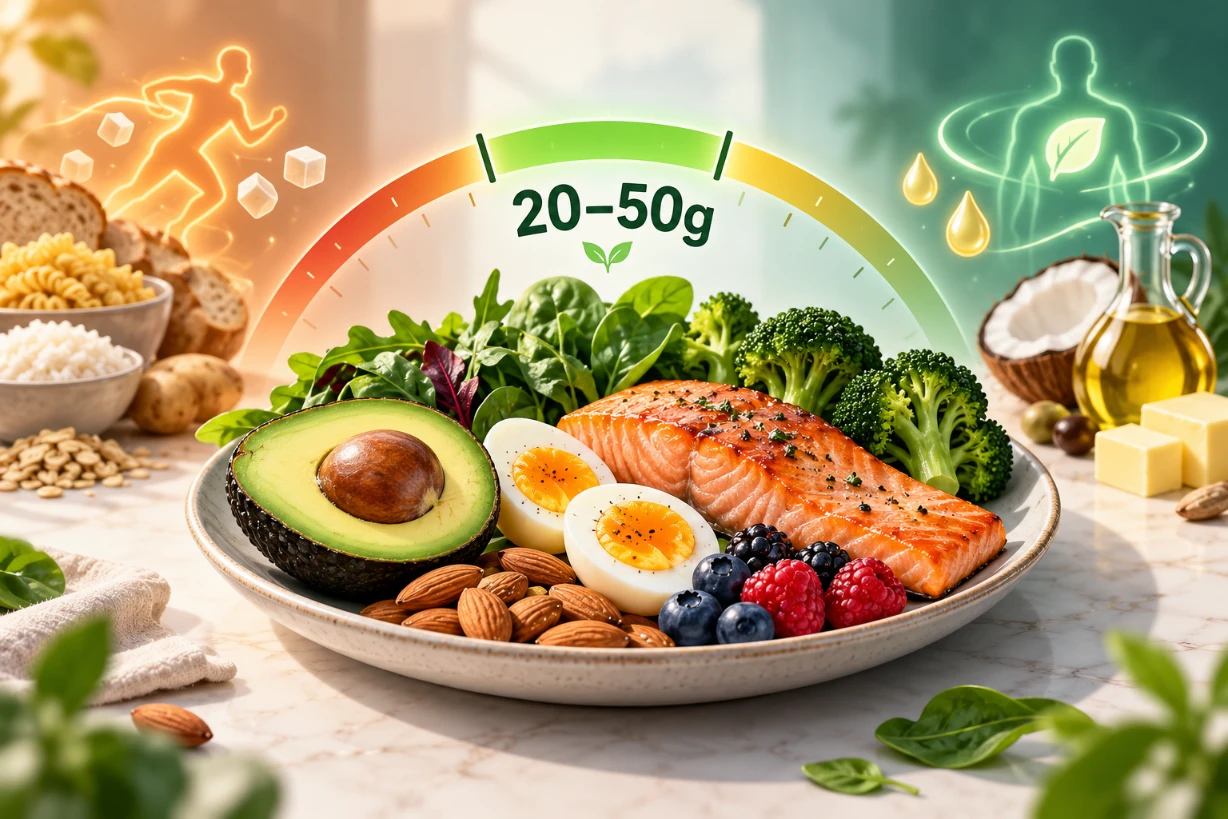
Low GI is not the same as low carb. Many effective weight loss plans using low GI foods still include 40 to 50 percent of calories from carbohydrates, especially for active people. Others do better slightly lower. There is no single number that works for everybody.
If you are coming from a very high carb pattern with lots of refined foods, just moving to mostly whole food, lower GI choices is already a big step, even without strict counting.
Step 2: Build meals around protein and vegetables first
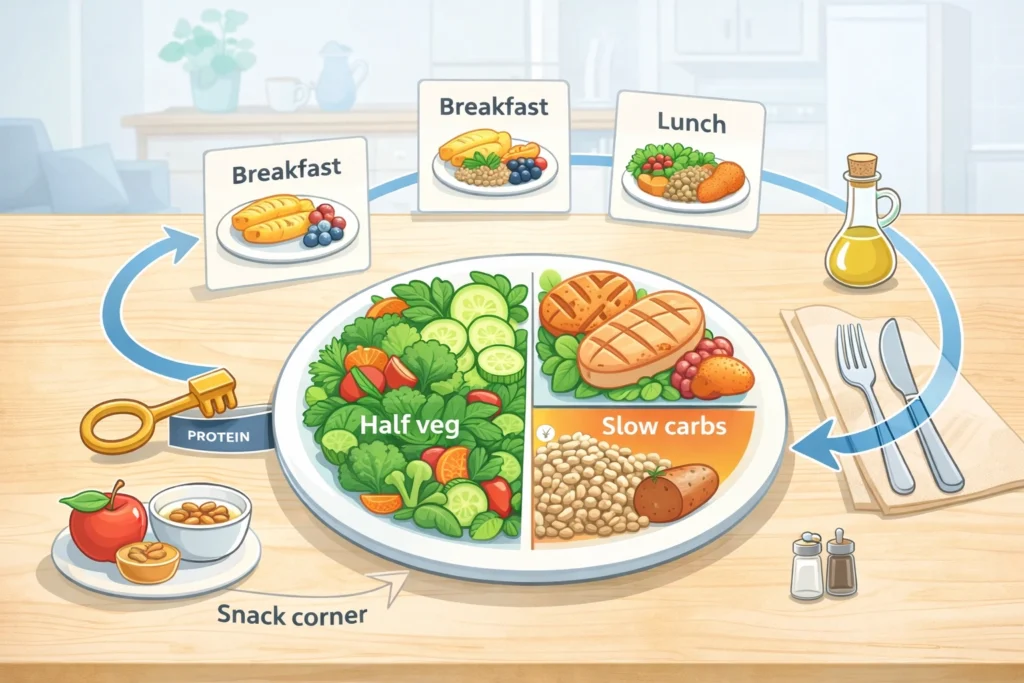
A simple framework for plate-building that works well with low GI principles is:
- Half plate: non-starchy vegetables
- One quarter: lean protein
- One quarter: lower GI carbs or starchy vegetables
- Plus: a small amount of healthy fat
Examples:
Breakfast: Veggie omelet cooked in olive oil with a small bowl of steel cut oats topped with chia seeds and berries.
Lunch: Large salad with mixed greens, chickpeas, cherry tomatoes, cucumbers, olives, grilled salmon, and vinaigrette, served with a small side of quinoa.
Dinner: Baked chicken thighs, roasted Brussels sprouts and carrots, and a side of lentils or a small baked sweet potato.
Step 3: Plan snacks that steady blood sugar instead of spike it
Snacks can support a low glycemic index diet for weight loss, but only if they help with hunger control rather than just add extra sugary calories.
Snack ideas that fit low GI principles:
- Apple slices with natural peanut or almond butter
- Plain Greek yogurt with cinnamon and a few walnuts
- Carrot sticks and bell pepper strips with hummus
- A small portion of cottage cheese with berries
Low GI diet compared with other popular weight loss patterns
Many readers wonder how a low glycemic index diet for weight loss stack up against keto, plant based eating, or Mediterranean style plans. Instead of picking one as the winner, it helps to notice where they overlap.
For example, both low GI and Mediterranean eating encourage whole grains, beans, vegetables, fruit, nuts, and olive oil. If you already like that style, you can adjust it toward lower GI choices by focusing on minimally processed grains and pairing carbs with protein and fat. A deeper look at foods in the Mediterranean pattern is available at https://dietlinic.com/what-foods-are-in-the-mediterranean-diet/.
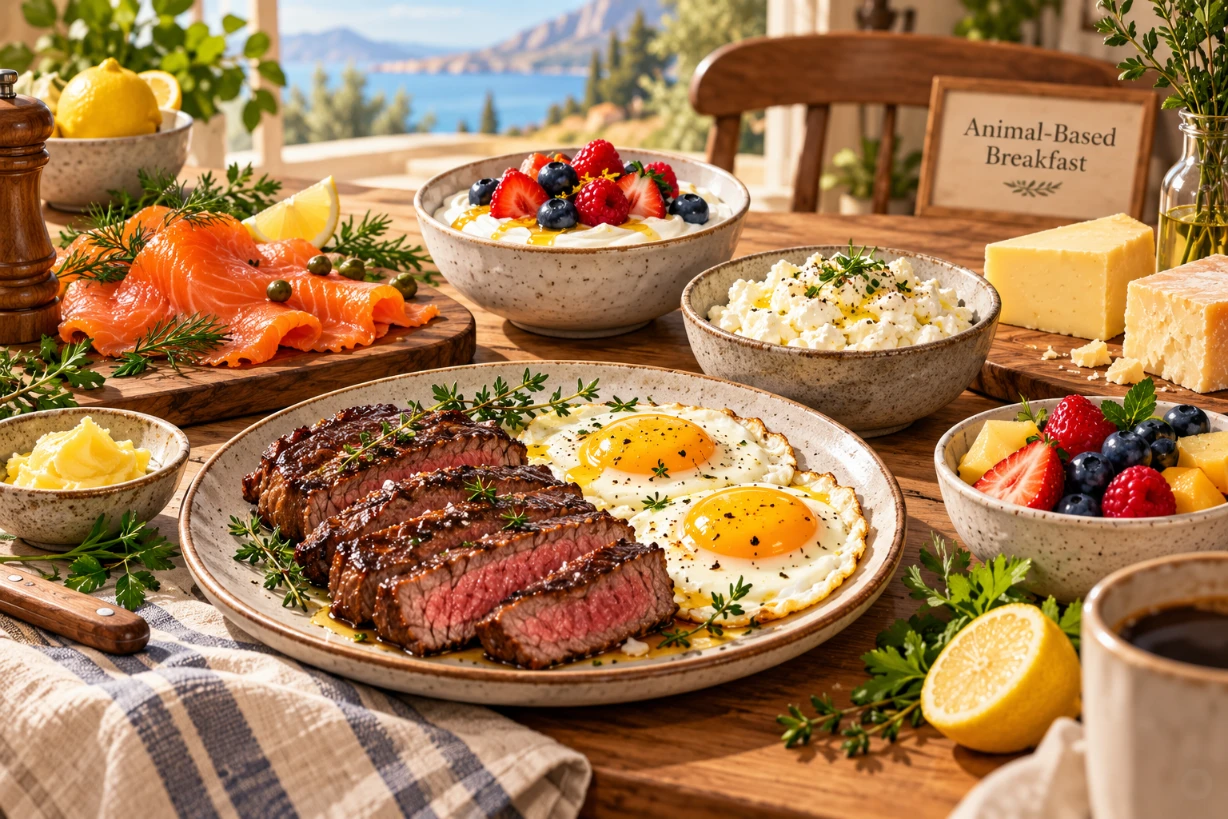
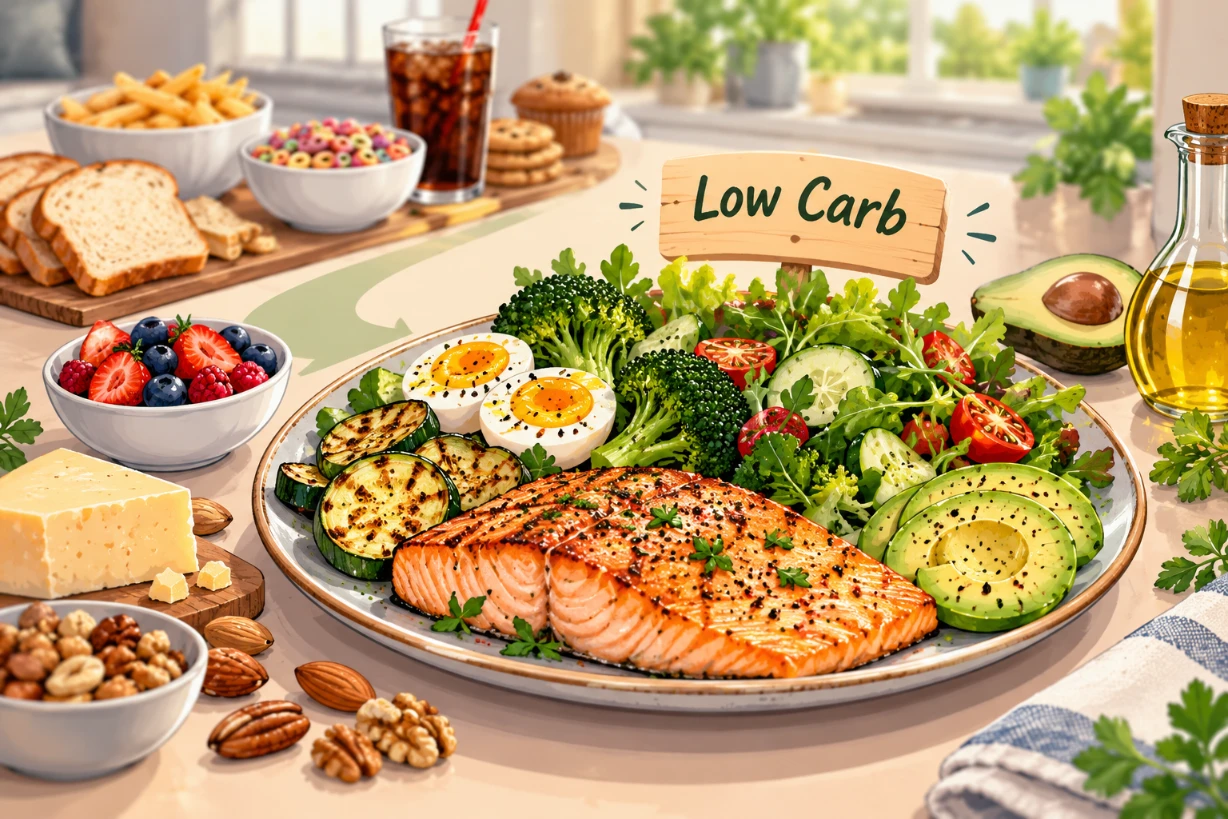
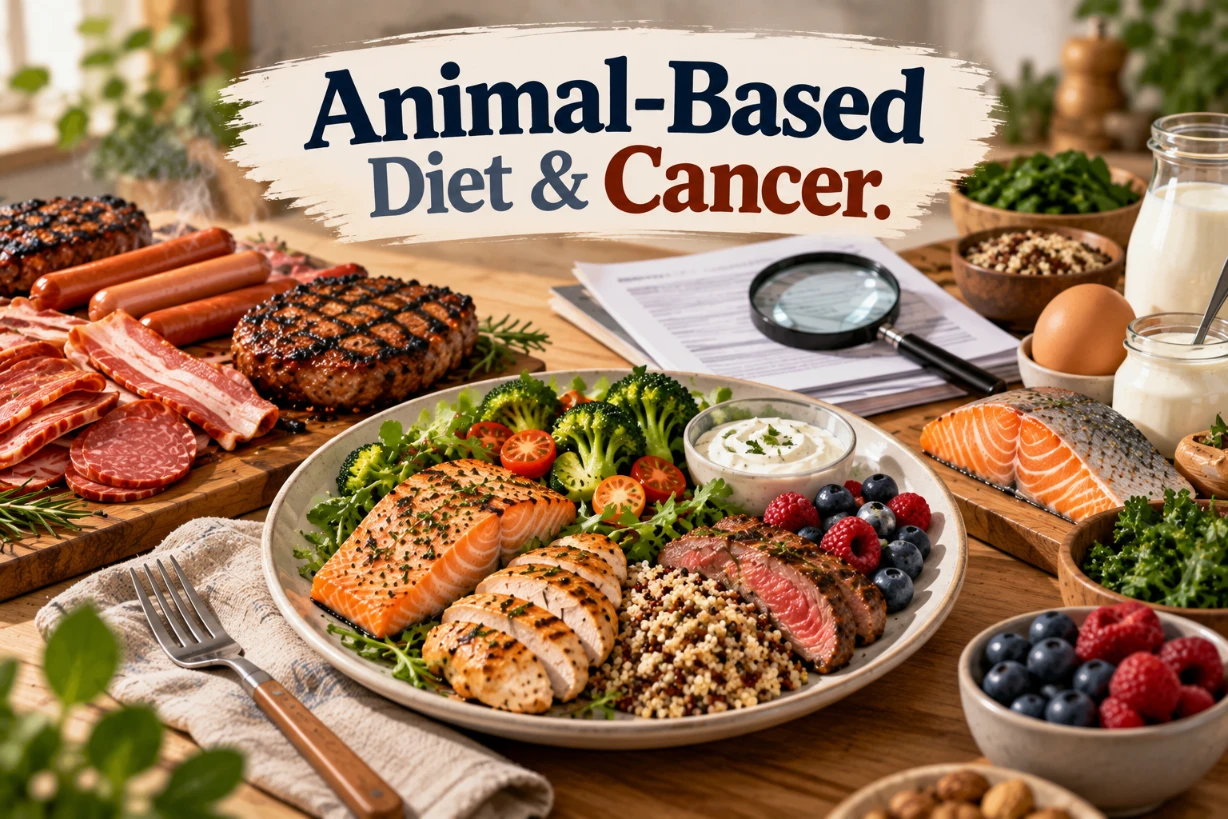
Animal based or keto-style diets usually keep overall carbs very low, which naturally drops GI load. They can work for some people, but they also cut out many nutritious carb sources like beans and fruit. If you are curious how animal based approaches compare with other styles, there is a detailed discussion at https://dietlinic.com/animal-based-diet-vs-keto-which-is-better/ and https://dietlinic.com/animal-based-diet-vs-plant-based-diet/.
What we see in practice is that people tend to stick best with patterns that feel culturally familiar and enjoyable. A low GI approach can be layered onto many different cuisines, from Latin American to Asian to Mediterranean, without losing their flavor or identity.
Sample 1 day low glycemic index menu for weight loss
This sample day is not a one-size-fits-all prescription, but it gives a rough picture of how low GI eating might look in daily life. Portions should be adjusted based on your size, hunger, activity level, and goals.
Breakfast
Steel cut oats cooked in water or milk, topped with:
- 1/2 cup mixed berries
- 1 tablespoon chia or ground flax seeds
- A sprinkle of cinnamon
Side: 1 scrambled or boiled egg for extra protein
Mid-morning snack
1 small apple + 1 tablespoon natural peanut butter
Lunch
Bowl made with:
- 1 cup mixed greens + chopped raw vegetables
- 1/2 to 3/4 cup cooked quinoa
- 3 to 4 ounces grilled chicken or baked tofu
- 2 tablespoons hummus as a dressing with lemon juice
Afternoon snack
Plain Greek yogurt (about 3/4 cup) + a few sliced almonds
Dinner
4 ounces baked salmon or white fish
1 cup roasted non-starchy vegetables (broccoli, cauliflower, carrots)
1/2 cup cooked lentils or a small roasted sweet potato
Evening option (if still hungry)
Herbal tea and a small handful of baby carrots or cucumber slices
This type of day keeps carbs mainly in the low to moderate GI range, spreads protein throughout, and supplies plenty of fiber, which support both weight control and digestion.
Common mistakes that make low GI diets less effective for weight loss
Just switching a few foods for “low GI” versions does not always lead to the results we want. Some frequent pitfalls show up again and again.
Overeating “healthy” carbs just because GI is low
We often see people pouring huge bowls of brown rice or polishing off half a bag of whole grain crackers and then feeling confused why the scale is stuck. Energy balance still matters. Using your hand as a portion guide can help prevent this mistake.
Ignoring drinks and liquid calories
Even when meals are well balanced, sweetened coffee drinks, fruit juice, sports drinks, and alcohol can quickly flood the system with high GI sugars. Swapping most of those for water, sparkling water, unsweet tea, or coffee with minimal sugar saves a lot of hidden calories and blood sugar swings.
Not eating enough protein
A low glycemic index diet for weight loss works best when protein is adequate. Many adults in the U.S. still under-eat protein at breakfast and lunch. Aiming for roughly 20 to 30 grams of protein at each main meal supports muscle, satiety, and healthy metabolism, especially while losing weight.
Expecting rapid, dramatic weight loss
Low GI eating is not usually a crash diet. Weight loss happens, but often at a moderate, sustainable pace, like 0.5 to 1 pound per week. Some people get frustrated because the scale is not dropping 5 pounds in a week, but they miss the fact their cravings are better, sleep is improving, and waist is shrinking slowly. Those deeper changes often matter more in the long run.
Who may benefit most from a low glycemic index diet for weight loss
While most generally healthy adults can follow low GI principles, certain groups often see even bigger benefits:
- People with prediabetes or type 2 diabetes who need better blood sugar control while losing weight.
- Women with PCOS, who often struggle with insulin resistance and stubborn belly fat.
- Individuals with strong sugar cravings or emotional eating linked to blood sugar swings.
- Those who tried very low carb or keto and found it too restrictive, but still want better carb quality.
On the other hand, athletes with very high training loads, underweight people, or those with certain medical conditions may need a different carb structure. Working with a registered dietitian or healthcare provider is wise when health issues are present.
Practical grocery tips for low GI eating on a busy schedule
It is one thing to understand the science, another to shop and cook when life is hectic. A few simple habits can lower GI without huge extra effort.
- Buy frozen vegetables and fruits without added sugar. They are often picked at peak ripeness and work well in stir-fries, soups, and smoothies.
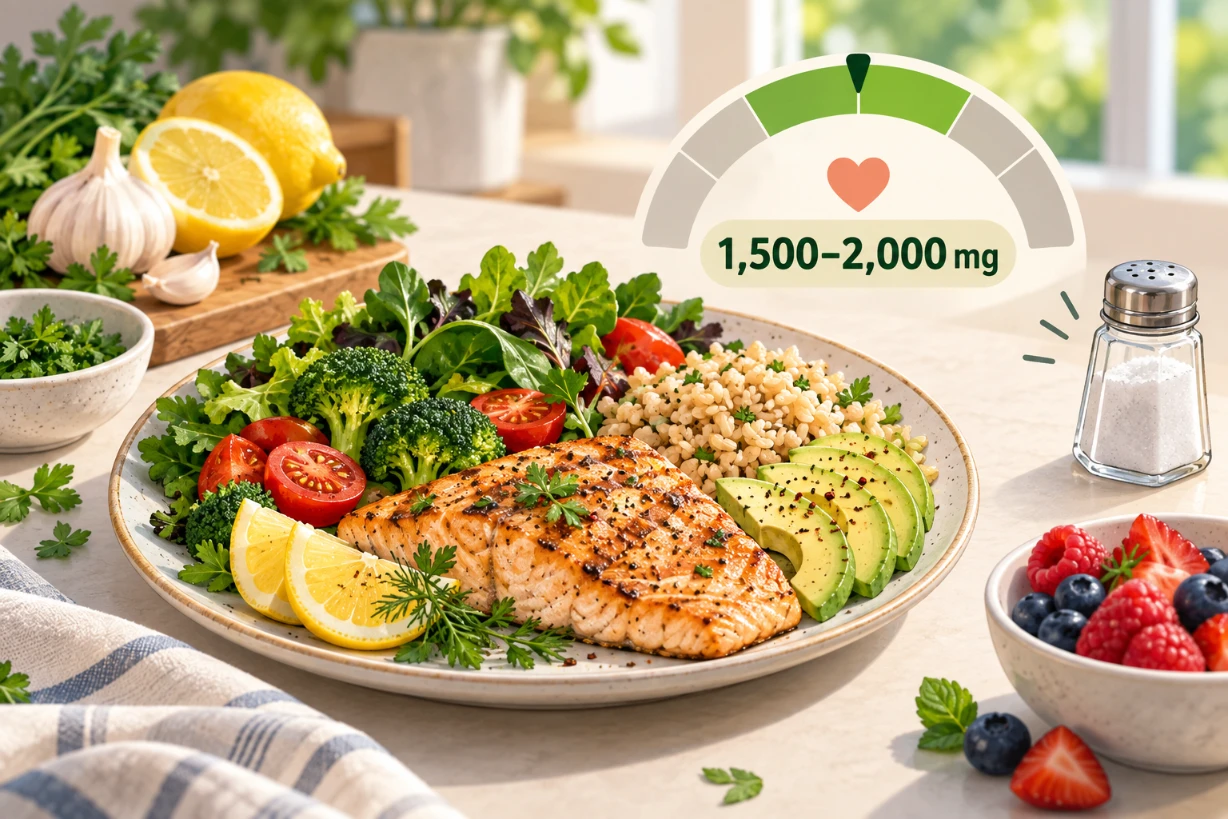
- Keep a couple of canned bean varieties on hand. Rinse them to reduce sodium and add to salads, soups, or grain bowls for fiber and protein.
- Choose breads with at least 3 grams of fiber per slice, and “100 percent whole grain” listed first on the ingredient list.
- Batch cook a pot of lentils, beans, or a whole grain on weekends to use across multiple meals.
- Stock simple proteins like eggs, canned tuna or salmon, plain Greek yogurt, and tofu for quick meals.
Small shifts like trading instant oatmeal for old fashioned or steel cut oats, or swapping sugary cereal for eggs with vegetables, can already lower glycemic load a lot.
Signs your low glycemic index diet is working (beyond the scale)
Weight is only one metric. Many readers tell us they start to notice change even before the scale moves much. Good signs that this way of eating is helping include:
- Less intense carb cravings and fewer “hangry” moments.
- Stronger energy across the day, with less afternoon slump.
- Clothes fitting better around the waist and hips.
- Improved fasting glucose and triglyceride levels in lab tests.
- Better sleep quality and mood stability.
These changes hint that your metabolism is shifting in a calmer, more balanced direction, which usually supports ongoing fat loss over months, not just weeks.
Final thoughts: using low GI as a long term tool, not a short diet
A low glycemic index diet for weight loss is not perfect, but it gives a helpful lens for thinking about carbs, hunger, and energy. Instead of labeling food strictly as good or bad, it encourages us to ask: How will this meal treat my blood sugar, my mood, and my future self.
For many people, the sweet spot is combining low GI choices with mindful portions, regular physical activity, and a flexible mindset. That way, we can enjoy food, respect our bodies, and still move steadily toward a healthier weight and better metabolic health without feeling trapped in another harsh diet cycle.



Leave a Reply