
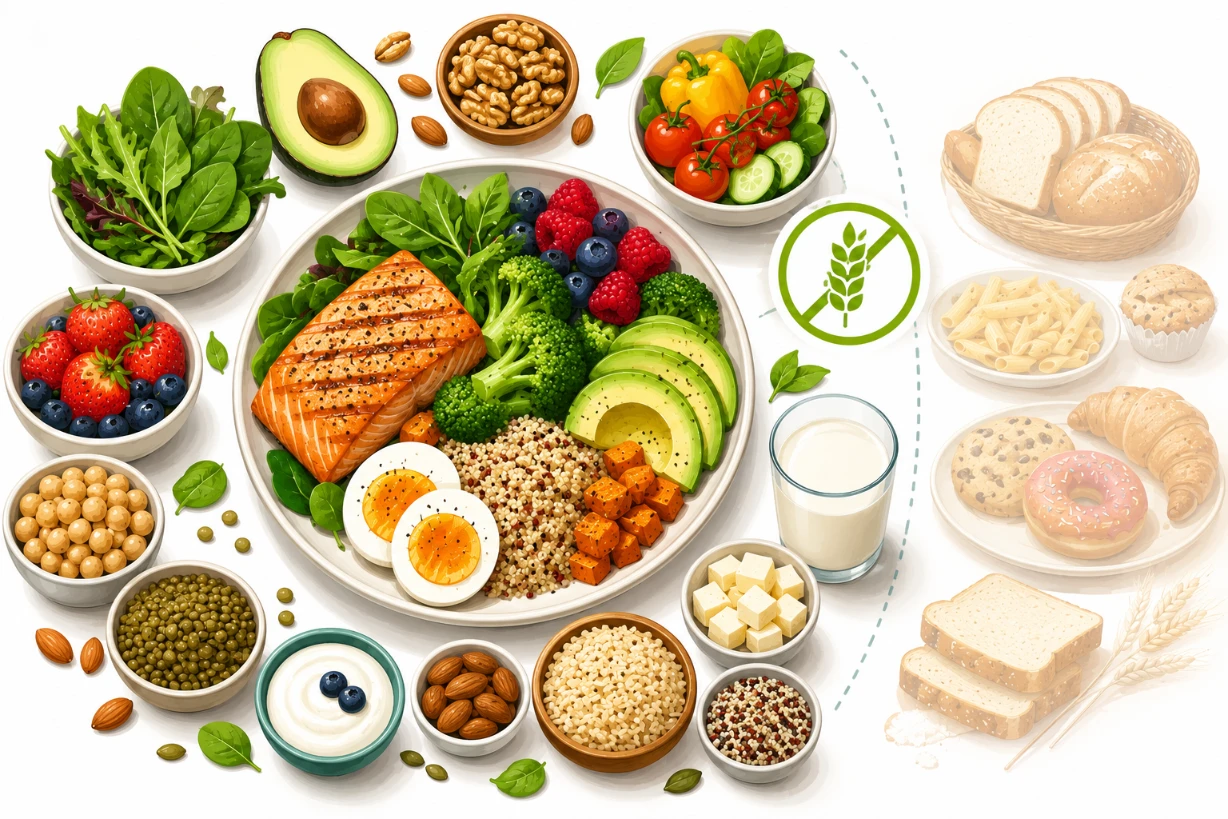

Figuring out what can you eat on a gluten free diet often feels confusing at first. Bread, pasta and baked snacks are everywhere in the American food culture, and they often hide gluten in places we do not expect. Still, once we understand the rules, a gluten free lifestyle can feel simple, flexible, and even pretty satisfiying.
What gluten actually is and why it matters
Gluten is a group of proteins found mainly in wheat, barley and rye. It gives dough that stretchy, chewy texture so many of us grew up loving in pizza and bagels.
For people with celiac disease, gluten triggers an autoimmune reaction that damage the small intestine. According to the Celiac Disease Foundation, about 1 in 100 people worldwide have celiac disease, but an estimated 80 percent remain undiagnosd. Even without celiac, some people have non celiac gluten sensitivity, meaning gluten causes symptoms like bloating, brain fog, or fatigue even though their gut lining does not show the same kind of damage.
So when we talk about what can you eat on a gluten free diet, we are really asking two things:
- Which foods naturally contain no gluten at all
- Which foods are safe only if they are labeled gluten free because of cross contact or hidden ingredients
Once we sort foods into those buckets, meal planning becomes much less stressful.
Gluten containing grains and foods to avoid completely
First we need a clear picture of what is off the table. A gluten free diet needs to remove:
Grains that contain gluten
- Wheat (all types including whole wheat, white flour, durum, semolina, spelt, farro, kamut, einkorn)
- Barley (including barley malt, malt extract, malt syrup, malt vinegar)
- Rye
- Triticale (a wheat rye hybrid)
Because of these grains, the follow foods are usually not gluten free unless they are clearly labeled that way:
- Regular breads, rolls, bagels, muffins, cookies, cakes and pastries
- Ordinary pasta, couscous, wheat noodles, dumplings
- Flour tortillas, breaded chicken, fish sticks, tempura
- Most breakfast cereals and granola with wheat, barley malt or rye
- Beer and malt beverages made from barley
Even if we remove all the obvious bread like foods, gluten can still show in less expected places, so label reading becomes a daily habit.
Naturally gluten free foods you can eat freely
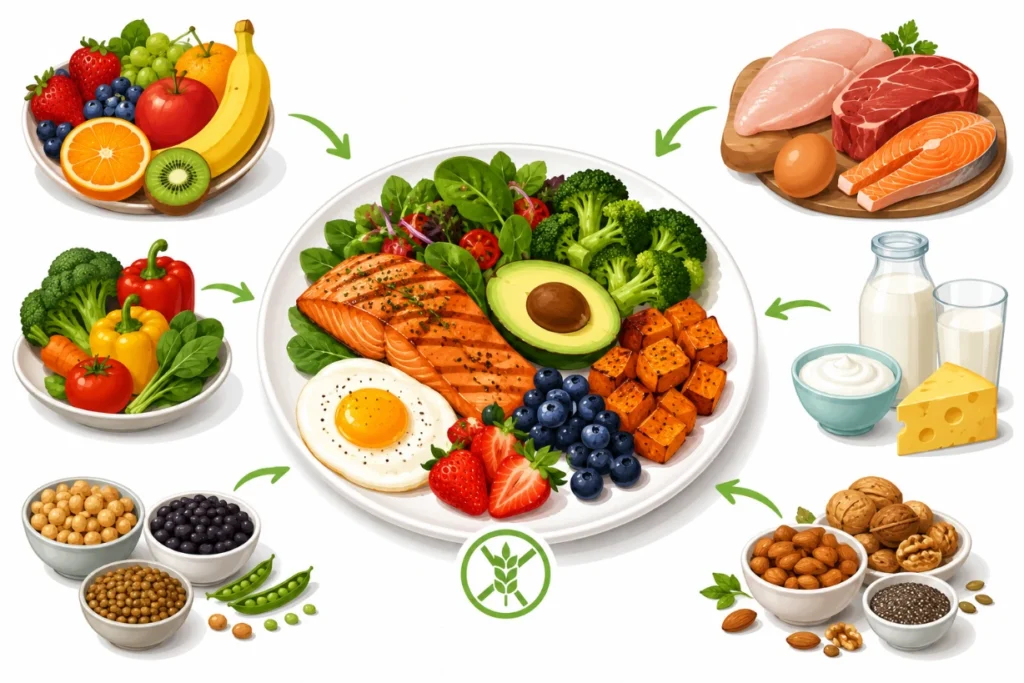
Here is the part that often suprises people. Most whole, unprocessed foods are already gluten free. When we ask what can you eat on a gluten free diet, a better question often is how do we build meals around the many things that are safe.
Meat, poultry, fish and eggs
Plain animal proteins have no gluten. Trouble only starts when coatings, marinades, or sauces are added.
You can enjoy, as long as they are not breaded or marinated in soy sauce or flour based gravies:
- Beef, lamb, bison
- Chicken, turkey, duck and other poultry
- Fish like salmon, cod, tuna, trout, tilapia
- Shellfish like shrimp, scallops, clams, crab, lobster
- Eggs cooked any way (scrambled, boiled, poached, fried in clean oil)
From a cooking perspective, many people find it easier to center meals on protein and vegetables, similar to what we use in a Mediterranean style eating pattern. If you like that approach, you might also find ideas in this guide on what foods are in the Mediterranean diet: https://dietlinic.com/what-foods-are-in-the-mediterranean-diet/
Fruits and vegetables
All fresh fruits and vegetables are naturally gluten free. That includes:
- Leafy greens like spinach, kale, romaine, arugula
- Cruciferous veggies such as broccoli, cauliflower, cabbage
- Root vegetables like potatoes, sweet potatoes, carrots, beets
- Summer veggies like zucchini, eggplant, tomatoes, peppers
- Fruits like apples, berries, bananas, oranges, grapes, melons, mango, pineapple
Problems sometimes happen when fruits or veggies are canned, frozen or prepared with sauces. Creamed spinach, battered onion rings, or veggies in a wheat based soy sauce will not be gluten free. For frozen vegetables, we like to check the ingredient list carefully. A bag that says “broccoli, water, salt” is fine, but “broccoli, seasoning mix” needs more attention.
Legumes and nuts
Beans and legumes do not contain gluten and they give helpful fiber, iron, and plant protein:
- Black beans, pinto beans, navy beans, kidney beans
- Chickpeas (garbanzo), lentils, split peas
- Soybeans and edamame (watch for flavored versions)
Nuts and seeds are also safe and make great snacks on a gluten free diet:
- Almonds, walnuts, pecans, cashews, pistachios
- Peanuts (technically legumes, but used like nuts)
- Sunflower, pumpkin, chia, flax, sesame seeds
We just need to be careful with flavored or roasted nuts that might use wheat based seasoning or be processed in facilities with gluten containing snacks. Many brands now mark “gluten free” on the front of the package, which simplify shopping.
Dairy foods
Most plain dairy products are gluten free:
- Milk (whole, low fat, skim, lactose free)
- Plain yogurt and many flavored yogurts that use gluten free thickeners
- Cheese (cheddar, mozzarella, parmesan, Swiss, cottage cheese, cream cheese)
- Butter and ghee
Some products such as flavored yogurt, ice cream, or dips may contain cookie pieces, brownie bits, or wheat based stabilizers. Reading labels is key. Many people with celiac disease also notice temporary lactose intolerance when they first go gluten free because the damaged gut has trouble breaking down milk sugar. In that case, lactose free options or aged cheeses can help while the gut heals.
Gluten free grains and starches you can use instead of wheat
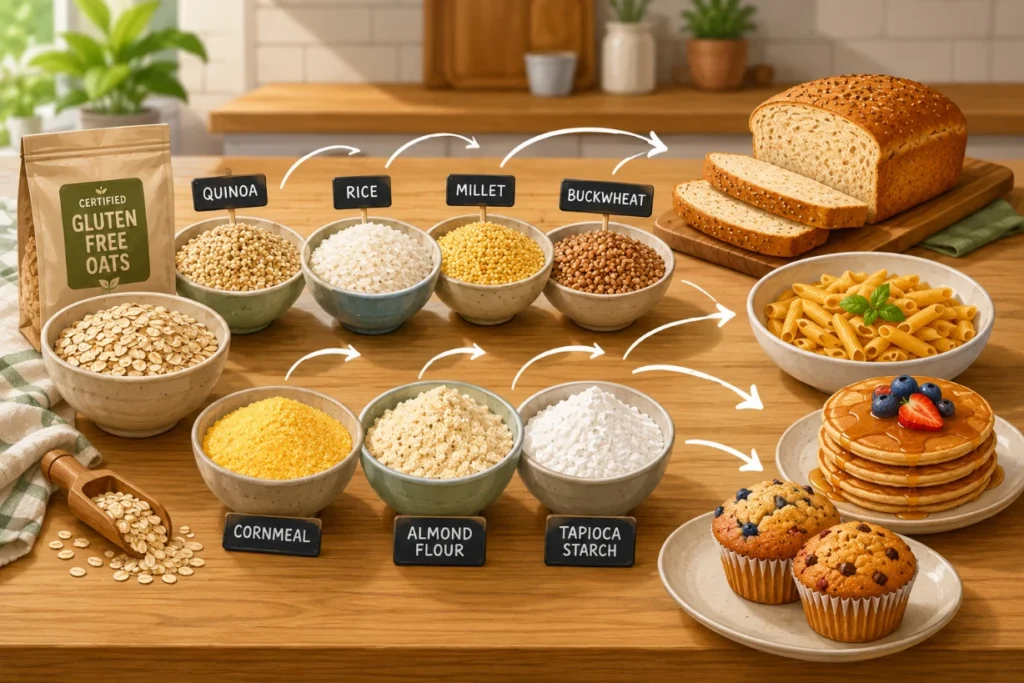
For most of us, bread, pasta and grains are mentally tied to comfort and convenience. Good news is, there are many naturally gluten free grains and starches that can fill that gap so we do not feel deprived.
Naturally gluten free grains
These grains and pseudo grains do not contain gluten on their own:
- Rice (white, brown, wild, jasmine, basmati)
- Quinoa
- Buckwheat (despite the name, it is not wheat)
- Millet
- Sorghum
- Teff
- Amaranth
- Corn (polenta, cornmeal, grits)
- Certified gluten free oats
Oats are a special case. They do not naturally contain gluten, but they are often grown and processed near wheat, so cross contact is very common. For a truly gluten free diet, especially with celiac, we need oats labeled “certified gluten free.” A 2023 review in Nutrients journal highlighted that cross contamination remain a top reason some celiac patients keep having symptoms even when they think they eat gluten free, which matches what many of us see in real life.
Starches, flours and baking ingredients
When we cook or bake at home, these gluten free flours and starches can replace wheat flour in recipes:
- Rice flour (white or brown)
- Almond flour and other nut flours
- Coconut flour
- Chickpea (gram) flour
- Sorghum flour, millet flour, teff flour
- Potato starch, tapioca starch, arrowroot powder
Most grocery stores now carry all purpose gluten free baking blends. They usually combine a few of the flours above along with xanthan gum to mimic the stretchy quality gluten gives to dough. In our experience, these blends work very well for pancakes, muffins, quick breads and many cookie recipes.
Packaged foods you can eat on a gluten free diet
Modern food companies have responded to the rising demand for gluten free options. The global gluten free products market has grown steadily, with North America holding a major share according to several 2023 industry reports. That means we have more choices, but we also need to stay label smart.
Gluten free breads, pastas and baked goods
You can now find:
- Gluten free sandwich bread, bagels, tortillas and wraps
- Pastas made from corn, rice, quinoa, lentils or chickpeas
- Gluten free pizza crusts
- Boxed mixes for gluten free brownies, cakes, muffins and pancakes
Texture and taste have improved a lot in the last few years. Based on our own trials and reader feedback, brands that mix a few flours (like rice plus sorghum plus tapioca) usually taste better and hold together more like wheat bread. Some stores also provide fresh gluten free bakery items, but here we pay attention to how they handle cross contact. If gluten free cookies sit on the same tray as wheat cookies, crumbs easily mix.
Snack foods
A gluten free diet still allows plenty of snack options when we choose carefully:
- Plain potato chips and corn tortilla chips cooked in clean oil
- Popcorn with simple ingredients
- Rice cakes and rice crackers labeled gluten free
- Gluten free pretzels
- Dark chocolate without cookie or wafer pieces
- Fruit bars and nut bars with certified gluten free oats or no oats at all
Seasoned chips, flavored crackers, energy bars and trail mix can hide gluten in flavorings, malt, or small cookie pieces. Many of us learn to do a quick scan of the ingredient list for words like wheat, barley, rye, malt, or brewer’s yeast (unless specified gluten free).
Condiments and sauces
Many simple condiments are safe, but some classic sauces use flour or barley malt as thickners or flavor base. In general:
- Usually gluten free: ketchup, mustard, mayonnaise, plain vinegar (not malt), salsa, hot sauce
- Check carefully: soy sauce, teriyaki sauce, salad dressings, barbecue sauce, gravy mixes, bouillon cubes, marinades
We tend to look for tamari or “gluten free soy sauce” as a staple swap. Regular soy sauce often contains wheat, while tamari usually do not, but checking the label is still smart.
Hidden gluten and cross contact risks
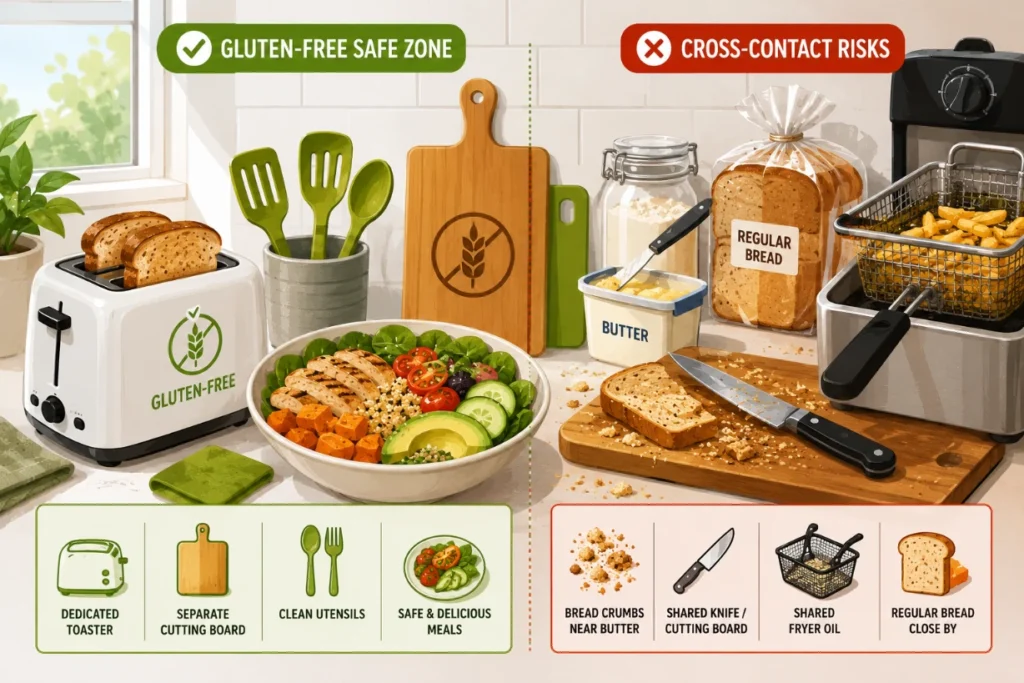
One of the hardest parts of answering what can you eat on a gluten free diet is realizing that gluten might not be obvious. Even trace amounts can trigger symptoms for someone with celiac disease.
Common sources of hidden gluten
Gluten can hide in:
- Soups and stews thickened with flour
- Imitation crab (surimi), some veggie burgers or meat substitutes
- Seasoned rice mixes and flavored instant noodles
- Licorice and some candies made with wheat flour
- Processed deli meats, sausages, or meatballs with bread crumbs
- Pre shredded cheese coated with anti caking agents that sometimes use wheat starch
Words that may signal gluten on a label include “wheat,” “barley,” “rye,” “malt,” “malt extract,” “malt flavoring,” and “brewer’s yeast” (unless labeled gluten free). In the United States, the FDA requires that wheat be declared on packaged food labels, but barley and rye do not have the same allergen rule, so we still need to watch for them by name.
Cross contact in the kitchen
Cross contact happnes when gluten free food touches surfaces, tools, or oils that were used for gluten containing food. Common examples:
- Toasters that hold regular bread crumbs
- Shared butter tubs where knives with bread crumbs dip in and out
- Restaurant fryers that cook breaded chicken and french fries in the same oil
- Cutting boards or wooden spoons used for both gluten and gluten free foods
At home, many people with celiac set up a separate toaster, cutting board and colander just for gluten free cooking. In restaurants, asking how they handle fryers, sauces, and prep surfaces can make the difference between a safe meal and a flare up.
Sample gluten free meal ideas for a full day
Looking at a real day of eating can make the choices feel more concrete. Here are some simple meal ideas that work well if your goal is to figure out what can you eat on a gluten free diet without spending hours in the kitchen.
Breakfast ideas
- Gluten free oatmeal made from certified gluten free oats, cooked in milk or water, topped with berries, peanut butter, and a sprinkle of chia seeds
- Greek yogurt parfait layered with fresh fruit, nuts, and a gluten free granola
- Scrambled eggs with spinach, tomatoes, and cheese, served with a side of roasted potatoes
- Gluten free toast topped with avocado, lemon juice and a fried egg
Lunch ideas
- Salad with mixed greens, grilled chicken, cherry tomatoes, cucumber, olives, feta and olive oil vinaigrette
- Rice bowl with black beans, roasted sweet potatoes, peppers, salsa and a spoon of plain Greek yogurt
- Gluten free turkey wrap using a certified gluten free tortilla, filled with lettuce, tomato, mustard and pickles
- Leftover quinoa with chickpeas, roasted vegetables, and tahini dressing
Dinner ideas
- Grilled salmon with lemon, served with brown rice and steamed broccoli
- Stir fry made with beef or tofu, mixed vegetables, and a gluten free tamari sauce served over rice or rice noodles
- Gluten free pasta with tomato sauce, fresh basil, parmesan cheese and a side salad
- Baked chicken thighs with herbs, roasted carrots and potatoes
Snack ideas
- Apple slices with almond butter
- Baby carrots, cucumber slices and bell pepper strips with hummus
- Cottage cheese with pineapple or berries
- A small handful of nuts and a piece of dark chocolate labeled gluten free
These meals follow the same balanced pattern many healthy eating styles use: protein, fiber rich carbs, healthy fats, and plenty of vegetables. Gluten free does not have to mean low carb, but it does push us toward more whole, naturally gluten free foods, which often helps overall diet quality.
Eating gluten free when you also follow other diet styles
Some readers also follow specific patterns like Mediterranean, higher protein, or animal based styles and still need to avoid gluten. Thankfully, most of these styles can work together with a bit of planning.
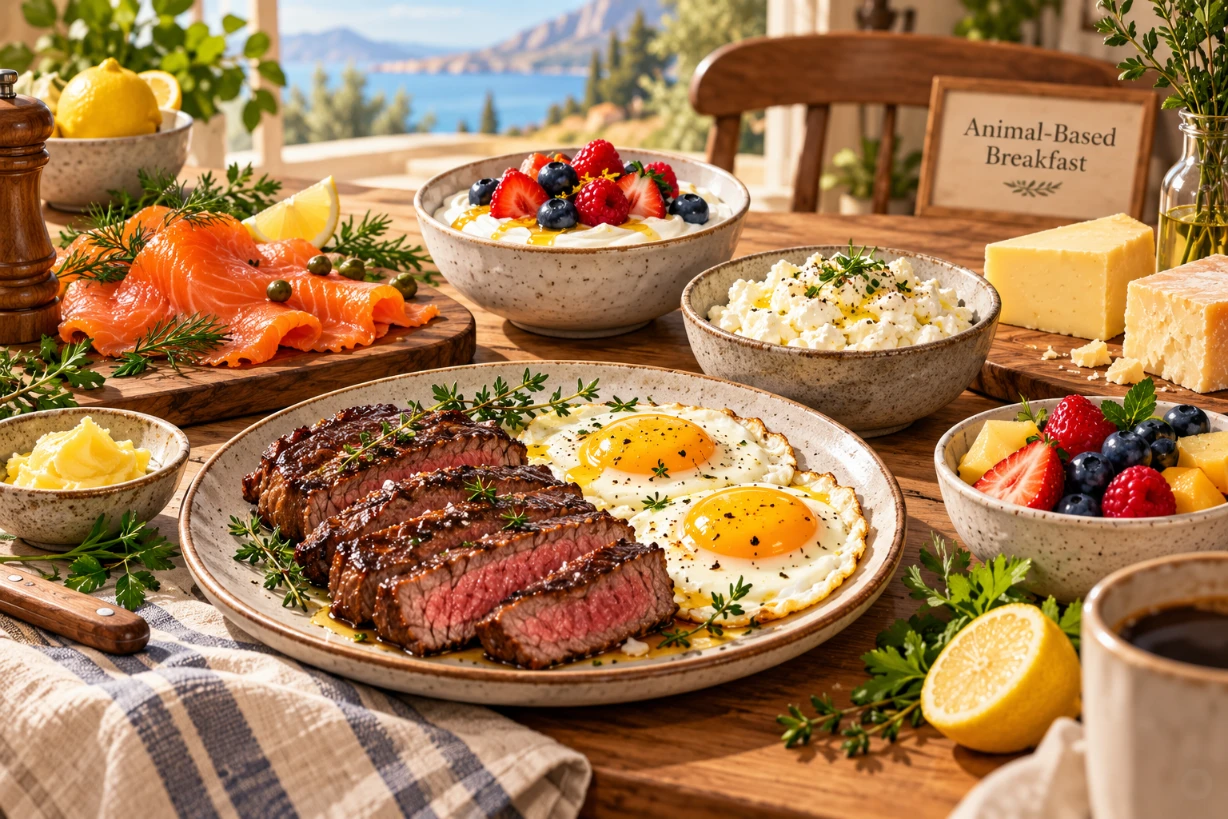
For example, many animal focused diets already limit grains, which reduces gluten by default. If you are curious about how fruits or vegetables fit around more animal centered eating, some of these guides might help you think through options:
- https://dietlinic.com/animal-based-diet/
- https://dietlinic.com/fruits-you-can-eat-on-an-animal-based-diet/
- https://dietlinic.com/animal-based-diet-vegetables-what-to-avoid/
The main point is that gluten free is one layer of food choices, not your whole identity. You can still build meals that align with other health or ethical goals while respecting your gluten limits.
How to read labels and spot safe gluten free products
For packaged foods, learning the basic label rules makes the question what can you eat on a gluten free diet much easier to answer.
The “gluten free” label rule
In the United States, when a food label states “gluten free,” “no gluten,” “free of gluten” or “without gluten,” the FDA requires that:
- The food contains less than 20 parts per million (ppm) of gluten
- No ingredient is a gluten containing grain unless it has been processed to below that level
For most people with celiac disease, this level is considered safe. For people who react to tiny amounts, working with a registered dietitian and sometimes choosing products certified by third party organizations like the Gluten Free Certification Organization (GFCO) can give extra peace of mind.
Ingredients that are usually safe
Not every word that looks scientific hides gluten. These ingredients are generally gluten free, though formulas can vary:
- Citric acid, lactic acid, ascorbic acid
- Modified food starch in U.S. products (if it comes from wheat, it must say “wheat”)
- Caramel color from corn or sugar (barley based caramel color is rare in U.S.)
- Maltodextrin (source does not matter for gluten in U.S.)
When in doubt, we usually do a quick check of the brand website or contact the manufactur. Many major brands now have detailed allergen sections because consumers ask more questions than a decade ago.
Social life, eating out and staying sane on a gluten free diet
Food is not just fuel. It connects families, culture, and community. When someone first goes gluten free, social situations often feel like the hardest part, even more than the grocery store.
Eating at restaurants
Many U.S. restaurants now offer gluten free menus or symbols. Still, the words “gluten friendly” or “gluten conscious” might not promise strict cross contact control, so asking a few calm, clear questions makes a big difference:
- Do you have a dedicated gluten free menu or options
- Are fries cooked in a fryer that only cooks gluten free items
- Can you cook my meat or fish on a clean pan instead of the shared grill
- Is your gluten free pasta boiled in fresh water in a clean pot
Servers hear these questions more often now, and many kitchen teams are used to handling them. Based on reader stories and our own experiences, chains with well documented allergen policies tend to be more consistent, but local spots can be great once you find a trusted place.
Family gatherings and holidays
Family food traditions hit differently when gluten is suddenly off limits. Handling this gently but clearly helps:
- Offer to bring a gluten free main dish or dessert that you know you can eat
- Explain that even a “little flour” in gravy or a dusting of bread crumbs does matter
- Share simple swaps like using cornstarch instead of flour for thickening sauces
Over time, many families adjust their go to recipes a bit. Maybe the stuffing stays traditional, but the mashed potatoes and green beans are kept fully gluten free so there is more on the table that everyone can share.
Key nutrients to watch on a gluten free diet
Removing wheat and enriched breads can change the nutrient profile of your diet. Research from the last few years suggests that some people on gluten free diets take in less fiber, iron, B vitamins and sometimes calcium, depending on food choices.
To keep your nutrition balanced, it helps to:
- Choose whole grains like brown rice, quinoa, millet and certified gluten free oats instead of only white rice
- Eat beans, lentils, nuts and seeds several times a week for fiber and minerals
- Include leafy greens, eggs, dairy or fortified plant milks to support B vitamins and calcium
- Check with your doctor about blood work for iron, vitamin D and B12, especially if you felt run down before going gluten free
Some people assume “gluten free” always means healthier, but gluten free cookies and cakes can still be high in sugar and low in fiber. Using gluten free whole foods as the foundation and saving treats for sometimes helps keep your energy steadier.
Putting it all together: what can you eat on a gluten free diet
When we step back, what can you eat on a gluten free diet turns out to be a wide, colorful list. You can eat all plain meats, eggs, most dairy, every fresh fruit and vegetable, beans, nuts, seeds and a big range of gluten free grains like rice, quinoa and millet. On top of that base, gluten free pastas, breads, snacks and even desserts are available when we read labels carefully and stay alert for hidden gluten and cross contact.
The first few weeks can feel overwhelming, but most people find a new groove pretty quickly. With a bit of practice, reading labels becomes second nature, favorite restaurants emerge, and home meals fall into easy patterns. A gluten free diet does not have to be boring or isolating. When we focus on what we can eat rather then every food that is off limits, eating gluten free becomes a realistic, sustainable way to protect our health and still really enjoy our food.

Leave a Reply