


Many people ask a simple question when they are trying to drop fat: is a high protein diet good for weight loss, or is it just another trend. Protein has been the star of fitness menus, meal prep bowls, and diet plans for years, and for good reason. When we look at both science and real life results, higher protein intake can help with appetite control, calorie intake, body composition, and long term maintenance.
What do we mean by a high protein diet for weight loss
Before we decide if a high protein diet is good for weight loss, we need to be clear about what “high” actually means. For most healthy adults who are not dieting, many health organizations still suggest about 0.8 grams of protein per kilogram of body weight per day (around 0.36 g per pound). That is the minimum to prevent deficiency, not the amount that is ideal for fat loss or muscle support.
Most research on high protein diets for weight loss use intakes around:
- 1.2 to 1.6 grams per kilogram of body weight per day (about 0.55 to 0.73 g per pound)
- Or 25 to 30 percent of total daily calories from protein
For example, a 170 pound person trying to lose weight might aim for 95 to 125 grams of protein per day. That is more than many typical diets, but still realistic if we plan meals around lean protein sources.
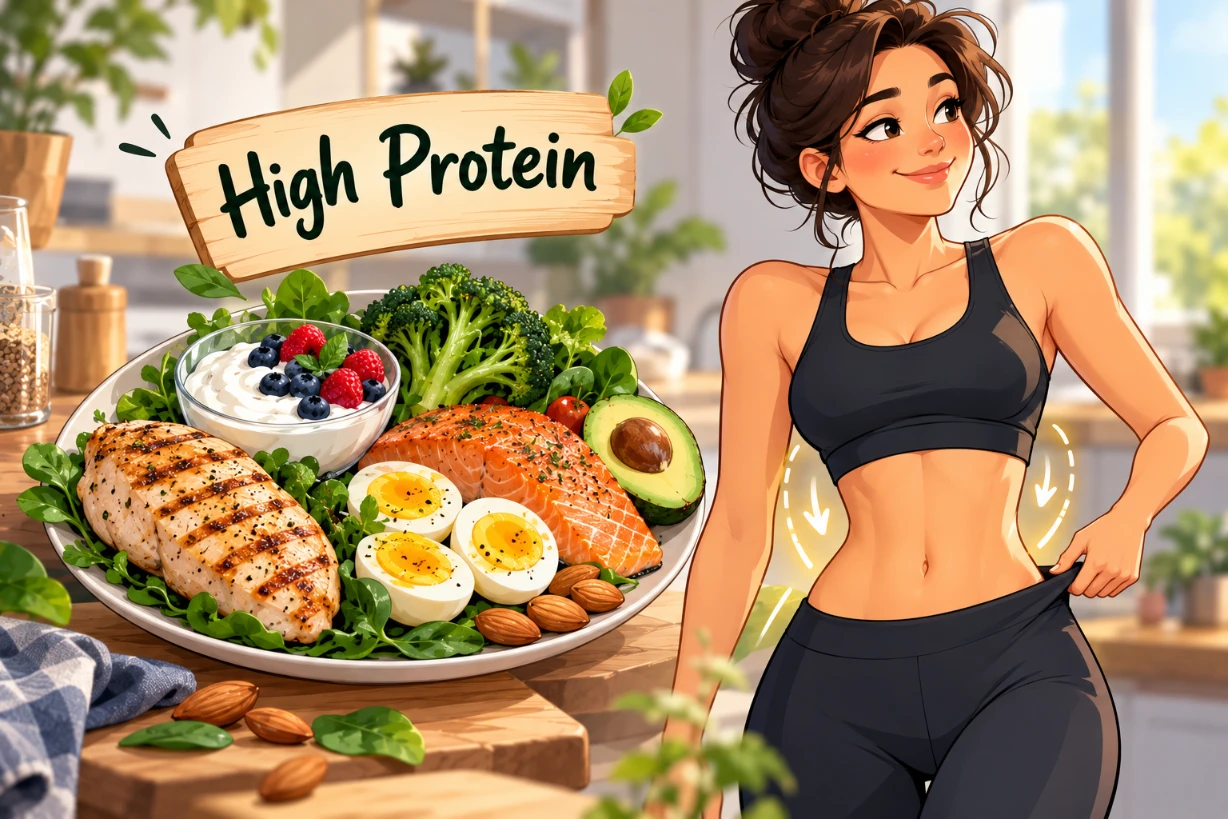
A “high protein diet” does not always mean low carb or low fat. We can still eat carbs and healthy fats, the core idea is that protein is not the side dish anymore, but a main part of each meal.
How protein supports weight loss on a biological level
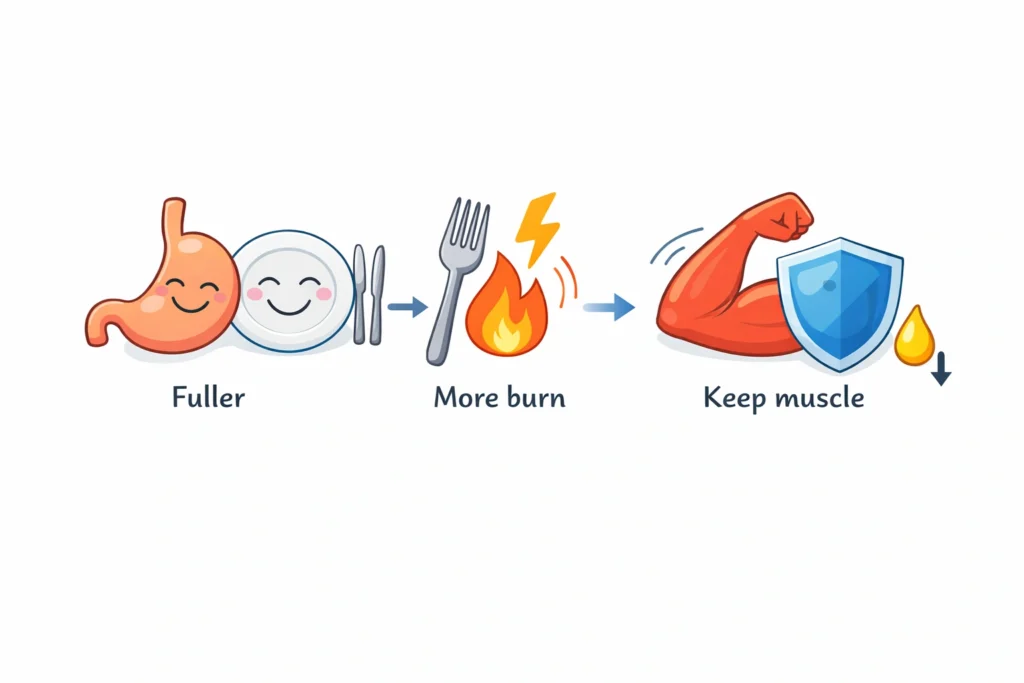
To answer is a high protein diet good for weight loss in a honest way, we need to look at how protein behaves in our body. Protein is more than just a building block for muscles. It also affect hormones, hunger, and the number of calories we burn across the day.
Protein helps control hunger and cravings
When people shift to higher protein, one of the first things they report sounds almost too simple: they feel fuller. That feeling is not just in their head. Higher protein meals can increase satiety hormones like peptide YY and GLP 1 and reduce levels of the hunger hormone ghrelin.
Several clinical trials between 2022 and 2024 have shown that, when calories are matched, groups eating higher protein tend to snack less and have fewer late night cravings. One meta analysis in the journal Obesity Reviews found that high protein diets reduce desire to eat and thoughts about food, which is a big deal if snacking and graze eating is your main roadblock.
From a everyday view, this means a breakfast with eggs and Greek yogurt is more likly to hold you till lunch than a bowl of sugared cereal. When hunger is calmer, we are less likely to overshoot our calorie budget without even noticing.
Protein has a higher thermic effect of food
Our body uses energy to digest and process food. This is called the thermic effect of food. Protein has the highest thermic effect compared to carbs and fats.
- Protein: about 20 to 30 percent of its calories burned during digestion
- Carbohydrates: about 5 to 10 percent
- Fats: about 0 to 3 percent
So if we eat 100 calories of protein, we may only net about 70 to 80 calories after digestion. This does not give us a free pass to eat as much protein as we want, but it does mean protein rich diets can slightly increase daily energy expenditure. Over months, that small difference can add up in favor of fat loss.
Protein protects lean muscle while we lose fat
Most people do not want to “lose weight” in a general sense. They want to lose fat while keeping tone and strength. Without enough protein, the body will burn both fat and muscle when we eat fewer calories.
Recent trials in adults with overweight or obesity have shown that combining higher protein intake with resistance training helps preserve, and sometimes even increase, lean mass while losing body fat. Losing muscle can slow our metabolism and make it easier to regain weight later, so this is a big reason why a high protein diet is often recommended during calorie deficits.
In practice, someone eating around 1.2 to 1.6 g of protein per kilogram, and doing strength training 2 or 3 times per week, keeps their metabolism more stable compared to another person on a low protein, low calorie plan. That makes weight loss more sustainable, not just a short crash.
Is a high protein diet good for weight loss compared to other diet types
There are many popular diet patterns out there. Low carb, plant based, animal based, keto, intermittent fasting, and more. Many of them work partly because they raise protein intake without people even noticing. When we compare them head to head, higher protein usually offers at least some advantage for appetite and body composition.
High protein vs low protein calorie restriction
When studies compare two weight loss diets with the same calories, but different protein levels, the high protein group often:
- Loses more fat mass
- Retains more lean mass
- Reports less hunger and better satisfaction with the diet
For example, a 2023 randomized trial looked at adults on a 25 percent calorie deficit. One group ate about 0.8 g/kg of protein, the other about 1.4 g/kg. The higher protein group lost similar total weight, but more of that loss came from fat and less from muscle. They also had fewer dropouts, which matters in the real world.
High protein and low carb combinations
Many people compare high protein diets to keto or very low carb plans. Keto often leads to rapid water loss and appetite suppression, but it can be hard to follow socially and mentally. High protein plans that still include moderate carbs can be more flexible while giving most of the same appetite benefits.
Some animal based or low carb approaches are naturally high in protein. If you are curious about how animal based eating compares to keto or plant heavy eating, we covered this in detail here: https://dietlinic.com/animal-based-diet-vs-keto-which-is-better/. The key takeaway is that, across different frameworks, keeping protein adequate makes weight loss more maintainable.
High protein within plant based or mixed diets
Sometimes people assume high protein always mean meat heavy. In reality, we can do higher protein with animal foods, plant foods, or both. A sensible, mixed pattern might include chicken, fish, Greek yogurt, tofu, beans, and protein rich whole grains.
If you are comparing animal based and plant based eating for health and body weight, you might find this guide useful: https://dietlinic.com/animal-based-diet-vs-plant-based-diet/. Both patterns can support a higher protein intake when meals are designed with intention.
Health benefits of high protein diets beyond weight loss
When we ask is a high protein diet good for weight loss, we should also ask what else it does for health. A smart high protein plan can improve several health markers that often travel with extra weight, like blood sugar control and blood pressure.
Blood sugar control and insulin response
Higher protein intake, especially when replacing some refined carbs, can lead to more stable blood sugar after meals. Protein slows digestion and can reduce the sharp spikes and crashes that lead to fatigue and sugar cravings.
Recent studies in people with prediabetes and type 2 diabetes show that moderate carb, higher protein diets often improve A1c, fasting glucose, and insulin sensitivity, especially when combined with weight loss and movement. For someone who struggles with “energy rollercoasters” during the day, a protein forward breakfast and lunch is often a simple, practical shift.
Blood pressure, cholesterol, and heart health
Some people worry that eating more protein, especially from animal sources, will harm their heart. The evidence is more nuanced. When higher protein intake replaces refined carbs and ultra processed foods, it can actually support better heart markers.
For example, replacing some red meat with fish, poultry, low fat dairy, eggs, or plant proteins can raise HDL cholesterol and lower triglycerides. A 2023 analysis found that high protein diets focused on lean and plant sources were associated with lower blood pressure and better cardiometabolic profiles compared with low protein, high refined carb diets.
The trick is not only the amount of protein, but the quality and the foods that come along with it. Protein packed meals that also include vegetables, fruits, and healthy fats are very different from processed meat snacks and greasy fast food burgers.
Potential risks and myths about high protein diets
No diet pattern is perfect for everybody. When we talk about is a high protein diet good for weight loss, we also need to be honest about possible downsides, myths, and who may need extra caution.
Myth: high protein always damage the kidneys
One of the most common fears is that high protein intake will ruin kidney function. Current research in healthy individuals does not support this idea. High protein diets up to about 2.0 to 2.2 g/kg per day do not appear to harm kidney function in people without pre existing kidney disease.
However, for people who already have chronic kidney disease, uncontrolled diabetes with kidney involvement, or certain other medical conditions, high protein may not be safe. These people usually need individualized guidance from a nephrologist or registered dietitian to set protein limits.
Myth: more protein is always better
There is such a thing as too much, especially when extra protein crowds out nutrient rich carbs and fats. More is not always better, and mega doses of protein do not lead to endless muscle gain or fat loss.
Most data suggests that intakes around 1.2 to 1.8 g/kg for active adults trying to lose fat is a sweet spot. Going far beyond that offers little extra benefit and may strain digestion or simply add wasted calories if we are not active.
Digestive issues and food quality
Some people experience bloating, constipation, or discomfort when they suddenly jump from low to high protein, especially if they rely heavily on powders and bars. Gradual increases and focusing on whole food sources typically reduces these issues.
Hydration and fiber also matter. Higher protein diets without enough vegetables, fruits, and whole grains can feel heavy and slow. Pairing protein with fiber rich sides makes meals more comfortable and better for gut health.
How much protein should you eat for weight loss
To personalize the answer to is a high protein diet good for weight loss, we need to look at your body size, activity level, and goals. Here is a rough starting framework for adults without kidney disease:
- General weight loss: 1.2 to 1.4 g/kg of body weight per day
- Active or doing regular strength training: 1.4 to 1.8 g/kg per day
- Older adults (50 plus) with muscle loss risk: usually on the higher end of that range
So, for a 150 pound person (about 68 kg) aiming for fat loss, that means roughly 80 to 110 grams of protein per day. We ideally spread that across 2 to 4 meals, because the body handles protein better in doses than in one big serving.
Sample daily protein targets by weight
| Body weight (pounds) | Body weight (kg) | Protein range (g/day) for weight loss (1.2–1.6 g/kg) |
|---|---|---|
| 130 | 59 | 70 to 95 |
| 150 | 68 | 80 to 110 |
| 170 | 77 | 90 to 125 |
| 200 | 91 | 110 to 145 |
| 230 | 104 | 125 to 165 |
Best protein sources for weight loss
Once we know how much we aim for, the next step is deciding where that protein comes from. All protein is not equal in terms of satiety, nutrients, and health impact.
High quality animal protein sources
These foods tend to have complete amino acid profiles and high bioavailability:
- Skinless chicken or turkey breast
- Fish and seafood (salmon, tuna, cod, shrimp, sardines)
- Eggs and egg whites
- Greek yogurt, cottage cheese, and other low fat dairy
- Lean beef in moderate portions
For people who eat animal foods, building meals around these options makes it easy to hit protein targets without over doing calories. For more ideas on structuring animal heavy meals for weight control, this guide offers practical recipes and examples: https://dietlinic.com/animal-based-diet-meal-ideas-recipes/.
Protein rich plant foods
Plant based eaters can still follow a high protein plan with a little planning. Helpful options include:
- Lentils, black beans, chickpeas, kidney beans
- Tofu, tempeh, edamame
- Seitan (for people who tolerate gluten)
- Quinoa, farro, amaranth, high protein whole grains
- Nuts and seeds (almonds, pumpkin seeds, hemp seeds) in modest portions
Combining different plant proteins across the day helps cover all essential amino acids. Many people also find that using a scoop of plant based protein powder in a smoothie or yogurt bowl is a simple way to fill gaps.
Protein powders and supplements
Whey, casein, and plant based protein powders can be helpful tools, especially if your schedule is busy. They are not required, but they can make a high protein diet easier to follow. In our experiance, they work best when used as a backup, not the core of the diet.
How to structure a high protein day for weight loss
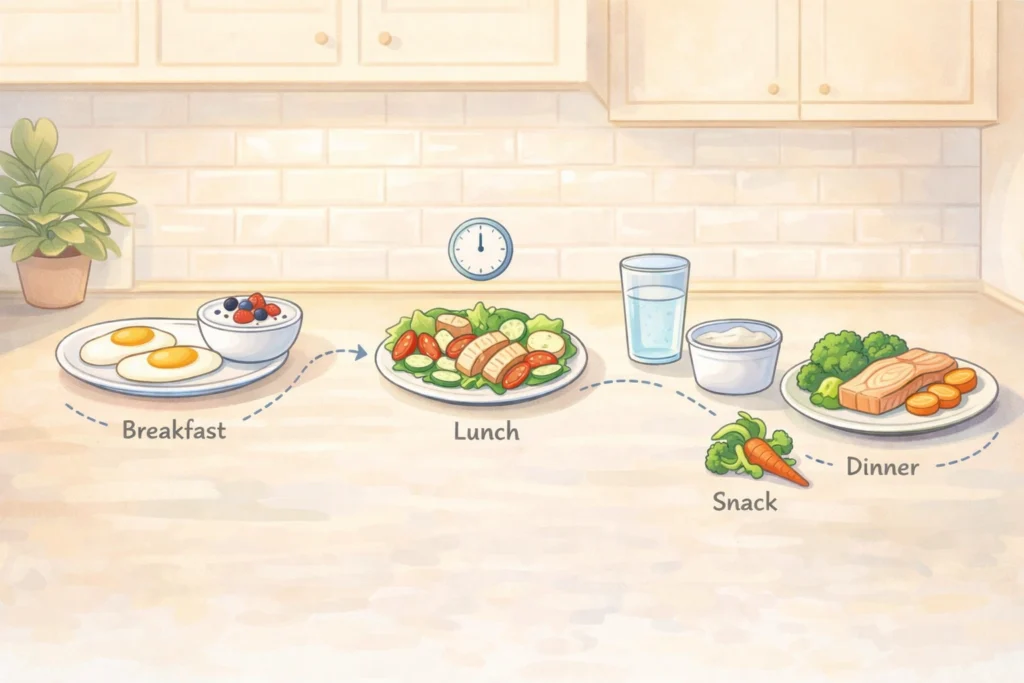
To make the idea practical, lets walk through how a typical day might look for someone targeting about 100 grams of protein on a moderate calorie deficit.
Example high protein day
Breakfast (25 to 30 g protein)
- 2 whole eggs + 2 egg whites scrambled with spinach and peppers
- 1/2 cup cottage cheese on the side
- 1 slice whole grain toast or a small fruit
Lunch (25 to 30 g protein)
- Grilled chicken breast over a big salad (mixed greens, tomatoes, cucumbers, carrots)
- Olive oil and vinegar dressing
- Optional small portion of quinoa for extra fiber and carbs
Snack (15 to 20 g protein)
- Greek yogurt with berries
- Or a protein shake made with whey or plant protein
Dinner (30 to 35 g protein)
- Baked salmon or tofu
- Roasted broccoli and carrots
- Small baked potato or brown rice
This day offers enough protein to support satiety and muscle, but still leaves room for carbs, fats, and plenty of vegetables. People often feel more steady energy, fewer cravings, and less urge to binge at night with this structure.
Balancing calories, macros, and lifestyle
Even if we answer yes to is a high protein diet good for weight loss, calories still matter. Protein makes a calorie deficit easier to live with, but we do still need that deficit for fat loss to happen.
Most adults can lose weight with a daily deficit of about 300 to 500 calories below their maintenance needs. Extreme cuts often backfire by ramping up hunger and slowing metabolism. Combined with regular movement, moderate deficits paired with high protein seem to strike a workable balance.
From a macro view, a lot of successful weight loss plans fall roughly in this range:
- Protein: 25 to 35 percent of calories
- Fats: 25 to 35 percent of calories
- Carbohydrates: the remaining calories, mostly from whole food sources
The exact percentages are less important than food quality, consistency, and how well the plan fits your preferences. A high protein, whole food pattern that you can stay with for months will do far more for you than a perfect macro split that makes you miserable.
Who should be cautious with high protein diets
While many adults can safely increase protein, some groups need tailored advice from a health provider before major diet changes:
- People with chronic kidney disease or reduced kidney function
- Those with advanced liver disease
- Individuals recovering from certain surgeries or with specific metabolic disorders
- Pregnant or breastfeeding women, who have unique protein and calorie needs
If you fall in one of these categories, it is smart to review your target protein range with your doctor or a registered dietitian. Sometimes a modest protein increase is still fine, but the details matter more.
Practical tips to start a high protein diet for weight loss
Shifting to a higher protein pattern does not have to be complicated or stressful. A few small habit changes can add up fast.
- Start with breakfast. Swap a low protein breakfast (like only toast or cereal) for options like eggs, Greek yogurt, cottage cheese, or a protein smoothie.
- Add a palm sized protein portion to every meal. This might be a piece of chicken, a block of tofu, a scoop of beans, or a container of yogurt.
- Replace some carb only snacks. Instead of chips or cookies, choose snacks that have at least 10 grams of protein, such as yogurt, cheese sticks, or hummus with veggies.
- Plan ahead when possible. Cooking extra chicken, beans, or tofu at dinner makes it easier to throw together lunches and bowls later in the week.
- Stay hydrated and keep fiber up. Drinking enough water and eating vegetables, fruits, and whole grains helps digestion adjust to more protein.
These shifts alone can raise your protein intake without totally changing your food culture or social life. Over time, many people notice that eating this way starts to feel more natural and even comforting.
So, is a high protein diet good for weight loss
Looking at the body of research and what we see in day to day practice, a high protein diet is usually a strong ally for people who want to lose weight in a healthy, sustainable way. Higher protein supports appetite control, preserves lean muscle, slightly increases calorie burn through digestion, and often improves several health markers linked to excess body fat.
That said, “high protein” is not a magic spell. It works best when it is part of an overall pattern that respects calorie balance, includes plenty of plants, and fits your personal lifestyle. The most effective high protein weight loss diets are the ones that feel doable on a busy Tuesday, not just on a perfect day.
If you have been struggling with hunger, muscle loss, or weight regain on lower protein, low calorie diets, experimenting with a protein forward approach may be worth your time and attention. With realistic targets, good food choices, and a bit of planning, a higher protein intake can be one of the more practical tools we have for lasting fat loss.


Leave a Reply