

Drinking diet soda bring up a question almost every health conscious person has at some point: will drinking diet soda make you gain weight or help you lose it. Many people swap regular soda for diet versions thinking it is a simple shortcut to cut calories. Then they feel stuck when the scale does not move, or worse, it moves in the wrong direction. The goal of this guide is to look calmly at the research, the real life experience, and small daily choices that decide whether diet soda supports your weight goals or quietly works against them.
What are diet sodas, really
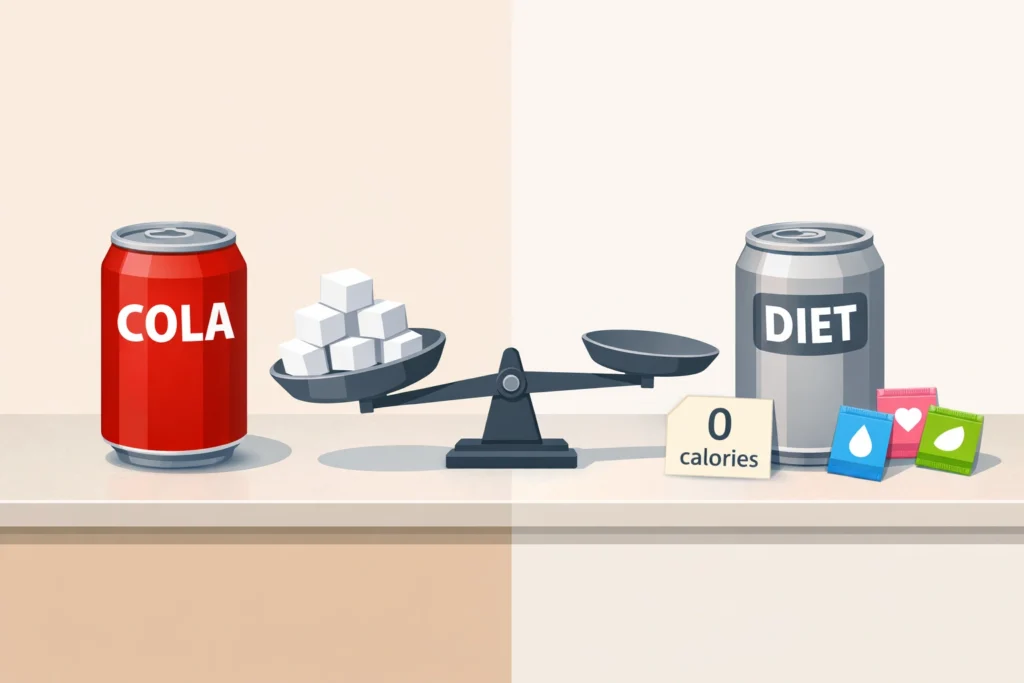
Diet sodas are carbonated drinks sweetened with zero calorie or very low calorie sweeteners instead of sugar or high fructose corn syrup. They try to provide the same sweet flavor as regular soda but with almost no calories. This is the main reason people reach for them when they try to manage weight, blood sugar, or overall health.
The most common sweeteners used in diet soda include:
- Aspartame
- Sucralose
- Acesulfame potassium (Ace-K)
- Stevia or stevia blends
- Saccharin (used less now than in the past)
From a pure calorie standpoint, diet soda looks like a win. A 12 ounce can of regular cola might have around 140 calories and 35 to 40 grams of sugar. A similar can of diet cola usually has 0 calories and 0 sugar on the label. So why do we even asking, will drinking diet soda make you gain weight. Because weight is not only about calories in the moment. It is about hormones, hunger signals, habits, and what else you end up eating during the day.
What the research actually says about diet soda and weight gain
Over the last decade, there has been a big pile of studies trying to test if diet soda makes people gain weight, lose weight, or stay the same. Some studies are short and controlled in a lab. Others follow tens of thousands of people for years and just watch what happens in real life.
Observational studies: diet soda drinkers often weigh more
Many large observational studies have found that people who drink more diet soda tend to have higher body weight or bigger waist lines. For example, a 2023 review in the journal Nutrients looked at multiple population studies and found a consistent link between frequent intake of artificially sweetened beverages and higher risk of obesity and metabolic syndrome.
But we need to be very careful here. These studies show association, not cause. People who already struggle with their weight or blood sugar are more likely to switch from regular soda to diet versions. So it is possible that diet soda is more like a marker of existing health or lifestyle problems, not the main cause of weight gain.
Still, when we ask, will drinking diet soda make you gain weight, these findings remind us that just swapping to the diet version is not a magic fix, especially if other habits stay the same or get worse.
Clinical trials: when you control calories, what happens
Randomized trials are more helpful for understanding cause and effect. In these studies, people are assigned to drink diet soda, water, or sugar sweetened drinks and their weight is tracked for weeks or months.
Results from these trials are mixed but lean in an interesting direction:
- When diet soda replaces sugary soda in a calorie controlled plan, people usually lose some weight or at least gain less weight than the sugar drink group.
- When diet soda is compared with plain water in a structured weight loss plan, weight loss is often similar, and sometimes the diet soda group does slightly better because they find it easier to stick to the plan.
A 2022 meta analysis in the journal Obesity Reviews found that low and no calorie sweetened beverages generally lead to modest weight loss when they replace sugar sweetened drinks, especially in people with overweight or obesity. So from a science standpoint, diet soda itself does not clearly cause weight gain when compared to regular soda.
However, real life is messy. Outside of a study, people do not always “replace” regular soda. They might add diet soda on top of other calorie dense food, or they might feel permission to eat more because they “saved” calories in their drink.
How diet soda can indirectly lead to weight gain
When people feel confused about why they gain weight while drinking diet soda, the answer is usually not in the can alone. It is in what diet soda does to appetite, cravings, and habits. Here are some of the main pathways that may cause trouble.
1. Compensatory eating: “I saved calories, so I can treat myself”
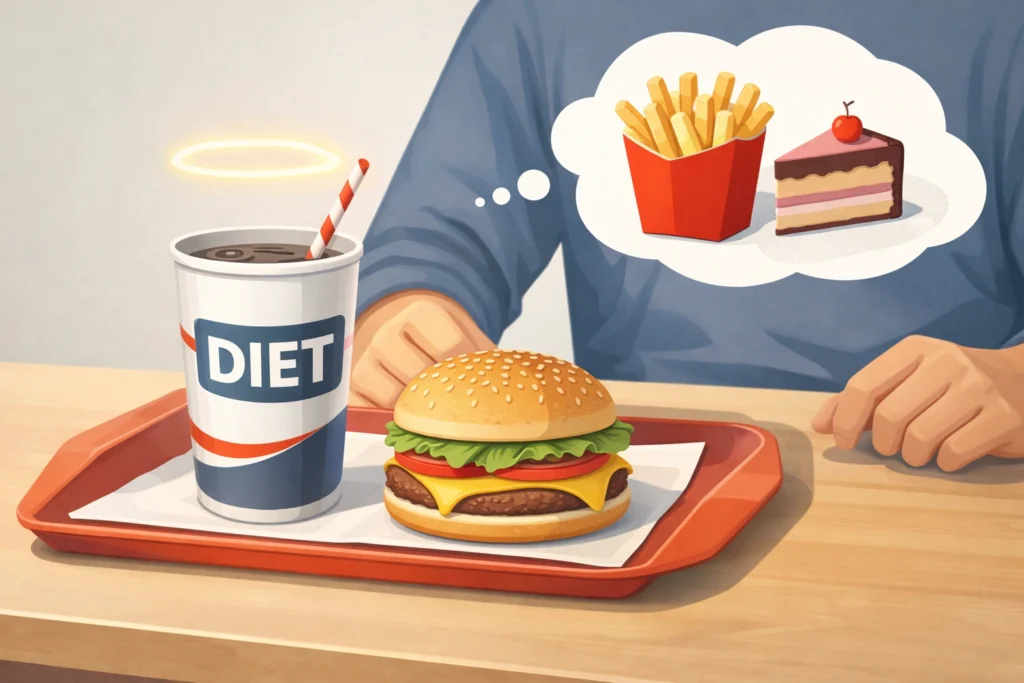
This is one of the most common patterns I see when people try to eat healthier but rely heavily on diet drinks. You grab a diet soda with your fast food meal, and a small voice in your head whispers, “Good choice. Now you can add fries.” Over a week or a month, those small choices can easily cancel out the saved calories and even push intake higher.
Several studies in behavioral nutrition show this effect, sometimes called the “health halo.” When a part of a meal feels “healthy” or low calorie, people often unknowingly eat more overall. With diet soda, this might look like:
- Ordering larger portions because the drink has no calories.
- Having dessert “because the drink was diet.”
- Snacking more later in the day because you feel you were “good” earlier.
So, will drinking diet soda make you gain weight. Not directly by its calories, but it can nudge your decisions in ways that increase overall intake unless you stay mindful.
2. Sweetness without calories and its effect on appetite
Artificial sweeteners deliver intense sweetness without energy. Some scientists worry that this mismatch might confuse the body’s normal response to sweet taste. Normally, sweet foods deliver sugar, the gut sense calories, and the brain adjust hunger hormones such as GLP 1 and ghrelin.
When the taste of sweet arrives without calories, it may affect:
- Cravings for more sweet foods later in the day.
- How full or satisfied you feel after meals.
- How your brain reward system reacts to food.
Research here is still ongoing and not fully settled. Some trials show increased appetite or cravings after certain sweeteners, others do not. A 2023 study in Cell Metabolism suggested that sucralose combined with carbs might change how the brain responds to sweetness and potentially affect glucose handling, while sucralose alone had less effect. This shows that context matter a lot.
From a practical standpoint, many people report that heavy diet soda use keeps their sweet tooth very active. That can make it harder to enjoy simple, less processed foods that actually support weight management.
3. Impact on gut microbiome and metabolism
The gut microbiome our internal community of bacteria and other microbes plays a surprisingly big role in weight, blood sugar, and inflammation. There is growing interest in how artificial sweeteners might change this ecosystem.
Some small human studies and animal research suggest that certain sweeteners, like saccharin and sucralose, may alter gut bacteria in ways that affect glucose tolerance. A 2022 review in Frontiers in Nutrition reported that some non nutritive sweeteners can change microbial composition and function, though the certainty of evidence is still low and results vary by person.
We are not at the point where we can say, “Diet soda wrecks your microbiome and makes you gain weight.” That would be too strong. But if someone already has metabolic issues and a fragile gut, heavy diet soda intake might be one more stress in the system rather than a neutral choice.
4. Diet soda and insulin response
A common claim online is that diet soda spikes insulin the same way sugar does, leading to fat storage and weight gain. The reality is more nuanced.
Most controlled studies show that artificial sweeteners on their own do not significantly raise blood sugar. Insulin responses vary. Some research finds a small insulin rise after tasting certain sweeteners, probably due to the brain’s response to sweetness, but this effect is usually much smaller than with real sugar.
For most people, that small potential insulin blip probably does not cause meaningful weight gain by itself. However, for someone with insulin resistance, metabolic syndrome, or type 2 diabetes, keeping overall sweet exposure lower, even from “diet” sources, can help stabilize cravings and energy levels through the day.
When diet soda might help with weight loss
So far we have focused on risks. But we also need to be honest about where diet soda can be useful, especially as a transition tool for people deeply attached to sugary drinks.
1. Replacing sugar sweetened soda in a gradual plan
If someone drinks 3 or 4 regular sodas a day, each with 140 to 200 calories, switching to diet versions can remove hundreds of calories daily. That change alone often leads to weight loss, even if nothing else change at first.
In practice, we often see this work best when:
- The person track their overall calorie intake, not just the drink.
- The swap is part of a broader plan that includes more whole foods and protein.
- There is a long term goal to move closer to water, tea, or unsweetened drinks over time.
For someone who feels like regular soda is non negotiable, diet soda can be a bridge instead of an all or nothing restriction. That can reduce the “rebel” feeling that sometimes comes with strict diet rules.
2. Managing cravings while staying within calorie targets
Some people find that one can of diet soda in the afternoon stops them from diving into a 400 calorie pastry or candy bar. In that case, the diet drink is a net win because it prevents a larger intake of sugar and fat.
The key is honesty with ourselves. Is the diet soda helping control snacking, or is it paired with snacks most days. The same drink can play a very different role depending on habits around it.
Key factors that decide whether diet soda leads to weight gain
When we put all the research and real life experience together, the answer to will drinking diet soda make you gain weight depends on several personal factors.
Your overall diet quality
If the rest of your diet is based mostly on processed foods, fast food, and frequent desserts, diet soda will not fix that. It might even give a false sense of safety, as if the lack of sugar in the drink balance out bigger issues on the plate.
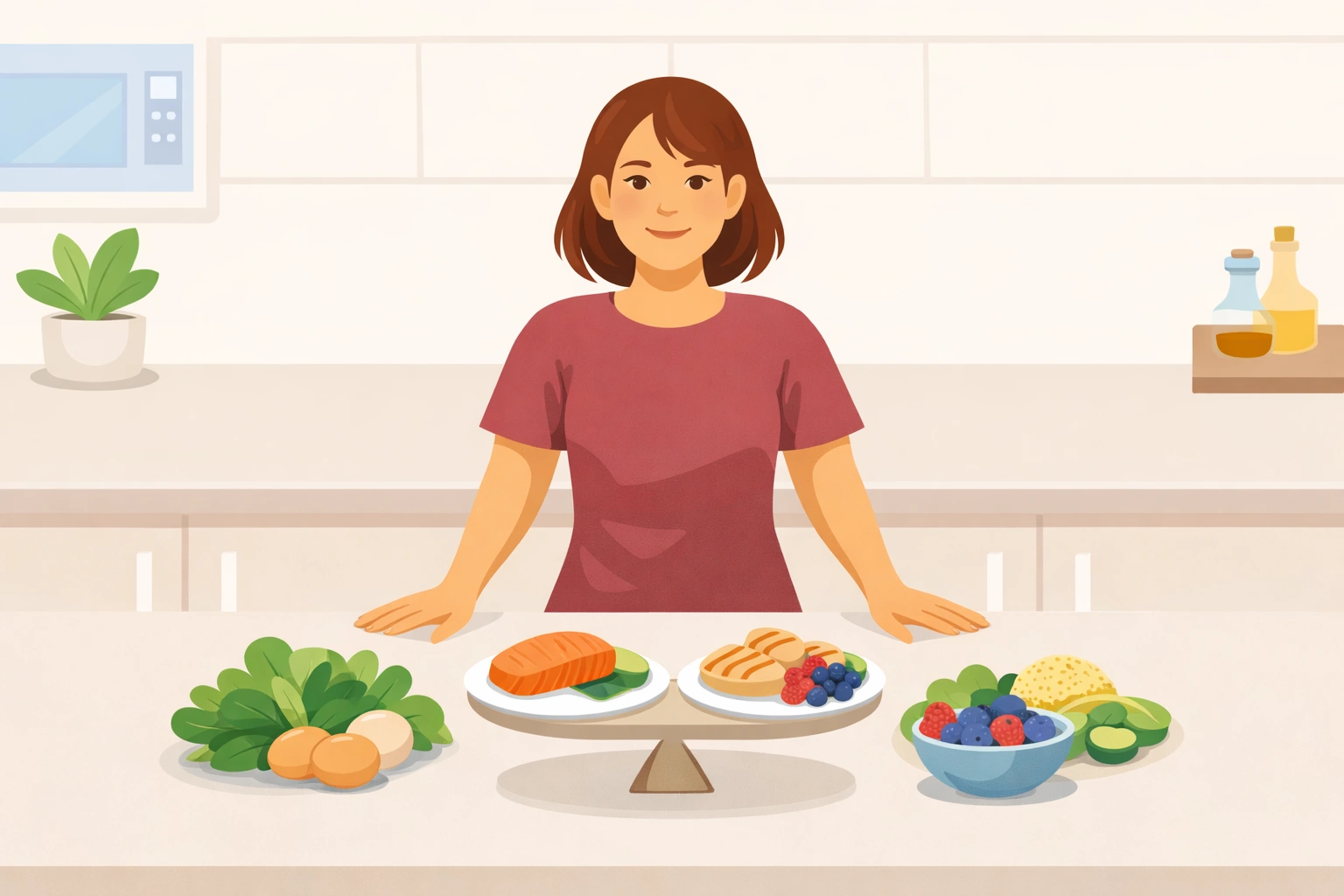
On the other hand, if you mostly eat whole foods lean proteins, vegetables, fruits, healthy fats, and quality carbs and use an occasional diet soda as a treat or backup, it is unlikely to ruin your progress.
Your hunger and craving patterns
Pay attention to how you feel after diet soda:
- Do you feel more hungry later.
- Do you crave sweets more than usual.
- Do you feel satisfied, or like something is still missing.
People respond differently. Some feel diet soda keeps them full enough between meals. Others notice it flips a switch that makes them want chips, cookies, or candy. Your body’s feedback is more important than any generic rule.
Your emotional relationship with sweet drinks
For many of us, soda is not just a drink. It is part of a daily ritual driving to work with a fountain drink, keeping a can on the desk, pouring a glass with dinner. When that ritual is tied to comfort, stress relief, or reward, weight gain risk comes less from the liquid calories and more from the emotional attachment.
If diet soda keeps that emotional loop alive, it might slow progress even if it does not add calories directly. Sometimes working on new rituals hot tea, flavored water, a short walk, or a protein rich snack can help break the pattern.
How many diet sodas per day is too much
Most health groups do not set a hard limit on diet soda, but they do suggest moderation. The American Heart Association and American Diabetes Association both say low calorie sweetened drinks can be part of a strategy to reduce added sugar, but they also warn against long term high intake.
From a practical perspective, many nutrition coaches use a simple guide:
- 0 to 1 diet soda per day: usually fine for most healthy adults, especially when overall diet quality is high.
- 2 to 3 per day: time to check if cravings, sleep, or gut comfort are affected.
- 4 or more per day: often linked to poor hydration, higher caffeine intake, and more processed foods.
If someone is drinking several cans a day and asking, will drinking diet soda make you gain weight, the bigger concern may be overall lifestyle balance and dependence rather than the calories in the drink itself.
Practical strategies if you choose to drink diet soda
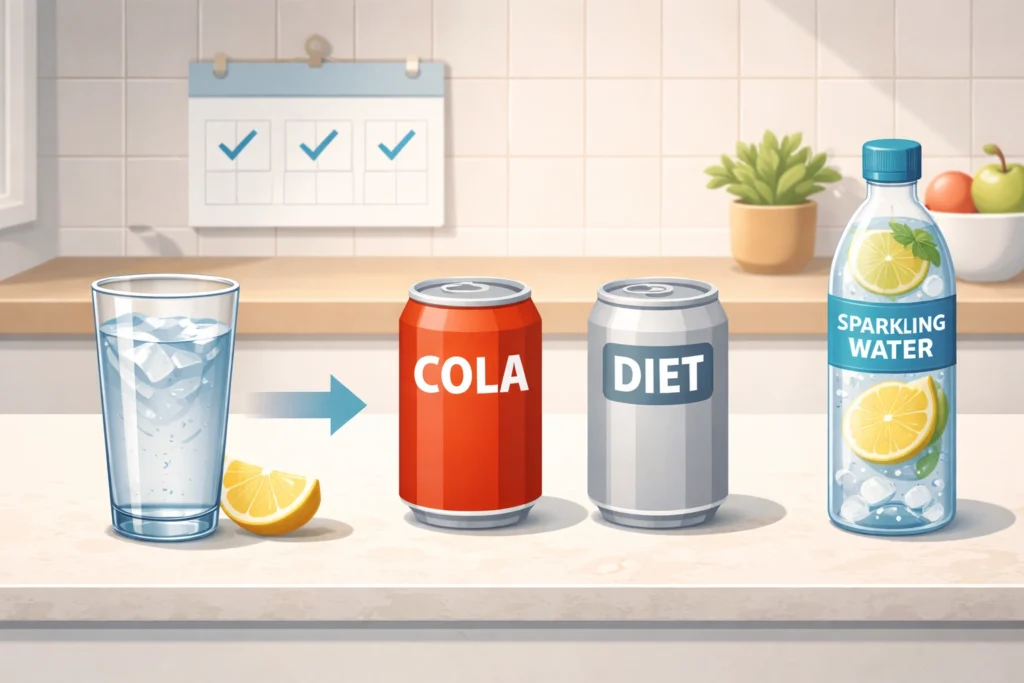
For many people, the best solution is not “never touch diet soda” but “use it wisely.” Here are simple ways to do that:
1. Use diet soda as a tool, not a crutch
If you currently drink regular soda, consider a staged approach:
- Week 1 to 2: Replace half your regular sodas with diet versions.
- Week 3 to 4: Replace all regular soda with diet versions.
- After 1 to 2 months: Gradually swap some diet sodas for water with lemon, sparkling water, or unsweetened tea.
This gives your taste buds time to adapt. Over time, many people find that super sweet drinks, even diet ones, start to taste too intense.
2. Pair diet soda with balanced meals, not snacks
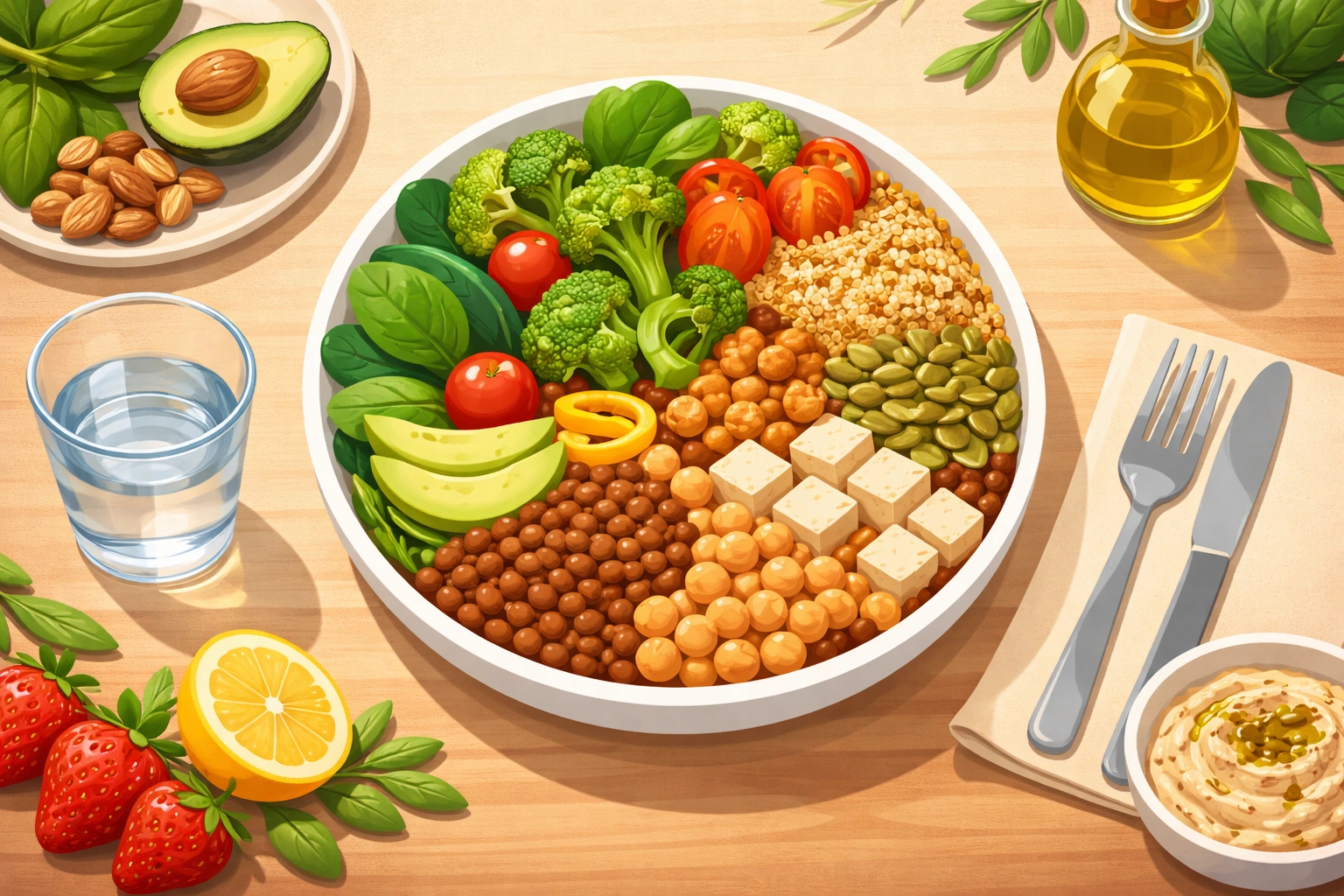
When diet soda is taken alone, especially when you are very hungry, it can trigger cravings. Try to have it with a meal that includes:
- Protein (chicken, fish, tofu, eggs, beans)
- Fiber (vegetables, salad, whole grains)
- Healthy fats (olive oil, avocado, nuts)
This combination helps stabilize blood sugar and may reduce the “I need something else” feeling that sometimes follows sweet drinks.
3. Protect your hydration
Many people forget that diet soda still contain caffeine and acids that can irritate the stomach or bladder in some people. It can also crowd out regular water intake. Aim for most of your fluids to come from water or lightly flavored water, using diet soda as an add on instead of your main drink.
A simple rule that works well is “water first.” For every can of diet soda, have at least one full glass of water earlier in the day. Your body handles appetite and energy better when you are well hydrated.
4. Watch your sleep and stress
Higher caffeine from diet cola or diet energy drinks, especially in the afternoon and evening, can disrupt sleep. Poor sleep alone can raise hunger hormones, reduce willpower, and push weight up over time. If you feel wired at night but tired in the morning, consider cutting off diet soda by mid afternoon.
Smarter drink choices that support weight management
If you are trying to lose weight or prevent weight regain, you do not have to jump straight from soda to plain water and nothing else. There are many middle ground options that feel satisfying without constant exposure to intense sweetness.
Some useful options:
- Sparkling water with lemon, lime, or a splash of 100 percent juice.
- Unsweetened iced tea (black, green, or herbal) with or without a tiny bit of honey if needed.
- Infused water with berries, cucumber, mint, or citrus slices.
- Mineral water for a slightly different mouthfeel that many people enjoy.
When your overall eating pattern leans toward whole foods, it becomes easier to manage weight, whether or not a small amount of diet soda stays in the picture. If you are interested in structured eating styles that focus more on real food, you may find it helpful to explore research based comparisons such as the animal based diet vs keto at https://dietlinic.com/animal-based-diet-vs-keto-which-is-better/ or discussions of animal based diet vs plant based diet at https://dietlinic.com/animal-based-diet-vs-plant-based-diet/.
Who should be most careful with diet soda
While occasional diet soda is likely fine for many adults, certain groups may want to be more cautious.
People with a history of binge eating or strong sugar addiction
For some, sweet taste, even without calories, can be a powerful trigger that lead back to old patterns. If you notice that one diet soda often leads to a full evening of grazing on junk food, it might be better to remove the trigger completely, at least for a while.
People with IBS or sensitive digestion
Sugar alcohols, carbonation, caffeine, and some sweeteners can cause bloating, gas, or discomfort in people with irritable bowel syndrome or other gut issues. If your stomach feels off after diet soda, your body is telling you something useful.
Children and teens
Most pediatric groups prefer that children drink mainly water and milk, with limited exposure to both sugar sweetened and artificially sweetened drinks. Taste preferences set early in life. The sweeter the daily baseline, the harder it becomes to enjoy simple, less sweet foods later.
Putting it all together: a balanced answer
So, will drinking diet soda make you gain weight. For most adults, diet soda by itself does not directly cause fat gain the way daily sugar loaded drinks do. When used carefully, it can even be a helpful step away from regular soda and part of a broader weight management plan.
The real risk comes from how diet soda may shape behavior, cravings, and routines. If it leads to extra snacking, bigger portions, or constant desire for sweets, then yes, drinking diet soda can indirectly push weight upward over time. If it is used occasionally, within a pattern of mostly whole foods, plenty of water, and attention to hunger signals, it is unlikely to be the main reason the scale will not budge.
The most helpful move is usually not obsessing over a single drink choice, but zooming out. Look at the whole day, the whole week, and your long term relationship with food and sweetness. When those pieces start to align, a can of diet soda now and then becomes just that a small piece in a much larger, healthier picture of eating and living.

Leave a Reply