
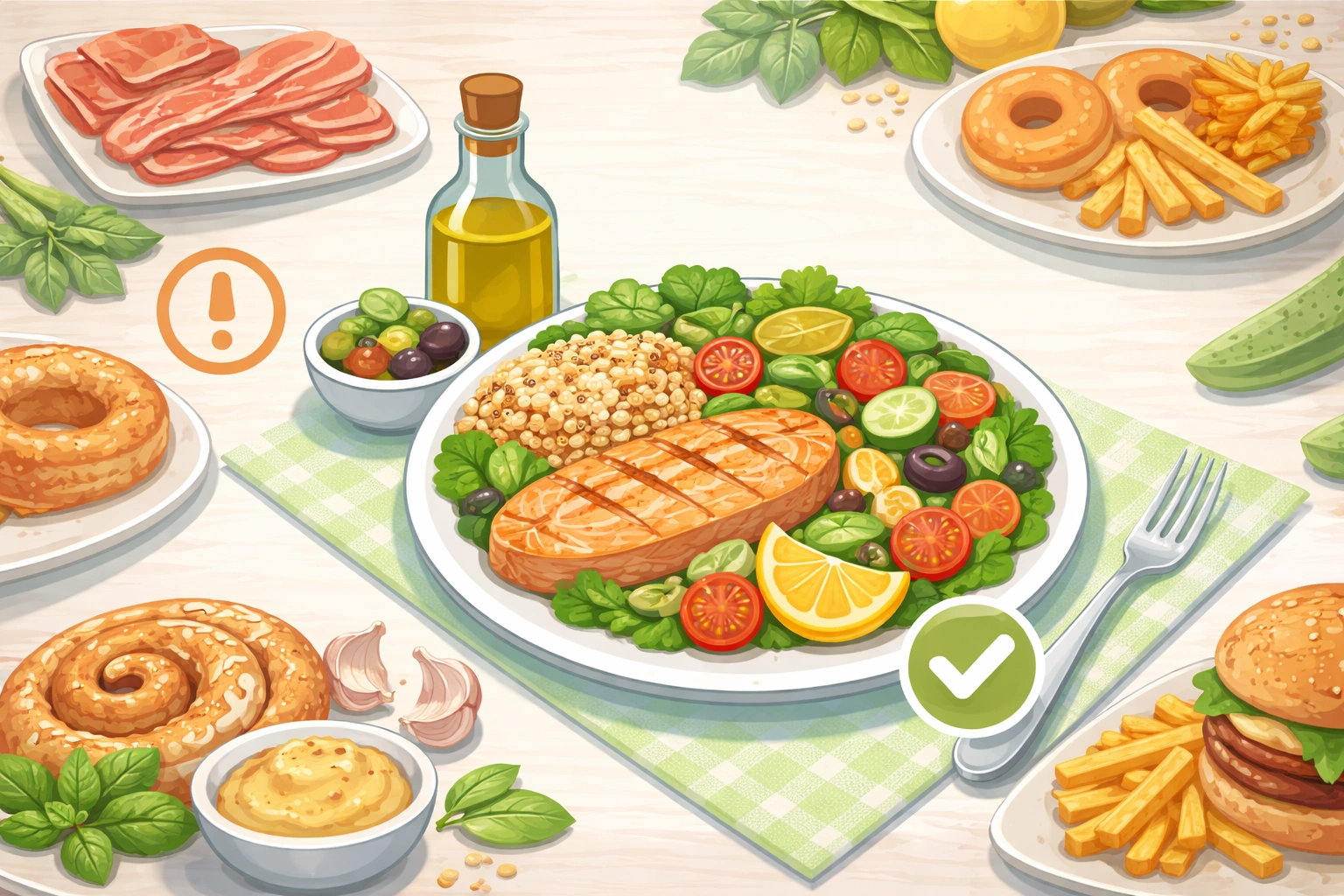

Many people search what foods are not allowed on Mediterranean diet because they want the heart benefits without feeling confused each time they open the fridge. This way of eating looks simple at first glance, but once we start reading labels and planning meals, gray areas appear fast. Is yogurt ok? What about bacon? How often can we have dessert?
What The Mediterranean Diet Actually Focus On
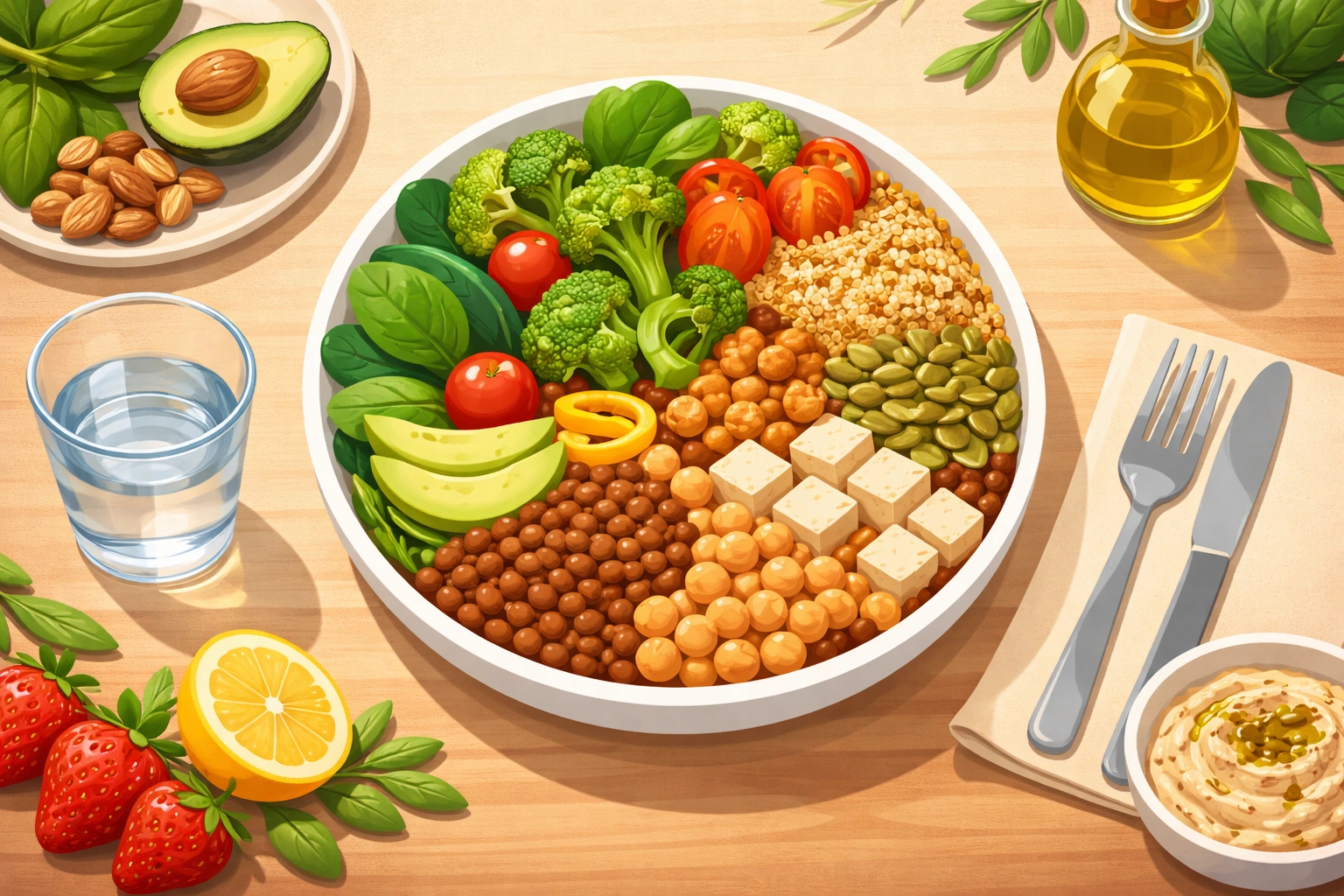
Before listing what foods are not allowed on Mediterranean diet, it helps to remember what this pattern is built around. The classic Mediterranean eating style from Greece, southern Italy, and coastal Spain is based on:
- Plenty of vegetables, fruits, beans, and whole grains
- Olive oil as the main added fat
- Fish and seafood several times a week
- Moderate dairy, mostly yogurt and cheese
- Limited red meat and sweets
Recent research from 2023 in the journal Nutrients linked higher adherence to this pattern with lower risk of heart disease, type 2 diabetes, and some cancers. But these benefits depend on what we avoid just as much as what we add. So let’s dig into the foods that do not fit, why they get in the way, and what to choose instead.
1. Processed Meats: The Top Group To Avoid
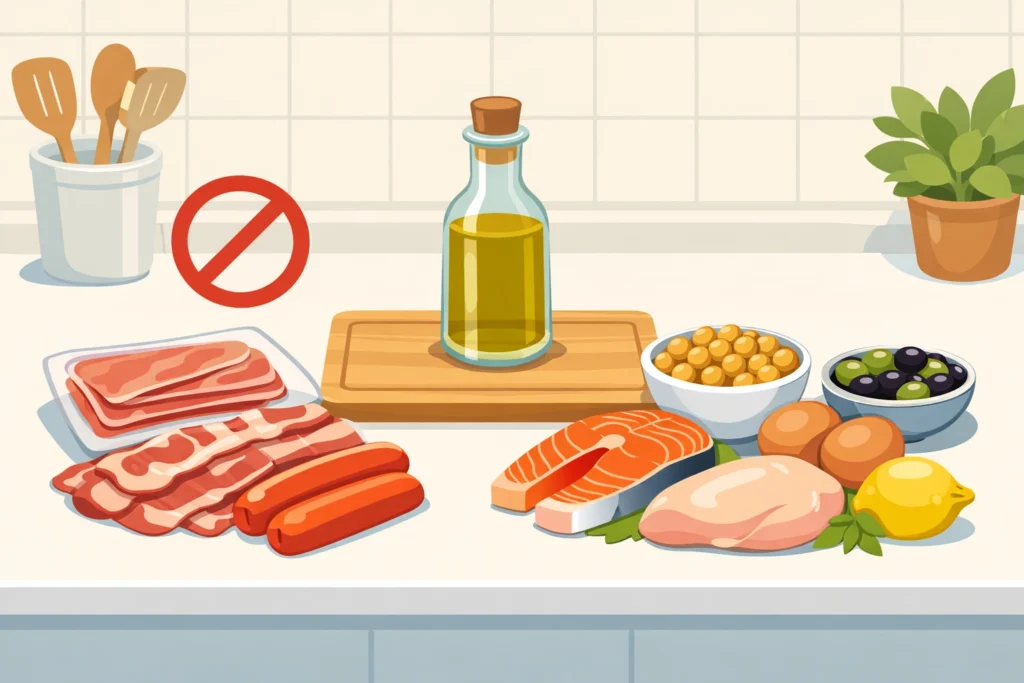
If we had to pick one clear answer to what foods are not allowed on Mediterranean diet, processed meats would be near the top. These include:
- Bacon, sausage, and hot dogs
- Deli meats like ham, salami, bologna, turkey slices
- Pepperoni and cured meats
- Any meat with nitrates, nitrites, or “smoke flavor” added
These foods are heavy in saturated fat, salt, and additives that promote inflammation. The World Health Organization still classifies processed meat as a Group 1 carcinogen for colorectal cancer risk. A 2022 meta analysis showed even small daily amounts raise risk over time.
On a Mediterranean style plan, these meats are not part of the normal rotation. They might show up rarely during holidays, but they are not everyday foods. When we keep them off the grocery list, our blood pressure, cholesterol, and long term gut health usually thank us.
Better swaps for processed meat
Instead of grabbing sausage or ham, we can build protein around:
- Fresh or frozen fish and seafood
- Skinless chicken or turkey (baked, grilled, or poached)
- Beans, lentils, chickpeas, and peas
- Eggs in moderate amounts
Something as simple as trading a ham and cheese sandwich for a tuna with olive oil and veggies sandwich can shift the whole meal closer to the Mediterranean pattern.
2. Red Meat: Limited To Very Occasional
Red meat is a bit more nuanced. It is not always 100 percent forbidden, but it sits in the “eat rarely” category. That means beef, lamb, goat, and veal. In old Mediterranean villages, red meat was eaten maybe once a week or even less, and portions were small.
Modern research gives us a clue why. Frequent red meat intake links with higher LDL cholesterol, higher inflammation markers, and increased risk of heart disease and colon cancer. A 2022 analysis in Circulation showed that replacing just one serving of red meat per day with plant protein or fish was associated with lower heart disease risk.
Most people who want strong results from the Mediterranean diet treat red meat almost like dessert. It is not on the “never ever” list, but it is not part of the same group as fish, beans, or olive oil either.
Tips to handle red meat while staying Mediterranean focused
For those who still want some red meat, these guidelines help:
- Limit to 1 small portion per week or less
- Choose lean cuts (sirloin, tenderloin, round) when possible
- Use meat as a garnish in veggie filled dishes, not the main star
- Skip processed red meats completely (bacon, salami, hot dogs)
But if the question is strictly what foods are not allowed on Mediterranean diet in its pure form, then red meat sits very low; many traditional menus have weeks with none at all.
3. Industrial Trans Fats And Deep Fried Fast Food
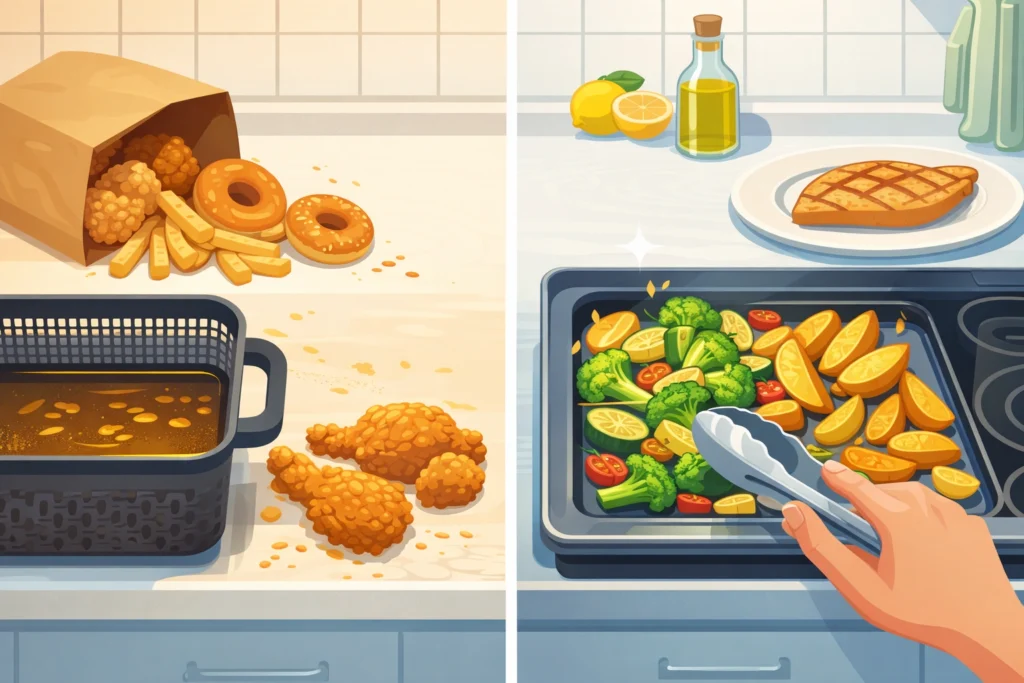
Trans fats and deep fried fast foods are widely out of line with Mediterranean eating. They inflame blood vessels, raise LDL and lower HDL, and increase insulin resistance. Even though the FDA largely removed artificial trans fats from the US food supply by 2020, traces can still show in some items, and deep frying creates its own problems.
Foods to avoid in this group include:
- Fast food fries, onion rings, fried chicken, and breaded fish
- Commercial donuts, packaged pastries, and fried pies
- Microwave popcorn with “butter flavor” and long ingredient lists
- Any item listing “partially hydrogenated oil” on the label
Based on current trends in public health data, frequent fast food intake still correlates with higher body weight, blood pressure, and diabetes risk in US adults, even when calories are “controlled”. It is not only the calories that matter; it is the oil quality, the salt, and the lack of fiber rich sides.
Mediterranean friendly cooking methods
Instead of deep frying, this pattern favors:
- Grilling or broiling with olive oil marinade
- Baking or roasting vegetables and fish
- Stewing beans, lentils, and vegetables in tomato or broth
- Light pan sautéing in extra virgin olive oil
When we like the crunch of fried food, oven baked “fries” made with olive oil and herbs can deliver the texture without the risky fat profile.
4. Refined Grains And Industrial Baked Goods
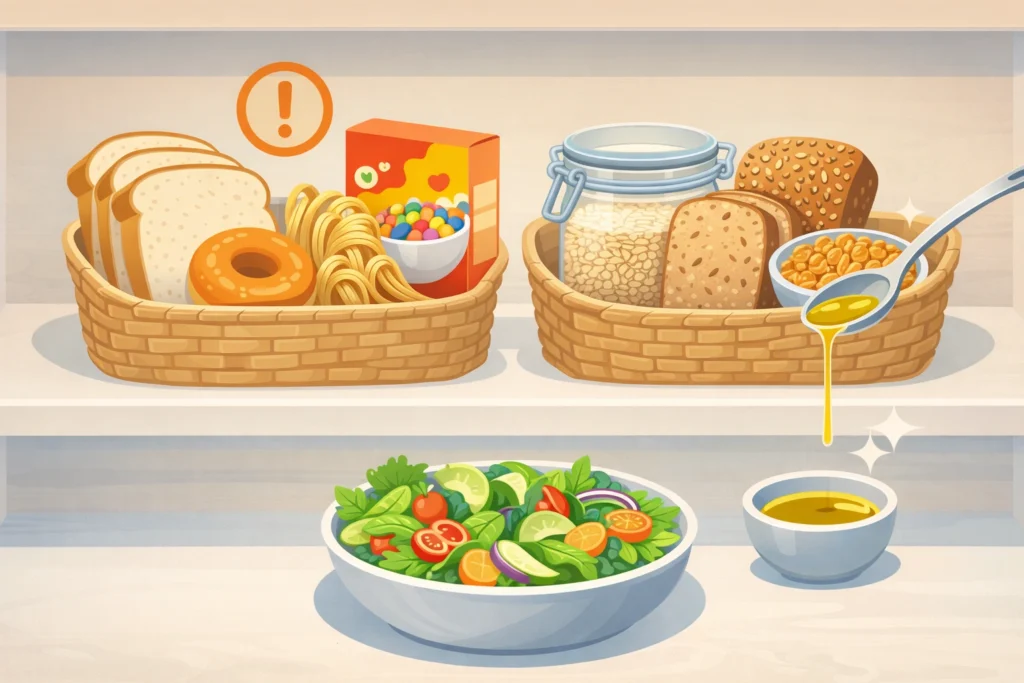
One common misconception is that all bread and pasta are welcomed with open arms on a Mediterranean diet. The real pattern favors whole grains, not the refined white versions we see in many US pantries.
Grain based foods to limit or avoid include:
- White bread, white hamburger buns, and most bagels
- Regular white pasta (when it crowds out vegetables and beans)
- Sugary breakfast cereals and granola bars with long ingredient lists
- Packaged cookies, cakes, muffins, and pastries
These products digest quickly, causing blood sugar and insulin spikes. Over time, frequent spikes can push us toward belly fat gain, fatigue after meals, and higher diabetes risk. A 2023 study in The Lancet Regional Health highlighted how diets heavy in refined grains and low in fiber linked to poor metabolic health across several Mediterranean countries that adopted more Western style foods.
Whole grain choices that fit the Mediterranean model
Instead of refined grains, we lean on:
- Whole grain bread with visible seeds and at least 3 grams fiber per slice
- Oats, barley, farro, bulgur, and brown rice
- Whole wheat or legume based pasta (chickpea, lentil)
From our kitchen experience, swapping white rice to a mix of brown rice and barley sound small, but over months it makes noticeable difference in hunger control and energy levels.
5. Highly Processed Snack Foods
When people ask what foods are not allowed on Mediterranean diet, they often picture meals, but snacks matter just as much. The classic pattern does not include highly processed chips, crackers, and candy as daily habits.
Foods in this “not allowed” or “strongly limit” group:
- Potato chips, corn chips, cheese puffs, and similar salty snacks
- Refined crackers with white flour and seed oils
- Candy bars and chewy candies
- Snack cakes and packaged dessert bars
These foods combine refined carbs, unhealthy fats, and salt in a way that tends to override fullness signals. In real life, we almost never see someone stop at seven chips. The design of these items pushes us to overeat far beyond what our body truly needs.
Snack options that stay Mediterranean aligned
Better options include:
- Fresh fruit with a handful of nuts
- Carrot, cucumber, or pepper slices with hummus
- Plain Greek yogurt with berries
- Olives with a few whole grain crackers
These snacks bring fiber, healthy fat, and some protein so we actually feel satisfied and not stuck in a craving loop.
6. Sugary Drinks And Excess Added Sugar
Sweetened drinks are one of the biggest hidden problems in modern eating patterns. On a traditional Mediterranean diet, sugary sodas and juices are not daily items. Water, herbal teas, and sometimes coffee or small amounts of red wine are more common.
Items to avoid or push near zero:
- Regular soda and energy drinks
- Sweetened iced tea and coffee beverages
- Fruit punch and juice cocktails
- Large servings of 100 percent juice (small portions occasionally can fit, but not constant sipping)
The CDC reported in 2022 that sugary drinks still provide a major share of added sugar in American diets, and high intake raises risk for obesity, fatty liver, and type 2 diabetes, even in people who are not yet overweight.
Sweets and desserts on a Mediterranean diet
When we talk about what foods are not allowed on Mediterranean diet, many people worry desserts are gone forever. They are not, but the pattern is:
- Fresh fruit is the main daily sweet
- Rich desserts are saved for special occasions
- Portions are smaller, and often shared
So things like frosted cakes, ice cream, commercial cookies, and candy can exist, but they stay in the “sometimes” corner. For strong heart and weight benefits, many people aim for added sugar under 25 grams per day for women and under 36 grams per day for men, echoing the American Heart Association guidelines.
7. Ultra Processed Packaged Foods
Ultra processed foods are one of the clearest answers to what foods are not allowed on Mediterranean diet, even if they look “healthy” on the front label. These are products with long ingredient lists, heavy processing, and multiple additives.
Common examples:
- Frozen dinners and boxed “complete meals” high in sodium
- Meal replacement bars and shakes with many artificial sweeteners
- Instant noodles, boxed macaroni dinners, and flavored rice packets
- Plant based “meat” products with long lists of binders, oils, and flavorings
A 2022 study in BMJ found that higher intake of ultra processed food correlated with greater risk of cardiovascular disease and overall mortality, even after adjusting for calories and exercise. It is not only “junk food”; even some modern “diet” foods fall into this category.
The Mediterranean diet leans on real, recognizable ingredients cooked in simple ways. Short ingredient lists are a good sign. If a food looks like something a grandmother in coastal Italy would not recognize, it probably does not fit well in this pattern.
8. Certain Fats And Oils That Work Against Heart Health
Olive oil is the iconic fat of Mediterranean eating, and extra virgin olive oil is linked with lower inflammation and better heart outcomes. On the other hand, some modern oils steer us away from this protective pattern.
Oils and fats to avoid or sharply limit:
- Margarine with hydrogenated or partially hydrogenated oils
- Shortening (often used in commercial baked goods)
- Deep frying oils reused many times in restaurants
- Heavy use of refined seed oils like corn, soybean, and cottonseed oil, especially in ultra processed snacks
We do not have to ban every restaurant meal cooked in vegetable oil, but the core of our home cooking should use olive oil. Many traditional Mediterranean households also use small amounts of nuts, seeds, and sometimes avocado as additional fat sources.
A note on butter and cream
Butter and heavy cream are not as common in Mediterranean coastal cooking as they are in Northern European or American styles. They are not always fully banned, but they stay in the “occasional” box. Choosing olive oil as the main fat and saving butter for rare treats lines up much more closely with the evidence on improved heart health.
9. Alcohol: When It Crosses The Line
The Mediterranean diet sometimes gets romanticized for red wine. However, current research is more careful about alcohol than in past years. The World Heart Federation in 2022 stated that no amount of alcohol is fully “safe”.
So while some Mediterranean studies showed mild benefits with small wine intake, heavy drinking clearly does not fit this diet model. That includes:
- Binge drinking on weekends
- Daily large pours of wine, beer, or spirits
- Cocktails with sugary mixers, syrups, and cream liqueurs
For people who do not drink, there is no reason to start. For people who do drink, staying within modest limits is key: up to 1 drink per day for women and up to 2 for men, and even those amounts might be high for some health conditions. Every person’s situation is different, and many health experts now suggest “the less, the better”.
10. Foods That Are Technically Allowed But Easily Overdone
Not all foods on the Mediterranean diet are automatically healthy if we eat them in huge amounts. Some items are allowed but can quietly sabotage weight loss, blood sugar, or cholesterol if portion sizes grow too much.
Nuts and nut butters
Nuts are a star in Mediterranean research, especially almonds and walnuts. But they are calorie dense. A small handful (about 1 ounce) is usually the target serving. Eating a whole bag while watching TV can add hundreds of calories without real fullness.
Cheese
Traditional Mediterranean diets include cheese like feta, goat cheese, or Parmigiano, but usually as a garnish. Large daily servings of full fat cheese can push saturated fat and calories high. Sprinkling a small amount over salads or pasta tends to work better than thick slices at every meal.
Whole grain breads and pastas
Even whole grains can add up. A large pasta bowl with little vegetables or beans might technically be “whole grain”, but it is still carb heavy. Balancing plates with half vegetables, a quarter protein, and a quarter whole grains helps keep meals closer to how Mediterranean families actually eat.
How To Read Labels The Mediterranean Way
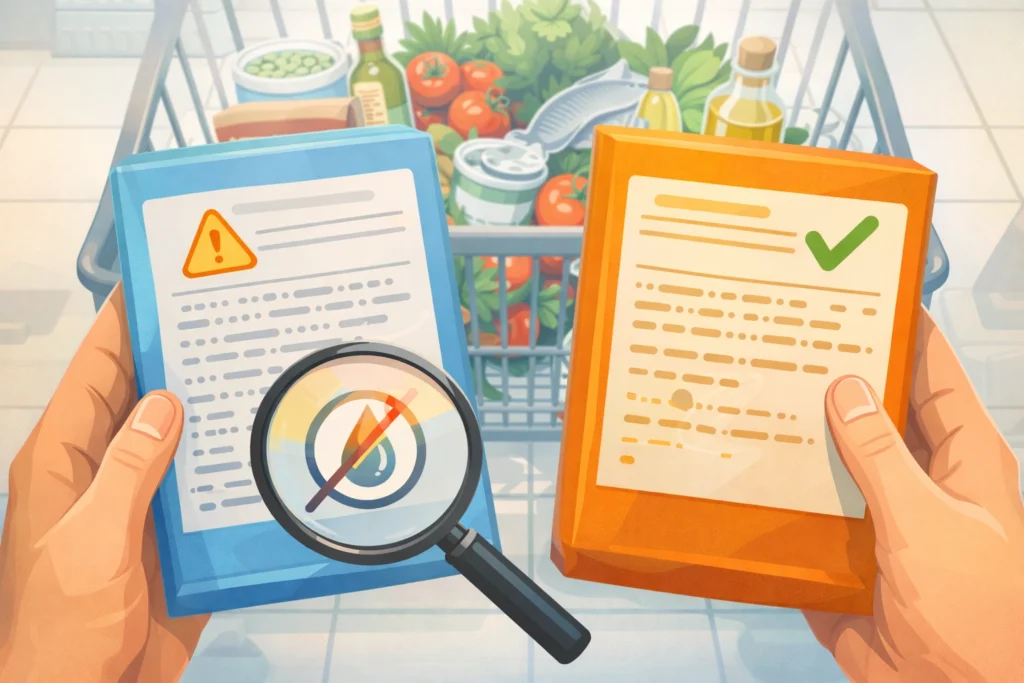
Knowing what foods are not allowed on Mediterranean diet is one thing. Spotting them on labels is where daily life gets tricky. Here are quick habits that help in the grocery aisle.
- Scan the ingredient list first. Shorter lists with recognizable foods are usually better.
- Avoid items listing sugar, high fructose corn syrup, or syrup near the top of the list.
- Skip products with “partially hydrogenated” anywhere in the ingredients.
- Watch sodium. A single serving above 500 mg is pretty heavy for one food.
- Check fiber. For grains, look for at least 3 grams per serving when possible.
In our experience, once people start reading labels this way for a few weeks, their cart changes naturally. They start putting back items that no longer feel worth the tradeoff.
Sample Day: What Fits And What Does Not
To bring this down to earth, here is a quick comparison of a day that strays from Mediterranean guidelines versus one that stays aligned.
Less Mediterranean style day
- Breakfast: Sweetened cereal with low fat milk, orange juice
- Snack: Granola bar with chocolate Drizzle
- Lunch: Ham and cheese sandwich on white bread, chips, soda
- Snack: Vending machine candy
- Dinner: Fried chicken, mashed potatoes with gravy, white roll, sweet tea
- Dessert: Large slice of frosted cake
More Mediterranean aligned day
- Breakfast: Oats cooked with cinnamon, topped with berries and walnuts, black coffee or water
- Snack: Apple slices with a small spoon of almond butter
- Lunch: Salad with mixed greens, chickpeas, tomatoes, cucumbers, olives, a sprinkle of feta, and olive oil vinaigrette; sparkling water
- Snack: Plain Greek yogurt with sliced grapes
- Dinner: Baked salmon with lemon and herbs, roasted vegetables in olive oil, small portion of brown rice or farro
- Dessert: Fresh fruit bowl, maybe a few dark chocolate squares
The second day has no processed meat, minimal added sugar, very little refined grain, and plenty of olive oil, fish, vegetables, and legumes. That is the basic spirit of the Mediterranean pattern reflected in real meals.
How Mediterranean Diet Compares To Other Eating Patterns
Many readers at DietLinic also explore other ways of eating, such as animal based or keto approaches. Compared to an https://dietlinic.com/animal-based-diet-vs-plant-based-diet/ framework, the Mediterranean diet leans much heavier on plant foods, whole grains, and legumes, while keeping red meat low. It also differs from strict keto because it allows moderate carbs from whole grains and fruits, as long as they are balanced with healthy fats and fiber.
Some people move between these patterns over time, depending on health goals and preferences. The key is understanding which foods truly support long term heart and metabolic health, and which ones repeatedly show up in research as risky when eaten often.
Putting It All Together: What Foods Are Not Allowed On Mediterranean Diet
To recap in simple terms, when we ask what foods are not allowed on Mediterranean diet, we really asking which foods should stay rare so we can get the full protective benefits seen in research.
The main groups to avoid or keep for rare occasions are:
- Processed meats like bacon, sausage, hot dogs, and deli slices
- Frequent red meat, especially large portions and processed forms
- Deep fried fast foods and foods with trans fats
- Refined grains and sugary baked goods
- Highly processed snacks like chips, candy, and packaged desserts
- Sugary drinks and high added sugar foods
- Ultra processed ready meals with long ingredient lists
- Unhealthy fats from margarine, shortening, and reused frying oils
- Excessive alcohol, especially in binge patterns
By steering away from these categories and centering meals on vegetables, fruits, beans, whole grains, fish, olive oil, nuts, seeds, and modest dairy, we create the same style of diet that keeps Mediterranean populations healthier well into older age.
Our daily choices do not have to be perfect, but each swap away from the “not allowed” foods and toward the core Mediterranean staples builds a pattern that supports our heart, blood sugar, and weight over years, not just weeks.



Leave a Reply