
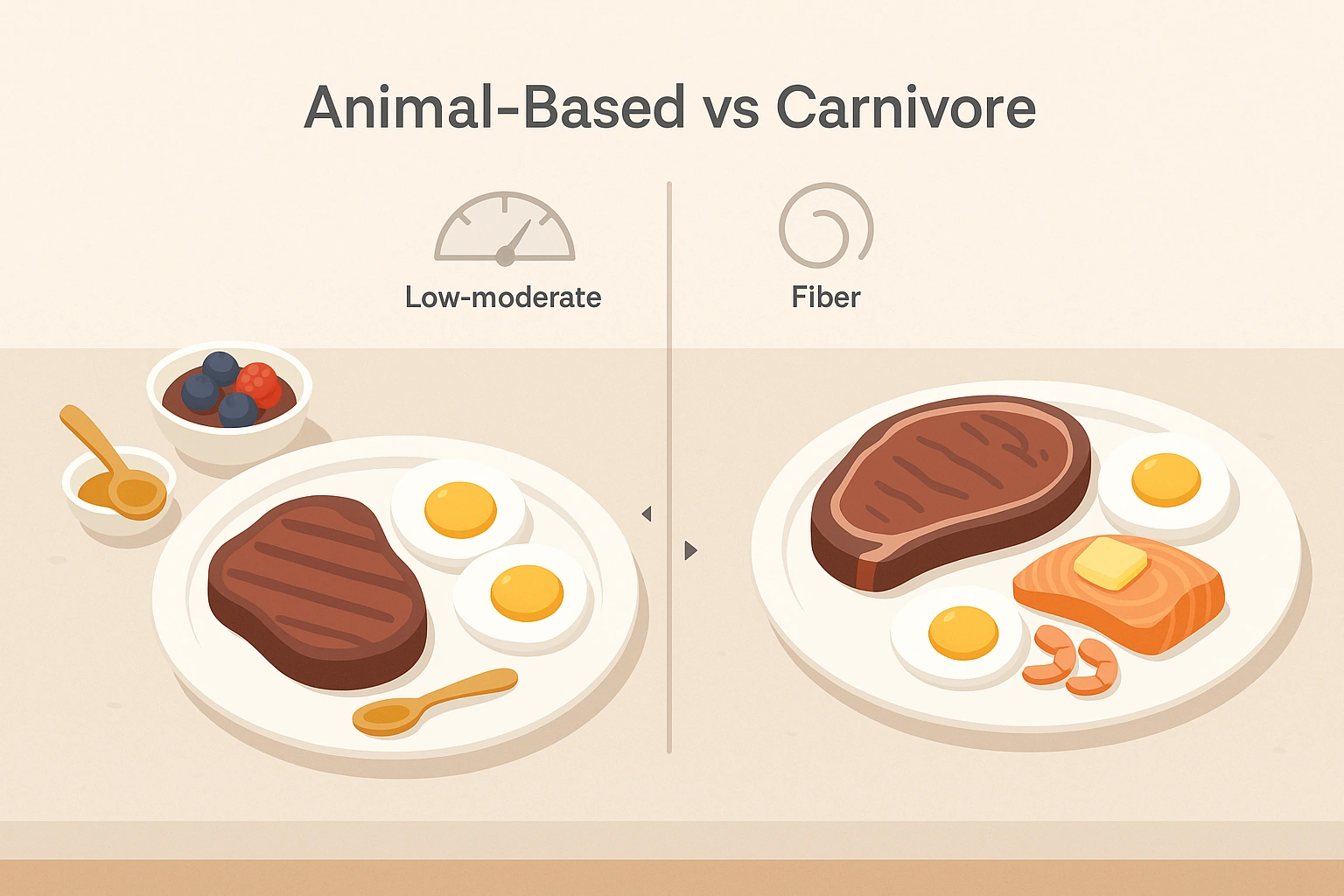

Animal based diet vs carnivore diet is a question showing up in gyms, offices, and family kitchens across the United States. We care about energy that last, better focus, simpler grocery lists, and meals that actually taste like real food. Both approaches are built around nutrient dense animal foods, but they are not the same plan. In this guide we explain the difference between animal based and carnivore diet, compare benefits and trade offs, and give clear steps so you can choose the right fit for your body and your goals. We also talk through real life tips that makes a week of eating less confusing and more satisfying.
What is an Animal-Based Diet
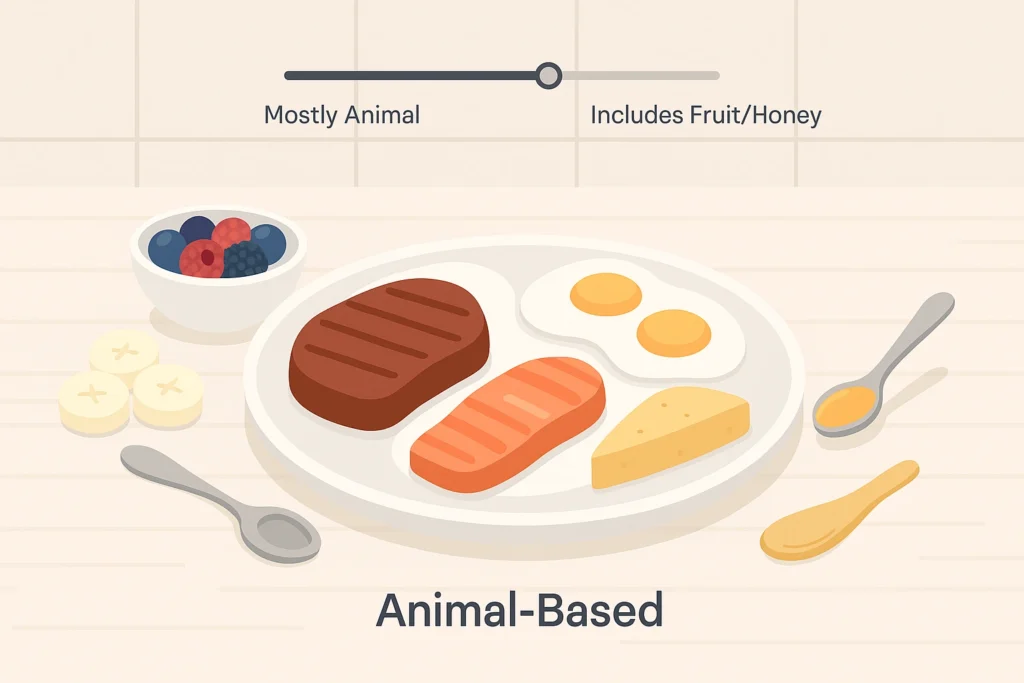
An animal-based diet centers on animal foods while keeping room for low toxin plant foods that many people tolerate well. It is not a rigid rulebook. Instead, it use a spectrum. At one end you have mostly ruminant meats like beef and bison, eggs, seafood, and dairy if tolerated. At the other, you include sweet fruits, honey, and sometimes carefully selected vegetables. Many folks removes grains and seed oils because they often trigger digestive issues for them.
Because it is flexible, this approach can feel easier for families and for social meals. You still get the warmth of a steak sizzling in the pan, but you might also add ripe berries at breakfast or a baked sweet potato on training days. Carbs is usually kept low to moderate, which means blood sugar swings tend to calm down for many people. For a deeper primer on the core foods and structure, see this animal-based diet overview.
What is the Carnivore Diet
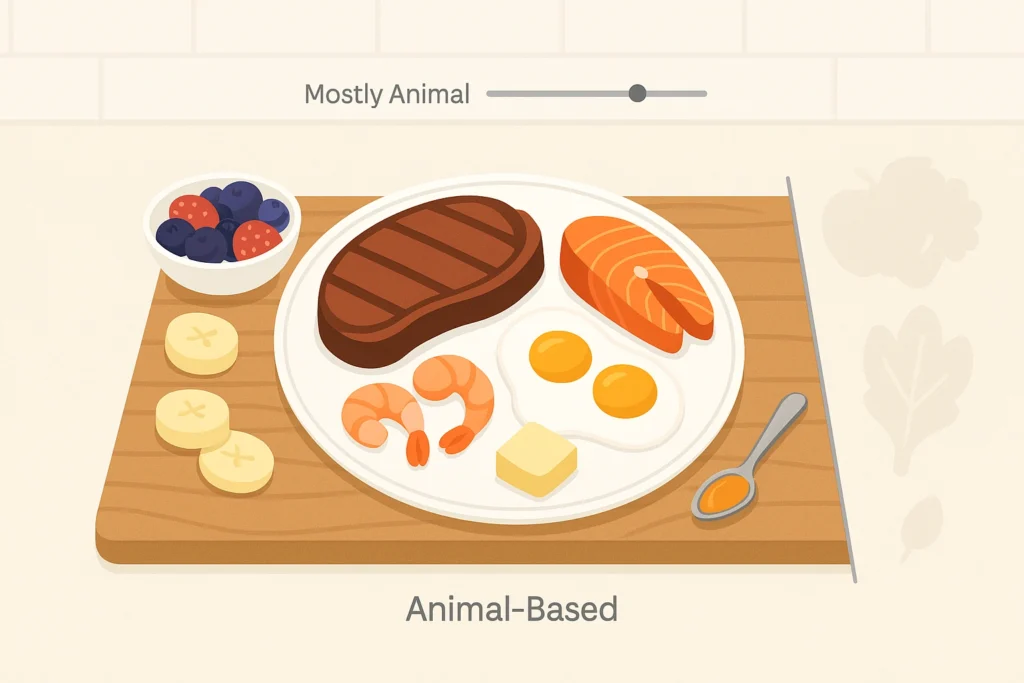
The carnivore diet limits intake to animal foods only. That means meat, seafood, eggs, and sometimes dairy depending on tolerance. No fruit, no vegetables, no grains, no legumes, no nuts. For many, this is a zero carb approach, although trace carbs may slip in via dairy. The goal is to simplify eating, remove plant compounds that bother some people, and rely on highly bioavailable protein and fat. People often report fast satiety, fewer cravings, less bloat. But adaptation take time, and electrolytes management is crucial.
Animal Based Diet vs Carnivore Diet: Key Differences
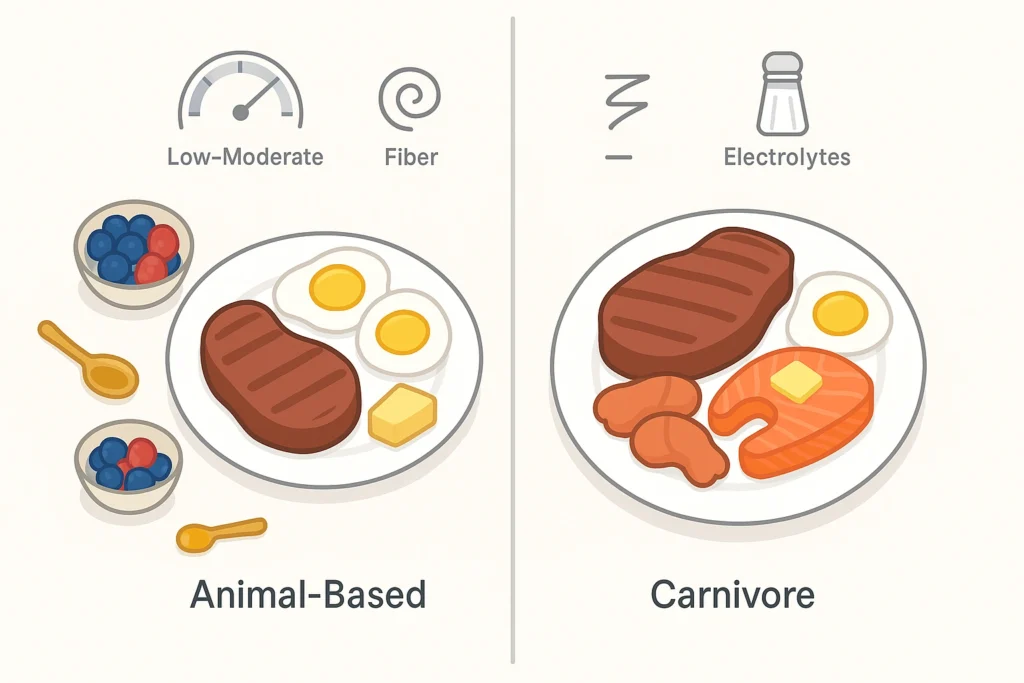
| Aspect | Animal-Based Diet | Carnivore Diet |
|---|---|---|
| Plant foods | Allows fruit, honey, and selective vegetables depending on tolerance | No plant foods at all |
| Carbohydrates | Low to moderate, often cyclic around workouts | Very low to zero |
| Fiber | Some fiber from fruit or certain vegetables | No dietary fiber |
| Electrolytes | Easier to maintain potassium and magnesium via fruit and dairy | Must be deliberate with sodium, potassium, magnesium |
| Micronutrients | Broader coverage via fruit and dairy plus meat and eggs | Relies on nose-to-tail eating, eggs, seafood, and possibly dairy |
| Flexibility | High flexibility for dining out and family meals | Strict, socially harder for some settings |
| Adaptation | Gentler transition for most people | Stronger adaptation phase, more electrolyte needs |
| Use cases | Athletes, general fat loss, health maintenance | Autoimmune relief, elimination testing, rapid simplification |
Philosophy and Flexibility
Animal-based eating aims to prioritize animal foods while allowing proven tolerable plants. It is food-forward, not dogmatic. That flexibility can be vital when your kid wants a shared bowl of strawberries or when you travel for work and the only good option is grilled fish with a side of fruit. Carnivore is stricter by design. It remove variables so you can quickly see if plant foods were aggravating your skin, joints, mood, or digestion. Some of us do very well on a tight carnivore period then reintroduce fruit and honey later. Others stay carnivore long term and feel best, and that is okay too.
Macronutrient Profiles
Carnivore typically runs very low carb with protein and fat doing the energy heavy lifting. This can increase satiety fast and it helps many with cravings. Animal-based plans include small to moderate carbs from fruit and honey, which may support higher intensity training and menstrual cycle comfort for some women. Protein remains high in both patterns. We often suggest a protein target near 0.7 to 1 gram per pound of goal body weight for active people, but listen to hunger and recovery because your body sometimes need more.
Micronutrient Coverage
With animal-based eating, fresh fruit and dairy add vitamin C, potassium, calcium, and magnesium. Carnivore can still cover a lot via red meat, eggs, seafood, and organs. For example, liver contains vitamin A and B12 in abundance, oysters deliver zinc and copper, salmon brings omega 3 fats. On carnivore, vitamin C intake is lower, but scurvy is rare when protein is high and refined sugars are gone. Still, if gums bleed or bruising rise, that signals a problem, you should test and adjust foods promptly. Minerals is a common blind spot. Many folks gets cramps and sleep issues simply because sodium and magnesium are far too low.
Performance and Recovery
For strength and endurance, both plans can work. Carnivore often improves steady focus and controlled energy, good for long work blocks and base cardio. Animal-based patterns may support repeated high intensity intervals because small carb amounts replenish muscle glycogen. We have seen powerlifters thrive carnivore and we have seen CrossFit athletes do better with fruit on training days. Your sport and your stress loads matter, and they change across seasons, so your diet may need to flex too. What works in winter might not be what works in July.
Gut and Immune Response
If you feel bloated or deal with IBS, carnivore sometimes calm symptoms quickly by removing fermentable fiber and plant compounds. That fast relief can be emotionally powerful. But some people do better with a little fiber from ripe fruit or cooked low oxalate vegetables, which can support bowel regularity. Animal-based eating gives that option. If autoimmune flares are intense, starting strict then expanding can be a wise path. Reintroduce slowly, track symptoms, do not rush because your gut often heal slower than your patience.
Long Term Sustainability and Lifestyle Fit
Animal-based diets tend to be more social friendly. Cookouts, restaurants, and family dinners are easier because you can add fruit or a simple vegetable. Carnivore can still be lived in a normal life, but it require more planning. At barbecues you lean on steak, chicken thighs, shrimp, cheese if tolerated, and sparkling water. If your calendar is packed, animal-based may feel less stressful. If your health issues are stubborn, carnivore may be the reset that finally works.
Who Might Choose Which Plan
We see patterns across clients. None of this is rules, but it provide a helpful starting point.
Consider carnivore if you are dealing with stubborn autoimmune flares, severe bloating, GERD, persistent skin rashes, or endless cravings that derail progress. People with heavy brain fog sometimes report clearer days on strict carnivore. The clarity can feel like a fresh breeze on a hot day, everything quiet down.
Consider animal-based if you want body composition change without feeling too restricted, if you train hard, or if you cook for a family and need flexible meals. Parents often tell us that slicing a mango or spooning yogurt keeps dinner peaceful, and their own plate stays focused on protein and whole foods.
How to Start Each Diet Safely

Before jumping in, speak with a clinician if you have medical conditions, take glucose or blood pressure meds, or have a history of disordered eating. A few simple steps reduces problems later.
Starting an Animal-Based Diet
Build each plate around a protein center like steak, ground beef, salmon, chicken thighs, or eggs. Add fruit for carbs and potassium. Include dairy if tolerated for calcium and extra protein. Cook in butter, ghee, or tallow. Avoid seed oils where possible. Keep the pantry simple. For detailed food lists, see fruits you can eat on an animal-based diet and this guide on animal-based diet vegetables to avoid.
Starting a Carnivore Diet
Pick 2 to 4 staple proteins you enjoy and rotate them. Ruminant meats, eggs, salmon, sardines, and bone broth work well. Salt food generously. Consider 2 to 4 grams electrolytes per day split across sodium, potassium, and magnesium especially for the first 2 weeks. Hydrate to thirst, do not force gallons. Expect an adaptation period where energy dip a bit and digestion shift. It get better for most people by week two or three.
Common Mistakes That Derail Results
- Too little sodium, potassium, and magnesium. Cramps and headaches are not a badge of honor, they is a sign to correct minerals.
- Undereating protein. Hunger returns fast if protein is low. Aim for a solid palm or two per meal.
- Trying to do hard workouts immediately during adaptation. Ease in, performance will catch up.
- Reintroducing foods too fast after a carnivore reset. Wait at least 2 to 3 weeks, add one item at a time.
- Ignoring sleep. Late screens and caffeine wreck hormones, then the diet gets blamed.
- Forgetting labs. Check ApoB, fasting insulin, A1c, ferritin, thyroid markers as your plan evolves.
Sample Day of Eating
Animal-Based Day
- Breakfast: Greek yogurt, blueberries, honey, and two eggs. Coffee with a splash of cream if desired.
- Lunch: Grass-fed burger patties with avocado and a side of pineapple.
- Dinner: Ribeye with baked sweet potato and butter. A few squares of 85 percent dark chocolate if you tolerate.
Carnivore Day
- Breakfast: Scrambled eggs cooked in butter and leftover steak bites. Salt to taste.
- Lunch: Salmon fillets and bone broth.
- Dinner: Chuck roast slow cooked until fork tender. Optional cheese if tolerated.
These meals are simple, satisfying, and they keeps prep time reasonable. The smells fill the kitchen, the sizzle tells you dinner is close, and you feel grounded in the routine.
Weight Loss: Which Works Better
Both plans can support fat loss. Carnivore often crushes cravings fast because food choices narrow and protein is high, so snacking naturally falls off. Animal-based gives flexibility that can keep you consistent longer, which matter more than any short burst of strictness. Calorie awareness still applies. Portion sizes, liquid calories, and mindless bites add up. For more detail on fat loss mechanics, see this analysis of animal-based diet for weight loss.
Health Markers to Track
We recommend a baseline and follow up checks every 3 to 6 months. Numbers tell a story, sometimes the story is good and sometimes it ask you to adjust.
Key markers include ApoB for cardiovascular risk, fasting insulin and A1c for metabolic health, HDL, triglycerides, liver enzymes, thyroid panel including free T3, ferritin, vitamin D, CRP for inflammation. Some see LDL rise, but triglycerides drop and HDL rise, so risk must be viewed in context. Others see across the board improvements. If your markers drift in a direction you do not want, it is not failure, it is information you can act on.
Frequently Asked Questions
What is the difference between animal based and carnivore diet
Animal-based allows fruit, honey, dairy, and sometimes selective vegetables. Carnivore allows only animal foods. The first is flexible and moderate in carbs, the second is strict and typically zero carb.
What’s the difference between carnivore and animal based diet for athletes
Animal-based carbs from fruit can help repeated high intensity efforts. Carnivore can support steady endurance and mental focus. Many lifters do well on both, but competition phases often favor small carb additions.
Is fiber necessary
Fiber is not strictly required for everyone. Some thrive without it, others feel better with a little. If stools become hard on carnivore, increase sodium, consider more rendered fat with meals, and give adaptation time. If still stuck, a shift to animal-based with fruit can help.
Can I build muscle
Yes. Protein quality is high on both diets, and strength goes up when recovery is managed. Sleep matters. So does total calories. If training volume is high, animal-based carbs can support more volume, which may drive growth.
Food Lists at a Glance
Animal-based staples: beef, bison, chicken thighs, turkey, salmon, sardines, eggs, full fat yogurt, raw or aged cheese if tolerated, ripe fruit like mango, pineapple, berries, bananas, honey. Some also include cooked low oxalate vegetables in small amounts. For a complete walkthrough, check the resource on animal-based diet basics.
Carnivore staples: beef cuts from lean to fatty, lamb, game meats, salmon, white fish, sardines, eggs, bone broth, butter, ghee. Some tolerate hard cheeses. Organ meats once or twice per week can fill gaps.
Reintroduction Strategy After a Carnivore Reset
If you use carnivore as an elimination phase, reintroduce one food group at a time. Start with fruit like blueberries or ripe bananas. Observe for five days. Log digestion, energy, sleep, skin, and joint status. Then add dairy or honey in a similar manner. If symptoms return, remove the last item and wait. The process can feel slow and boring, but it stop confusion. Your body speaks in whispers first, then it shout if you ignore it.
Costs, Sourcing, and Practical Shopping
Buying in bulk saves money. Look for family packs of ground beef, whole chickens, and frozen wild fish. Egg prices fluctuate, so local farms sometimes beat supermarkets. For animal-based eaters, in season fruit is cheaper and tastes better. The ripe peach juice that runs down your wrist makes a simple dinner feel special. If budget is tight, prioritize protein and salt first, then layer in fruit or dairy as funds allow. Fancy supplements are often less required than people think.
A Note on Culture and Community
Food is personal. We all carry memories of weekend breakfasts or grilled dinners with friends. Restrictive rules can feel isolating if we do not prepare. When you pick a plan, bring your people with you. Share the why. Offer to cook. Choose restaurants that grill meat and seafood. Ask for fruit as your side. Small acts makes this livable, and your health journey becomes less lonely and more shared.
Troubleshooting Quick Guide
Low energy in week one. Add more salt and two extra glasses of water. Increase fat at meals with tallow or butter. Sleep earlier. If you are an endurance athlete, consider fruit on animal-based days or a targeted honey dose pre workout.
Constipation. Raise sodium, include more liquid with meals, and try fattier cuts. On animal-based, add ripe fruit. If still stuck after two weeks, talk to your clinician.
Plateau. Track portions for seven days. Most of us undercount fats and nibbles. Add a daily walk. Consider a protein focused refeed day if training volume is high. Or move to a slightly stricter phase for a week.
Internal Resources for Deeper Learning
These guides expand on food choices and structure that support an animal-based approach. They are practical and easy to follow when you are standing in a grocery aisle trying to decide what to buy next: animal-based diet, fruits on an animal-based diet, and vegetables to avoid.
Final Thoughts
When we compare carnivore diet vs animal based diet, we are really asking what level of simplicity, flexibility, and carbs matches our current life. Carnivore strips food down to essentials and can deliver powerful relief and stable appetite for many. Animal-based keeps the best of animal nutrition while adding fruit, honey, and sometimes dairy or a few vegetables to widen nutrient variety and social ease. Your decision does not have to be forever. Health is a long road, and we can change lanes as seasons shift. If you start strict and it works, celebrate it. If you add fruit and your training improves, that is a win too. Keep watching your markers, keep notes on how you feel, and keep meals simple enough to repeat. With patience, your plate will tell you which approach fits best. And if friends ask what’s the difference between carnivore and animal based diet, you will be ready to explain it with clarity and with confidence.

Leave a Reply